


Hillary Rodham Clinton's campaign released a detailed economic plan yesterday on the eve of Wisconsin's presidential primary, as Barack Obama snuck in an unannounced visit with John Edwards, who has not yet endorsed either of his former rivals in the close Democratic race.
On the Republican side, John McCain, the party's presumptive nominee, tried to differentiate himself from US President George W. Bush on such issues as climate change and government spending, while offering conservatives a "no new taxes" pledge and hitting the Democratic candidates for supporting an early Iraq withdrawal.
Both Democrats had planned to campaign on Sunday in Wisconsin, but they were grounded by a heavy snowstorm that blanketed the Midwestern state.
Although reporters normally travel everywhere with Obama, he left them behind on Sunday to fly to North Carolina in secret from his hometown of Chicago.
His campaign confirmed the meeting with Edwards, but wouldn't comment on the possibility of an endorsement.
Both Democratic candidates are actively seeking Edwards' support because of his appeal to working-class Democrats, who are heavily represented in upcoming primaries in Ohio and Pennsylvania.
Clinton stayed in Milwaukee, where she ate breakfast at a diner and visited a Hispanic grocery on Sunday.
There are 92 Democratic delegates at stake in Wisconsin's primary and 20 in caucuses in Obama's native Hawaii today. Polls show a tight race in Wisconsin even as Clinton advisers have publicly downplayed their expectations for the state. The first lady appears to be looking ahead to bigger races next month to regain her lead.
Obama, who usurped Clinton as the leader by a slender margin last week, has been campaigning in Wisconsin for most of the week. Clinton arrived in Wisconsin on Saturday after spending most of the week campaigning in Ohio and Texas, two bigger states that vote on March 4.
The former first lady had scaled back plans to campaign in Wisconsin, but was to try to squeeze in some of the canceled events yesterday. Obama and his wife, Michelle, planned to campaign in Wisconsin yesterday.
Clinton's campaign released yesterday a 13-page blueprint for fixing the economy, detailing her plans to achieve universal health care, address the home foreclosure crisis and develop jobs for the middle class.
The pamphlet, which will be distributed to voters at campaign events and posted online, outlines many of the ideas she talks about on the campaign trail each day. But by pulling them together, the document resembles a populist manifesto -- with Clinton championing the needs of working-class voters over corporate and business interests.
Meanwhile, Clinton's advisers argued on Sunday that Obama had abandoned a commitment to accept public funding if he wins the Democratic presidential nomination.
Last week, Obama's campaign walked back from a proposal the Illinois senator made last year to accept public financing for the general election if the Republican nominee also agreed to do so. Such a commitment would level the financial playing field with McCain, whose campaign has had a harder time raising money than Obama, who has broken all fundraising records.
Candidates who take public funds for the general election would have to return the money they raised.
Obama's campaign said accepting public financing was an option he would consider if he wins the nomination, rather than a hard pledge.
Clinton advisers seized on the shift, suggesting it highlighted Obama's pattern of making promises to voters and revising them later as circumstances change.
"We don't need lectures on campaign finance from a campaign that's accepted more money from lobbyists than any other Republican or Democratic candidate who's run for president," Obama spokesman Bill Burton responded. "This is a question we will address if and when Obama is the nominee."
Clinton next heads to Ohio, where her husband, former president Bill Clinton, was already campaigning on Sunday.
After winning eight straight head-to-head contests, Obama led the chase for nomination delegates 1,280 to1,218. It takes 2,025 delegates to secure the presidential nomination at the party's convention this summer in Denver.
On the Republican side, McCain, in a taped interview aired on Sunday on ABC television's This Week, said he was confident he could persuade Americans that the Democratic candidates' call for an early Iraq withdrawal would result in a "catastrophe" with al-Qaeda claiming victory.
McCain denied the Democratic candidates' argument that voting for him would in essence amount to a third Bush term.
"How am I different? ... Climate change is an issue. Spending is another issue," McCain said, referring to his support for measures to combat global warming and wasteful government spending.
"I can out-campaign them, and I can out-debate them, and I can out-perform them ... My vision is more in keeping with the majority of Americans," said the 71-year-old Arizona senator, a former Vietnam prisoner of war
He added that he is "making progress" in solidifying his support among conservative Republicans. He said there will be "no new taxes" during his administration if he is elected president.
McCain was expected to receive an endorsement from former president George H.W. Bush in Houston, Texas, yesterday, Republican officials said. The endorsement is a further nudge for conservative activists to get over their distaste for McCain, and for former Arkansas governor Mike Huckabee to quit the race.
But Huckabee, an ordained Baptist minister, has refused to drop out until McCain secures the 1,191 delegates needed to secure the nomination at the party's convention this September in Minneapolis-St. Paul, Minnesota.
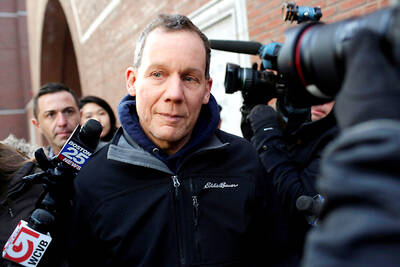
An American scientist convicted of lying to US authorities about payments from China while he was at Harvard University has rebuilt his research lab in Shenzhen, China, to pursue technology the Chinese government has identified as a national priority: embedding electronics into the human brain. Charles Lieber, 67, is among the world’s leading researchers in brain-computer interfaces. The technology has shown promise in treating conditions such as amyotrophic lateral sclerosis and restoring movement in paralyzed people. It also has potential military applications: Scientists at the Chinese People’s Liberation Army have investigated brain interfaces as a way to engineer super soldiers by boosting
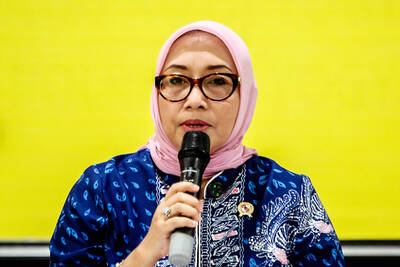
Indonesian police have arrested 13 people after shocking images of alleged abuse against small children at a daycare center went viral, sparking outrage across the nation, officials said on Monday. Police on Friday last week raided Little Aresha, a daycare center in Yogyakarta on Java island, following a report from a former employee. CCTV footage circulating on social media showed children, most younger than two, lying on the floor wearing only diapers, their hands and feet bound with rags. The police have confirmed that the footage is authentic. Police said they also found 20 children crammed into a room just 3m by 3m. “So
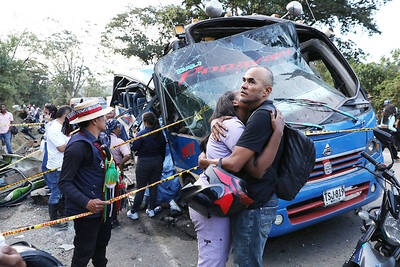
A highway bomb attack in a restive region of southwestern Colombia on Saturday killed 14 people and injured at least 38, the latest spate of violence ahead of next month’s presidential election. Authorities blamed the attack in the Cauca department — a conflict-ridden, coca-growing region — on dissidents of the now-disbanded FARC guerrilla army, who have been sowing violence across the country. “Those who carried out this attack ... are terrorists, fascists and drug traffickers,” Colombian President Gustavo Petro said on social media. “I want our very best soldiers to confront them,” he added. The leftist leader blamed the bombing
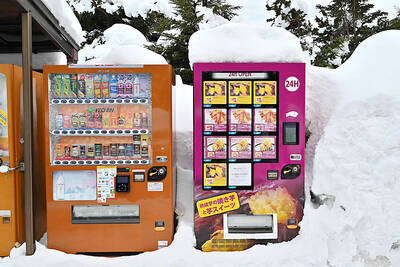
From post offices and parks to stations and even the summit of Mount Fuji, Japan’s vending machines are ubiquitous, but with the rapid pace of inflation cooling demand for their drinks, operators are being forced to rethink the business. Last month beverage giant DyDo Group Holdings announced it would remove about 20,000 vending machines — about 7 percent of their stock nationwide — by January next year, to “reconstruct a profitable network.” Pokka Sapporo Food & Beverage, based in Nagoya, also said last month it would sell its 40,000-machine operation to Osaka-based Lifedrink Co. “The strength of the vending machine


 RSS
RSS