


A new study published on Tuesday dealt a fresh blow to accusations that a triple vaccine against measles, mumps and rubella (MMR) is linked to autism.
The study, which appears in the Archives of Disease in Childhood published by the British Medical Association (BMA), found no evidence of any abnormal biological response from the shot that could point to a link between the vaccine and autism.
The investigation by British doctors comes nearly 10 years to the day since a paper, appearing in The Lancet, unleashed a health scare that prompted many parents to refuse the MMR jab for their children.
That paper has since been debunked by several other studies and was finally retracted by 10 of its 13 authors in 2004.
"This [new] study really supports the view these are safe vaccines," said David Brown, a researcher at Britain's Health Protection Agency who worked on the study. "The evidence is now so solid there really isn't a need for further studies here."
In 1998, Dr Andrew Wakefield of Royal Free Hospital in London and colleagues sparked a fierce worldwide debate among scientists and a health scare by suggesting the MMR jab caused autism. Outbreaks of all three diseases followed.
The new study is based on antibody tests on blood samples taken from 240 children aged between 10 and 12 in southern England. It looked at 98 children with autism, and two comparison groups -- 52 children with special educational needs but no autism, and 90 children who were developing normally.
All of the children had been given the MMR vaccination, but not all had been given the two scheduled doses.
The researchers looked at three paths that have been shuggested as the various links between MMR vaccine and autism: evidence of persistent measles infection; an abnormal immune response; and an inflammatory bowel disorder called enterocolitis.
They found no association at all.
Other investigations into the MMR scare have similarly found no evidence to support a link.
Two of them have been large-scale population studies -- one among 31,000 children in Japan and 28,000 children in Canada -- while one probe was conducted into a mercury-based chemical, thimerosal, used as a preservative in MMR vaccines but dropped in 1999.
Autism is a neuropsychiatric disorder that impairs a child's ability to communicate and interact with others.
The disorder appears to have been rising massively in developed countries for the past two decades, but experts are divided as to why this should be so.
Some say there may be an environmental cause. Others say that cases of autism are more likely to be detected and reported because the taboo surrounding this condition is receding.
The MMR scare was mainly centered on Britain, but also affected other countries to a lesser degree. In some parts of Britain, the proportion of children getting the vaccination slumped to 60 percent, triggering outbreaks of measles that placed infants' lives at risk.
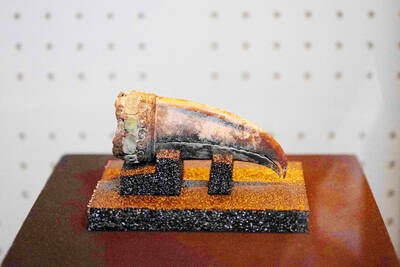
Archeologists in Peru on Thursday said they found the 5,000-year-old remains of a noblewoman at the sacred city of Caral, revealing the important role played by women in the oldest center of civilization in the Americas. “What has been discovered corresponds to a woman who apparently had elevated status, an elite woman,” archeologist David Palomino said. The mummy was found in Aspero, a sacred site within the city of Caral that was a garbage dump for more than 30 years until becoming an archeological site in the 1990s. Palomino said the carefully preserved remains, dating to 3,000BC, contained skin, part of the
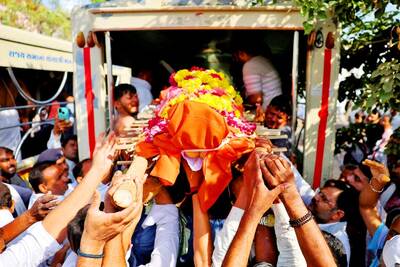
‘WATER WARFARE’: A Pakistani official called India’s suspension of a 65-year-old treaty on the sharing of waters from the Indus River ‘a cowardly, illegal move’ Pakistan yesterday canceled visas for Indian nationals, closed its airspace for all Indian-owned or operated airlines, and suspended all trade with India, including to and from any third country. The retaliatory measures follow India’s decision to suspend visas for Pakistani nationals in the aftermath of a deadly attack by shooters in Kashmir that killed 26 people, mostly tourists. The rare attack on civilians shocked and outraged India and prompted calls for action against their country’s archenemy, Pakistan. New Delhi did not publicly produce evidence connecting the attack to its neighbor, but said it had “cross-border” links to Pakistan. Pakistan denied any connection to

TRUMP EFFECT: The win capped one of the most dramatic turnarounds in Canadian political history after the Conservatives had led the Liberals by more than 20 points Canadian Prime Minister Mark Carney yesterday pledged to win US President Donald Trump’s trade war after winning Canada’s election and leading his Liberal Party to another term in power. Following a campaign dominated by Trump’s tariffs and annexation threats, Carney promised to chart “a new path forward” in a world “fundamentally changed” by a US that is newly hostile to free trade. “We are over the shock of the American betrayal, but we should never forget the lessons,” said Carney, who led the central banks of Canada and the UK before entering politics earlier this year. “We will win this trade war and

Armed with 4,000 eggs and a truckload of sugar and cream, French pastry chefs on Wednesday completed a 121.8m-long strawberry cake that they have claimed is the world’s longest ever made. Youssef El Gatou brought together 20 chefs to make the 1.2 tonne masterpiece that took a week to complete and was set out on tables in an ice rink in the Paris suburb town of Argenteuil for residents to inspect. The effort overtook a 100.48m-long strawberry cake made in the Italian town of San Mauro Torinese in 2019. El Gatou’s cake also used 350kg of strawberries, 150kg of sugar and 415kg of


 RSS
RSS