


The EU was to present plans yesterday to tackle climate change with more windmills, fewer power-draining buildings and heavier penalties on major polluters.
Proposals by the European Commission will set out how the EU's 27 nations can slash carbon dioxide and other gases linked to global warming by a fifth by 2020 -- a pledge EU leaders made last year.
Wind power generators along the Atlantic coast and tighter limits for coal-burning plants will mean cleaner air and a cleaner conscience for Europe as it seeks a global pact to cut carbon dioxide emissions that cause climate change.
Draft EU plans describe Europe and the world as being at a crossroads. The documents call for "decisive and immediate action" to release less carbon and steer away from unreliable and costly energy imports by developing homegrown renewable power.
But EU officials acknowledge that their green ambitions will carry harsh costs -- at least 0.5 percent of gross domestic product, or 55 billion euros (US$80 billion) a year -- and likely see electricity prices go up.
They insist that will be balanced by a 50 billion euro reduction in the EU's bill for oil and natural gas imports, while a low-carbon revolution within Europe generates "first mover advantage" for a wave of energy-efficient goods and renewable power technology for export.
The EU is calling for a 20 percent cut in the region's overall greenhouse gas emissions from 1990 levels -- or 14 percent from 2005.
Richer EU nations will have to go further, while some poorer countries, such as EU newcomer Romania, will be allowed to increase emissions as their economies expand. No country will have to cut emissions by more than a fifth.
A push to use less energy should be simple and relatively painless, as the EU pushes people to install energy-saving light bulbs and insulate buildings -- efforts that could reduce energy consumption by 20 percent.
However, the centerpiece of the program -- a carbon cap-and-trade program for heavy industry -- will carry a much more expensive price tag as it will likely hike electricity bills and may cause the cost of manufacturing in Europe to soar above other regions.
Up and running since 2005, the European emissions trading program gives polluters a financial incentive to reduce greenhouse gas emissions because they get permits they can sell if they emit less than their allowance. If they need to pollute more, they must buy extra permits.
Electricity generators and steel companies covered by the plan will see the amount they are allowed to release shrink by 21 percent by 2020. They will be joined by chemical, fertilizer and aluminum companies who face a 10 percent cut. Smaller polluters would be excused if they face other measures, such as a tax, to encourage them to release less.
Some companies already complain that tightening carbon trading will increase their costs and encourage them to move to looser regimes outside Europe.
And unlike now, they will not get all their original permits for free. The EU wants to auction all allowances for electricity companies and oil refineries with the justification that they can pass on those costs to their customers.
Europe also plans to draw a fifth of its overall energy from renewable power by 2020. For many European countries, they will have to rapidly ramp up their amount of wind, solar or hydro power by 2020 to hit new binding targets.
Some have a hard road ahead. Britain, which generated 1.3 percent of its energy from renewables in 2005, is expected to be ordered by the EU executive to increase that figure to 15 percent. Hydropower-happy Sweden was close to 40 percent while Denmark's wind farms brought it to 17 percent.
The EU as a whole stood at 8.5 percent three years ago.
Part of this effort will come from replacing 10 percent of transport fuel with biofuels made from energy crops such as sugar cane and rapeseed oil. Each country will have its own target. Biofuels accounted for 1 percent of transport fuel in 2005.
EU officials rejected criticism from environmental and development campaigners that the sudden thirst for biofuels will see rain forests cleared and land turned from food to fuel crops, hiking bread prices across the world. They say they would set environmental standards banning imports of biofuels grown at the expense of pristine natural areas.

‘IN A DIFFERENT PLACE’: The envoy first visited Shanghai, where he attended a Chinese basketball playoff match, and is to meet top officials in Beijing tomorrow US Secretary of State Antony Blinken yesterday arrived in China on his second visit in a year as the US ramps up pressure on its rival over its support for Russia while also seeking to manage tensions with Beijing. The US diplomat tomorrow is to meet China’s top brass in Beijing, where he is also expected to plead for restraint as Taiwan inaugurates president-elect William Lai (賴清德), and to raise US concerns on Chinese trade practices. However, Blinken is also seeking to stabilize ties, with tensions between the world’s two largest economies easing since his previous visit in June last year. At the
Nearly half of China’s major cities are suffering “moderate to severe” levels of subsidence, putting millions of people at risk of flooding, especially as sea levels rise, according to a study of nationwide satellite data released yesterday. The authors of the paper, published by the journal Science, found that 45 percent of China’s urban land was sinking faster than 3mm per year, with 16 percent at more than 10mm per year, driven not only by declining water tables, but also the sheer weight of the built environment. With China’s urban population already in excess of 900 million people, “even a small portion

UNSETTLING IMAGES: The scene took place in front of TV crews covering the Trump trial, with a CNN anchor calling it an ‘emotional and unbelievably disturbing moment’ A man who doused himself in an accelerant and set himself on fire outside the courthouse where former US president Donald Trump is on trial has died, police said yesterday. The New York City Police Department (NYPD) said the man was declared dead by staff at an area hospital. The man was in Collect Pond Park at about 1:30pm on Friday when he took out pamphlets espousing conspiracy theories, tossed them around, then doused himself in an accelerant and set himself on fire, officials and witnesses said. A large number of police officers were nearby when it happened. Some officers and bystanders rushed
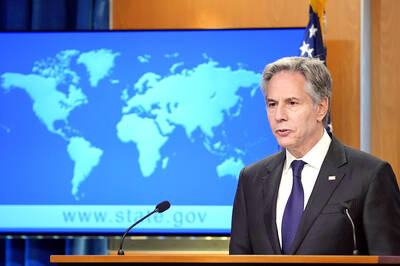
Beijing is continuing to commit genocide and crimes against humanity against Uyghurs and other Muslim minorities in its western Xinjiang province, U.S. Secretary of State Antony Blinken said in a report published on Monday, ahead of his planned visit to China this week. The State Department’s annual human rights report, which documents abuses recorded all over the world during the previous calendar year, repeated language from previous years on the treatment of Muslims in Xinjiang, but the publication raises the issue ahead of delicate talks, including on the war in Ukraine and global trade, between the top U.S. diplomat and Chinese


 RSS
RSS