


Police yesterday fired teargas to disperse scores of supporters of Kenyan President Mwai Kibaki who took to the streets of Nairobi to back his disputed re-election.
Police chased the supporters, who had been chanting "Lead on, Kibaki," into shops and nearby alleys in the latest bout of unrest in the east African nation.
Police have banned street protests since the election, almost all of which have been by the opposition.
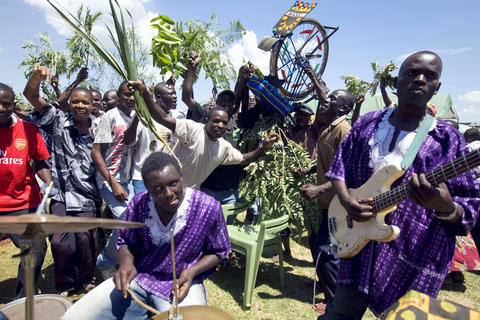
PHOTO: AFP
About a dozen police officers fired at least three canisters of tear gas at the group, which numbered around 100, as they moved down a main street with banners saying "Respect Kibaki" and showing his face.
Former UN secretary-general Kofi Annan was due in Kenya later yesterday to try to mediate the crisis since a Dec. 27 vote that the opposition says was rigged in favor of Kibaki.
Annan, along with Graca Machel, the wife of former South African president Nelson Mandela, will join former Tanzanian president Benjamin Mkapa who, with two other former African heads of state, has failed to revive a moribund international mediation effort.
Police said yesterday that six people had been killed in tribal clashes in the Rift Valley.
The latest deaths brought to at least 63 the number of people killed since last Wednesday, when opposition chief Raila Odinga and his Orange Democratic Movement (ODM) called for nationwide protests over the re-election of Kibaki.
The six, including a father and his two sons, were killed late on Monday in the volatile Molo district, where rival tribes have been clashing in recent weeks, a police commander told reporters.
"There is a big problem in Molo," he said.
Demonstrations
Meanwhile, the ODM has called for demonstrations tomorrow which police have vowed to block, raising fears of fresh street confrontations.
"The police are doing all they can to ensure that the rule of law is respected and is inviting all citizens to assist them," police spokesman Eric Kiraithe told reporters.
"We also appreciate the support the police is receiving from the people of Kenya and the government in trying to restore law and order across the country," he said.
Political protests have devolved into tribal clashes, taking place mainly in western Kenyan and Nairobi's crowded slums -- ethnic tinderboxes where most of Kenya's 42-plus tribes coexist -- and in rural areas already beset by feuds over land and resources.
Kikuyu tribe
Most of the victims are members of Kibaki's Kikuyu tribe, which has dominated the country's economic life for years and has been the target of revenge attacks since Kibaki was accused of rigging the Dec. 27 elections.
Kenyan Vice President Kalonzo Musyoka, who chairs a government panel struggling to launch dialogue, hit out at the opposition for its hardline stance, calling on them to refrain from disrespecting the courts.
"Let us not disown the courts. It is crucial that we uphold the independence of the judiciary and follow the due process: It is our responsibility as a regional bloc to respect the rule of law," said Muskoya.
Odinga has refused to take the electoral dispute to court, insisting the judiciary is loyal to Kibaki, and has vowed never to sit down with Musyoka, whom he accuses of being a traitor like "Judas Escariot."
Musyoka fell out with Odinga after a power struggle shortly before last month's elections, and sought the presidency on his own but finished third.
Ugandan President Yoweri Museveni -- who was one of the first heads of state to congratulate Kibaki on his re-election -- was also expected in Nairobi yesterday to support dialogue and discuss regional stability.
The government has rejected the term "mediation," insisting there is no crisis in the country, but has welcomed African leaders to facilitate dialogue to end the political stand-off.
The ODM announced last week it would change tactics and launch a boycott of companies owned by Kibaki's allies.
But the government, in a statement published on Monday, said the move was meant "to create poverty and destroy the livelihood of the very poor" and accused the opposition of incitement.
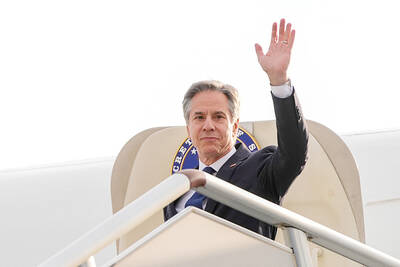
‘IN A DIFFERENT PLACE’: The envoy first visited Shanghai, where he attended a Chinese basketball playoff match, and is to meet top officials in Beijing tomorrow US Secretary of State Antony Blinken yesterday arrived in China on his second visit in a year as the US ramps up pressure on its rival over its support for Russia while also seeking to manage tensions with Beijing. The US diplomat tomorrow is to meet China’s top brass in Beijing, where he is also expected to plead for restraint as Taiwan inaugurates president-elect William Lai (賴清德), and to raise US concerns on Chinese trade practices. However, Blinken is also seeking to stabilize ties, with tensions between the world’s two largest economies easing since his previous visit in June last year. At the

UNSETTLING IMAGES: The scene took place in front of TV crews covering the Trump trial, with a CNN anchor calling it an ‘emotional and unbelievably disturbing moment’ A man who doused himself in an accelerant and set himself on fire outside the courthouse where former US president Donald Trump is on trial has died, police said yesterday. The New York City Police Department (NYPD) said the man was declared dead by staff at an area hospital. The man was in Collect Pond Park at about 1:30pm on Friday when he took out pamphlets espousing conspiracy theories, tossed them around, then doused himself in an accelerant and set himself on fire, officials and witnesses said. A large number of police officers were nearby when it happened. Some officers and bystanders rushed

Beijing is continuing to commit genocide and crimes against humanity against Uyghurs and other Muslim minorities in its western Xinjiang province, U.S. Secretary of State Antony Blinken said in a report published on Monday, ahead of his planned visit to China this week. The State Department’s annual human rights report, which documents abuses recorded all over the world during the previous calendar year, repeated language from previous years on the treatment of Muslims in Xinjiang, but the publication raises the issue ahead of delicate talks, including on the war in Ukraine and global trade, between the top U.S. diplomat and Chinese
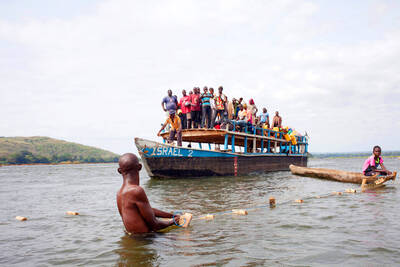
RIVER TRAGEDY: Local fishers and residents helped rescue people after the vessel capsized, while motorbike taxis evacuated some of the injured At least 58 people going to a funeral died after their overloaded river boat capsized in the Central African Republic’s (CAR) capital, Bangui, the head of civil protection said on Saturday. “We were able to extract 58 lifeless bodies,” Thomas Djimasse told Radio Guira. “We don’t know the total number of people who are underwater. According to witnesses and videos on social media, the wooden boat was carrying more than 300 people — some standing and others perched on wooden structures — when it sank on the Mpoko River on Friday. The vessel was heading to the funeral of a village chief in


 RSS
RSS