


Women are being advised to cut out caffeine during the first three months of pregnancy to help reduce their risk of having a miscarriage.
The warning follows a study that found pregnant women who consumed two or more mugs of coffee a day were twice as likely to miscarry as those who abstained from caffeine completely.
The study of 1,063 pregnant women showed that those who had at least 200mg of caffeine each day had a 25 percent risk of miscarriage compared with a 12 percent risk for women who avoided all caffeine, including in tea, soft drinks and chocolate.
"It appears that 200mg a day is already a high enough dose to increase the risk of miscarriage," said De-Kun Li, a perinatal epidemiologist who led the study at Kaiser Permanente, a California-based non-profit health foundation that runs 32 hospitals and is one of the US' largest private health organizations.
He advised women to consider not consuming caffeine or at least limiting their intake to less than 200mg during the first 12 weeks of pregnancy.
The women were asked what they had eaten and drunk until the 20th week of gestation: 635 had up to 200mg a day; 164 women had 200mg or more daily; and 264 had none.
The doctors accounted for other factors known to affect miscarriage rates, including age, income, a history of miscarriages, smoking and alcohol consumption.
Overall, 172 women miscarried, 95 percent within the first 15 weeks of pregnancy.
The results suggested that even moderate amounts of caffeine increased the risk, but this was only confirmed in women who consumed 200mg or more a day. It made no difference whether the caffeine came from coffee, tea, chocolate or soda.
Li called on doctors to encourage patients to reduce or give up caffeine during early pregnancy.
It is unclear why caffeine should affect early pregnancy, although it is known that pregnant women take longer to process caffeine and it can cross the placenta into a baby's bloodstream.
Li's study, in the current online issue of the American Journal of Obstetrics and Gynecology, accounted for this "pregnancy-related caffeine aversion" -- which Li said had hampered previous studies -- by following women who did not change their drinking habits.
High levels of caffeine have previously been linked to increased risk of premature birth and small babies.
But a Danish study last year found no difference where mothers had drunk only moderate amounts of caffeinated and decaffeinated coffee.
Tracy Flanagan, director of women's health at Kaiser Permanente in northern California, advised pregnant women to consider switching to decaffeinated drinks, and natural energy boosts, such as a brisk walk, yoga or dried fruit.
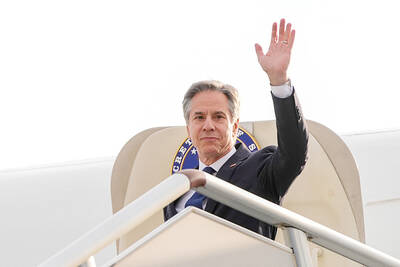
‘IN A DIFFERENT PLACE’: The envoy first visited Shanghai, where he attended a Chinese basketball playoff match, and is to meet top officials in Beijing tomorrow US Secretary of State Antony Blinken yesterday arrived in China on his second visit in a year as the US ramps up pressure on its rival over its support for Russia while also seeking to manage tensions with Beijing. The US diplomat tomorrow is to meet China’s top brass in Beijing, where he is also expected to plead for restraint as Taiwan inaugurates president-elect William Lai (賴清德), and to raise US concerns on Chinese trade practices. However, Blinken is also seeking to stabilize ties, with tensions between the world’s two largest economies easing since his previous visit in June last year. At the
Nearly half of China’s major cities are suffering “moderate to severe” levels of subsidence, putting millions of people at risk of flooding, especially as sea levels rise, according to a study of nationwide satellite data released yesterday. The authors of the paper, published by the journal Science, found that 45 percent of China’s urban land was sinking faster than 3mm per year, with 16 percent at more than 10mm per year, driven not only by declining water tables, but also the sheer weight of the built environment. With China’s urban population already in excess of 900 million people, “even a small portion

UNSETTLING IMAGES: The scene took place in front of TV crews covering the Trump trial, with a CNN anchor calling it an ‘emotional and unbelievably disturbing moment’ A man who doused himself in an accelerant and set himself on fire outside the courthouse where former US president Donald Trump is on trial has died, police said yesterday. The New York City Police Department (NYPD) said the man was declared dead by staff at an area hospital. The man was in Collect Pond Park at about 1:30pm on Friday when he took out pamphlets espousing conspiracy theories, tossed them around, then doused himself in an accelerant and set himself on fire, officials and witnesses said. A large number of police officers were nearby when it happened. Some officers and bystanders rushed
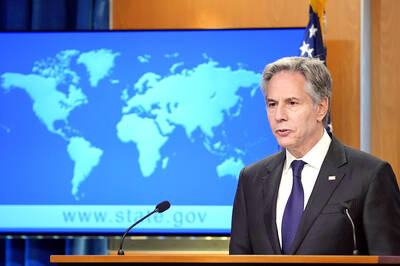
Beijing is continuing to commit genocide and crimes against humanity against Uyghurs and other Muslim minorities in its western Xinjiang province, U.S. Secretary of State Antony Blinken said in a report published on Monday, ahead of his planned visit to China this week. The State Department’s annual human rights report, which documents abuses recorded all over the world during the previous calendar year, repeated language from previous years on the treatment of Muslims in Xinjiang, but the publication raises the issue ahead of delicate talks, including on the war in Ukraine and global trade, between the top U.S. diplomat and Chinese


 RSS
RSS