


The diplomatic stand-off between the UK and Russia entered a dangerous new phase on Wednesday as British officials denounced "a pattern of intimidation" by Russia's security services against British Council staff.
The UK Foreign Office complained of unacceptable behavior, after Russians working at British Council offices in St Petersburg and Yekaterinburg were called in for questioning by the FSB, the successor to the KGB, and visited at home by interior ministry officials. Stephen Kinnock, the head of the council's St Petersburg office, was stopped and detained for an hour for alleged drunk-driving and driving the wrong way down a one-way street.
British officials denied that Kinnock, the son of former British Labour Party leader Neil Kinnock had being drinking, saying he had refused to take a breath test and called for consular assistance in line with Foreign Office guidelines.
One official said Kinnock had been followed home after dining with friends in what the official described as "a pattern of intimidation intended to disrupt the British Council."
The organization said it was deeply concerned for the safety of its employees.
The St Petersburg office was forced to close last night, after its staff were summoned for FSB questioning for the second time in 24 hours. The British Council will decide today on whether it is able to keep its regional offices open while its staff are being put under intense FSB pressure.
The organization had attempted to continue its work this week in defiance of Moscow's order to close the regional offices, on the grounds that the order was illegal under international law and incompatible with bilateral agreements. Russian officials blame Britain for the collapse of talks last year aimed at reviewing status of cultural organizations. The failure of the talks, they argue, left the British Council without a legal footing in Russia.
Russia's ambassador to London, Yuri Fedotov, was summoned to the Foreign Office to hear British complaints.
Later he said: "Now we are really experiencing what can be called a crisis," adding that he saw no immediate prospect of any improvement.
The battle over the British Council is the latest in a series of skirmishes between London and Moscow starting with the murder in November 2006 of the Russian dissident and former FSB agent, Alexander Litvinenko.
It worsened with Russia's refusal to extradite Britain's principal suspect, Andrei Lugovoi, the subsequent tit-for-tat expulsion of diplomats and restrictions on visas for Russian officials.
British Foreign Secretary David Miliband issued a statement yesterday saying: "Any intimidation or harassment of officials is obviously completely unacceptable. The only losers from any attack on the British Council are Russian citizens who want to use the British Council -- and the reputation of the Russian government."
Peter Ricketts, the head of the British diplomatic service, told Fedotov that any "attack" on Britain's cultural arm would damage Moscow's reputation.
Russian officials say that the British Council's Moscow offices could be targeted next if no agreement, encompassing the status of cultural organizations and the availability of British visas for Russian diplomats, was reached.
Miliband has already promised to respond, with the further expulsion of Russian diplomats now an option.
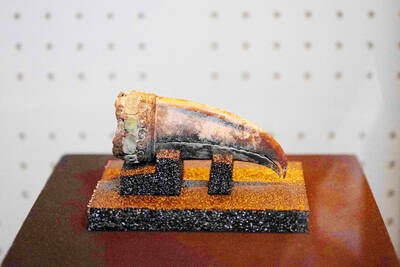
Archeologists in Peru on Thursday said they found the 5,000-year-old remains of a noblewoman at the sacred city of Caral, revealing the important role played by women in the oldest center of civilization in the Americas. “What has been discovered corresponds to a woman who apparently had elevated status, an elite woman,” archeologist David Palomino said. The mummy was found in Aspero, a sacred site within the city of Caral that was a garbage dump for more than 30 years until becoming an archeological site in the 1990s. Palomino said the carefully preserved remains, dating to 3,000BC, contained skin, part of the
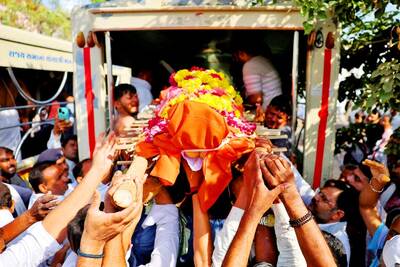
‘WATER WARFARE’: A Pakistani official called India’s suspension of a 65-year-old treaty on the sharing of waters from the Indus River ‘a cowardly, illegal move’ Pakistan yesterday canceled visas for Indian nationals, closed its airspace for all Indian-owned or operated airlines, and suspended all trade with India, including to and from any third country. The retaliatory measures follow India’s decision to suspend visas for Pakistani nationals in the aftermath of a deadly attack by shooters in Kashmir that killed 26 people, mostly tourists. The rare attack on civilians shocked and outraged India and prompted calls for action against their country’s archenemy, Pakistan. New Delhi did not publicly produce evidence connecting the attack to its neighbor, but said it had “cross-border” links to Pakistan. Pakistan denied any connection to

TRUMP EFFECT: The win capped one of the most dramatic turnarounds in Canadian political history after the Conservatives had led the Liberals by more than 20 points Canadian Prime Minister Mark Carney yesterday pledged to win US President Donald Trump’s trade war after winning Canada’s election and leading his Liberal Party to another term in power. Following a campaign dominated by Trump’s tariffs and annexation threats, Carney promised to chart “a new path forward” in a world “fundamentally changed” by a US that is newly hostile to free trade. “We are over the shock of the American betrayal, but we should never forget the lessons,” said Carney, who led the central banks of Canada and the UK before entering politics earlier this year. “We will win this trade war and

Armed with 4,000 eggs and a truckload of sugar and cream, French pastry chefs on Wednesday completed a 121.8m-long strawberry cake that they have claimed is the world’s longest ever made. Youssef El Gatou brought together 20 chefs to make the 1.2 tonne masterpiece that took a week to complete and was set out on tables in an ice rink in the Paris suburb town of Argenteuil for residents to inspect. The effort overtook a 100.48m-long strawberry cake made in the Italian town of San Mauro Torinese in 2019. El Gatou’s cake also used 350kg of strawberries, 150kg of sugar and 415kg of


 RSS
RSS