


US warplanes unleashed one of the most intense airstrikes of the Iraq War, dropping 18,145kg of explosives in a thunderous 10-minute onslaught on suspected al-Qaeda in Iraq safe havens in Sunni farmlands south of Baghdad.
The mighty barrage on Thursday -- recalling the Pentagon's "shock and awe" raids during the 2003 invasion -- appeared to mark a significant escalation in a countrywide offensive launched this week to try to cripple remaining insurgent strongholds.
But it also fits into the endgame strategy of last year's US troop buildup, which seeks to regain control of Baghdad and surrounding areas as a buffer zone for the capital. US commanders are now attempting to subdue the last insurgent footholds around Baghdad before the Pentagon faces a possible reduction in troop strength.
Some of the additional 30,000 troops have been pulled out and the remainder are expected to depart by June, military officials have said. With insurgents still holding pockets south of the capital and in districts to the north and far north -- including the key northern city of Mosul -- the military apparently wants to take the remaining four months or so to use the expanded military muscle against al-Qaeda.
After Thursday's airstrikes, US and Iraqi soldiers advanced through smoldering citrus groves into areas that were considered important al-Qaeda enclaves around Arab Jabour, southeast of Baghdad. An Iraqi officer said the soldiers discovered two houses used to torture kidnap victims and arrested at least 12 suspected insurgents.
Little initial resistance was reported. At least nine US soldiers have been killed since the offensive began on Tuesday -- the deadliest days for US forces since last fall.
In the farming village of Zambaraniyah, on the outskirts of Arab Jabour about 14.5km southeast of the capital, scenes of neglect and devastation were testimony to years of fighting between militants and US and Iraqi troops.
Most of the land is torched or left fallow along small roads that were once laced with booby traps and bombs.
Major Alayne Conway, a spokeswoman for troops in central Iraq, said the amount of ordnance dropped in 10 minutes almost exceeded what had been used in the region in any month since June.
Conway said the air attack "was one of the largest airstrikes since the onset of the war" in March 2003.
A military statement said two B-1 bombers and four F-16 fighters hit 40 targets in Arab Jabour in 10 strikes. Al-Qaeda fighters are believed to control the area, a Sunni district lined with citrus groves.
"Thirty-eight bombs were dropped within the first 10 minutes, with a total tonnage of 40,000 pounds [18,145kg]," it said.
The Iraqi army officer, whose unit is in the Arab Jabour area, said the airstrikes began at 8am and set several groves ablaze and destroyed two houses used by gunmen. He said soldiers confiscated documents and weapons including AK-47s. The army officer spoke on condition of anonymity.
Moahmoud Chiad, who lives on the edge of Arab Jabour, said he was surprised to see many US-Iraqi checkpoints with Iraqi security forces. Iraqis used loudspeakers to order residents to stay home.
"After this, we saw US helicopters hovering over the area while the sounds of jet fighters were also heard," he said. "Minutes later, there were the sounds of big explosions. We saw fire and smoke coming out from some groves. Then, the gunfire crackled in the groves, but it ended by noon."

‘IN A DIFFERENT PLACE’: The envoy first visited Shanghai, where he attended a Chinese basketball playoff match, and is to meet top officials in Beijing tomorrow US Secretary of State Antony Blinken yesterday arrived in China on his second visit in a year as the US ramps up pressure on its rival over its support for Russia while also seeking to manage tensions with Beijing. The US diplomat tomorrow is to meet China’s top brass in Beijing, where he is also expected to plead for restraint as Taiwan inaugurates president-elect William Lai (賴清德), and to raise US concerns on Chinese trade practices. However, Blinken is also seeking to stabilize ties, with tensions between the world’s two largest economies easing since his previous visit in June last year. At the

UNSETTLING IMAGES: The scene took place in front of TV crews covering the Trump trial, with a CNN anchor calling it an ‘emotional and unbelievably disturbing moment’ A man who doused himself in an accelerant and set himself on fire outside the courthouse where former US president Donald Trump is on trial has died, police said yesterday. The New York City Police Department (NYPD) said the man was declared dead by staff at an area hospital. The man was in Collect Pond Park at about 1:30pm on Friday when he took out pamphlets espousing conspiracy theories, tossed them around, then doused himself in an accelerant and set himself on fire, officials and witnesses said. A large number of police officers were nearby when it happened. Some officers and bystanders rushed

Beijing is continuing to commit genocide and crimes against humanity against Uyghurs and other Muslim minorities in its western Xinjiang province, U.S. Secretary of State Antony Blinken said in a report published on Monday, ahead of his planned visit to China this week. The State Department’s annual human rights report, which documents abuses recorded all over the world during the previous calendar year, repeated language from previous years on the treatment of Muslims in Xinjiang, but the publication raises the issue ahead of delicate talks, including on the war in Ukraine and global trade, between the top U.S. diplomat and Chinese
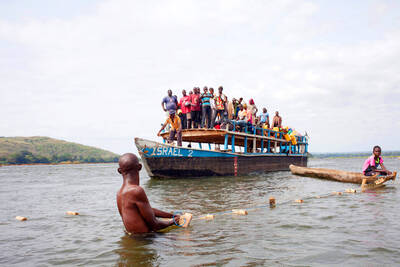
RIVER TRAGEDY: Local fishers and residents helped rescue people after the vessel capsized, while motorbike taxis evacuated some of the injured At least 58 people going to a funeral died after their overloaded river boat capsized in the Central African Republic’s (CAR) capital, Bangui, the head of civil protection said on Saturday. “We were able to extract 58 lifeless bodies,” Thomas Djimasse told Radio Guira. “We don’t know the total number of people who are underwater. According to witnesses and videos on social media, the wooden boat was carrying more than 300 people — some standing and others perched on wooden structures — when it sank on the Mpoko River on Friday. The vessel was heading to the funeral of a village chief in


 RSS
RSS