


A popular Internet video accusing Australians of opposing Japanese whaling because of racism while brutally killing animals such as kangaroos and dingoes drew sharp government criticism yesterday.
Australian Foreign Minister Stephen Smith condemned the video as he announced that Australia would this week deploy a ship to the Southern Ocean to gather evidence for possible legal action against Japan over its whaling program.
The 10-minute video, which has recorded more than 100,000 hits since being posted anonymously on the YouTube Web site, shows graphic images of Australians killing animals and of infamous racial riots at Cronulla beach in 2005.
It says Australians are opposed to Japanese whaling because of a racist ideology, and claims in English, with Japanese subtitles, that Australia holds the world record for mammal extinction.
"It is untasteworthy in the extreme, that's the kindest thing I can think to say about it," Smith told reporters. "Its general overtone, its general content, I absolutely condemn. It's anonymous, so that tells you something before we even start."
The video would not change Australia's opposition to Japanese whaling, but neither would it "in any way disturb or affect the very good relationship with Japan," he said.
Smith announced that the Oceanic Viking customs ship would leave Australia this week on a 20-day mission to monitor the Japanese whaling fleet in the icy waters of the Antarctic.
The ship's mission would be coordinated with aerial surveillance and aimed to gather video and photographic evidence for a potential international court case against Japan, he said.
Japan exploits a loophole in a 1986 international moratorium on commercial whaling to kill whales for what it calls scientific research, while admitting that the meat from the hunt ends up on dinner plates.

PHISHING: The con might appear convincing, as the scam e-mails can coincide with genuine messages from Apple saying you have run out of storage For a while you have been getting messages from Apple saying “your iCloud storage is full.” They say you have exceeded your storage plan, so documents are no longer being backed up, and photos you take are not being uploaded. You have been resisting Apple’s efforts to get you to pay a minimum of £0.99 (US$1.33) a month for more storage, but it seems that you cannot keep putting off the inevitable: You have received an e-mail which says your iCloud account has been blocked, and your photos and videos would be deleted very soon. To keep them you need
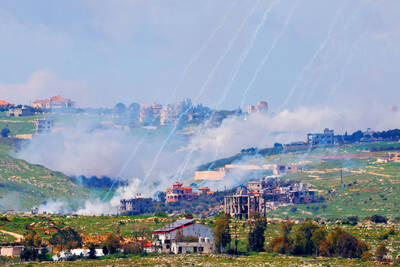
The Israeli military has demolished entire villages as part of its invasion of south Lebanon, rigging homes with explosives and razing them to the ground in massive remote detonations. The Guardian reviewed three videos posted by the Israeli military and on social media, which showed Israel carrying out mass detonations in the villages of Taybeh, Naqoura and Deir Seryan along the Israel-Lebanon border. Lebanese media has reported more mass detonations in other border villages, but satellite imagery was not readily available to verify these claims. The demolitions came after Israeli Minister of Defense Israel Katz called for the destruction of

A US YouTuber who caused outrage for filming himself kissing a statue commemorating Korean wartime sex slaves has been sentenced to six months in prison, a court in Seoul said yesterday. Johnny Somali, 25, gained notoriety several years ago for recording himself doing a series of provocative stunts in South Korea and Japan, and streaming them on platforms such as YouTube and Twitch. South Korean authorities indicted Somali — whose real name is Ramsey Khalid Ismael — in 2024 on public order violations and obstruction of business, and banned him from leaving the country. “The court has sentenced him to six months in
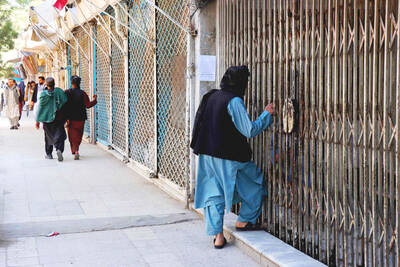
The death toll from a shooting in western Afghanistan rose to 11 on Saturday, after gunmen targeted civilians at a picnic spot in Herat, the provincial authority said. Bullet marks were visible on a wall of the Sayed Mohammad Agha Shia shrine, while bloodstains marked a blanket abandoned at the scene. “Eleven people have been recorded dead and eight others wounded from Friday’s incident, with the condition of two of the wounded reported as critical,” Herat’s information office said in a statement. The update raises a toll of seven killed provided on Friday by the Afghan Ministry of Interior Affairs


 RSS
RSS