


For the first time, doctors have used stem cells from liposuctioned fat to fix breast defects in women who have had cancerous lumps removed.
The approach is still experimental, but holds promise for millions of women left with cratered areas and breasts that look very different from each other after cancer surgery. It also might be a way to augment healthy breasts without using artificial implants.
So far, it has only been tested on about two dozen women in a study in Japan. But doctors in the US say it has great potential.
"This is a pretty exciting topic right now in plastic surgery," said Karol Gutowski at the University of Wisconsin-Madison. "There are people all over the country working on this."
The Japanese study was reported on Saturday at the San Antonio Breast Cancer Symposium. The company that developed the treatment, Cytori Therapeutics, plans larger studies in Europe and Japan next year.
More than 100,000 women have lumps removed each year in the US. These operations, lumpectomies, often are done instead of mastectomies, which take the whole breast. But they often leave deformities because as much as a third of a woman's breast may be removed.
The defect "initially may not be as noticeable" but it often gets worse, especially if the woman also has radiation treatment, said Sameer Patel, a reconstructive surgeon at Fox Chase Cancer Center in Philadelphia.
The implants sold today are for reconstructing breasts after mastectomies. They aren't designed to fix odd-shaped deformities from lumpectomies or radiation.
"Each one is so different, there's no little thing you can just pop in there," Gutowski said.
Doctors can try making the other breast smaller so they match, transplanting a back muscle to boost the flawed breast, or rearranging tissue to more evenly distribute what's left. But these involve surgery and leave scars.
Mini implants of fat tissue have been tried, but they often get resorbed by the body or die and turn hard and lumpy. The recent discovery that fat cells are rich in stem cells -- master cells that can replenish themselves and form other tissues in the body -- renewed interest in their use.
In the Japanese study, doctors liposuctioned fat from 21 cancer patients' bellies, hips or thighs. Half was reserved as the main implant material; the rest was processed to extract stem cells and combined with the reserved fat. This was injected in three places around a breast defect.
Doctors think the stem cells will keep the tissue from dying and form lasting mini implants.
Eight months after treatment, "about 80 percent of the patients are satisfied" with the results, said the lead researcher, Keizo Sugimachi at Kyushu University in Fukuoka, Japan.
There was a statistically significant improvement in breast tissue thickness at one and six months after treatment.
The treatment is expected to cost US$3,000 to US$5,000, said Cytori's president, Mark Hedrick.
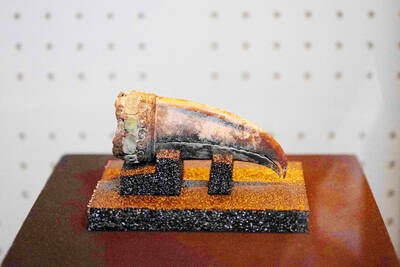
Archeologists in Peru on Thursday said they found the 5,000-year-old remains of a noblewoman at the sacred city of Caral, revealing the important role played by women in the oldest center of civilization in the Americas. “What has been discovered corresponds to a woman who apparently had elevated status, an elite woman,” archeologist David Palomino said. The mummy was found in Aspero, a sacred site within the city of Caral that was a garbage dump for more than 30 years until becoming an archeological site in the 1990s. Palomino said the carefully preserved remains, dating to 3,000BC, contained skin, part of the
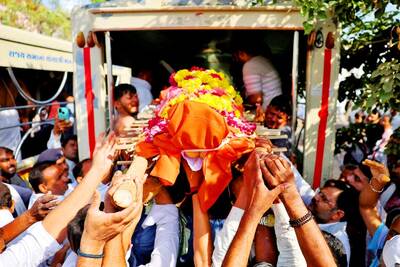
‘WATER WARFARE’: A Pakistani official called India’s suspension of a 65-year-old treaty on the sharing of waters from the Indus River ‘a cowardly, illegal move’ Pakistan yesterday canceled visas for Indian nationals, closed its airspace for all Indian-owned or operated airlines, and suspended all trade with India, including to and from any third country. The retaliatory measures follow India’s decision to suspend visas for Pakistani nationals in the aftermath of a deadly attack by shooters in Kashmir that killed 26 people, mostly tourists. The rare attack on civilians shocked and outraged India and prompted calls for action against their country’s archenemy, Pakistan. New Delhi did not publicly produce evidence connecting the attack to its neighbor, but said it had “cross-border” links to Pakistan. Pakistan denied any connection to

TRUMP EFFECT: The win capped one of the most dramatic turnarounds in Canadian political history after the Conservatives had led the Liberals by more than 20 points Canadian Prime Minister Mark Carney yesterday pledged to win US President Donald Trump’s trade war after winning Canada’s election and leading his Liberal Party to another term in power. Following a campaign dominated by Trump’s tariffs and annexation threats, Carney promised to chart “a new path forward” in a world “fundamentally changed” by a US that is newly hostile to free trade. “We are over the shock of the American betrayal, but we should never forget the lessons,” said Carney, who led the central banks of Canada and the UK before entering politics earlier this year. “We will win this trade war and

Armed with 4,000 eggs and a truckload of sugar and cream, French pastry chefs on Wednesday completed a 121.8m-long strawberry cake that they have claimed is the world’s longest ever made. Youssef El Gatou brought together 20 chefs to make the 1.2 tonne masterpiece that took a week to complete and was set out on tables in an ice rink in the Paris suburb town of Argenteuil for residents to inspect. The effort overtook a 100.48m-long strawberry cake made in the Italian town of San Mauro Torinese in 2019. El Gatou’s cake also used 350kg of strawberries, 150kg of sugar and 415kg of


 RSS
RSS