


EU leaders, keen to avoid the mistakes of the past, were set to try at a summit yesterday to forge unity on how to handle Kosovo's bid for independence from Serbia without inciting new violence in the Balkans.
Memories of deep divisions over the Balkan Wars in the 1990s -- which led to the union's inability to prevent the fighting -- still haunts EU capitals.
But the union remains divided over whether to recognize Kosovo's independence, putting at risk an administrative takeover of Kosovo from the UN, a mission that needs the backing of all 27 EU states.
On the eve of the summit, Swedish Premier Fredrik Reinfeldt said it would be best to wait until after the presidential elections in Serbia before recognizing Kosovo's independence. The Serbian election is scheduled for Jan. 20, with a possible runoff on Feb. 3.
"The most important thing is to stand together and probably also wait for the Serbian presidential elections," Reinfeldt said at a meeting of Christian Democrat leaders.
Ethnic Albanians, who comprise 90 percent of Kosovo's 2 million people, insist on independence. Serbia, backed by Russia, insists it must remain Serbian territory.
"We have to have Russia as a partner" when shaping a final deal on Kosovo, Luxembourg Prime Minister Jean-Claude Juncker said.
Within the EU, Cyprus is the strongest opponent of Kosovar sovereignty and of sending an 1,800-member EU police and security mission to Kosovo.
Cyprus shares an island with a Turkish community that broke away in the 1970s. Neither Cyprus nor the global community recognizes the independence of the Turkish Cypriot area.
Spain, Slovakia, Greece and Romania have expressed fears that independence for Kosovo would encourage separatist movements elsewhere.
But they are under pressure from Britain, France and Germany to act jointly on Kosovo.
"This is a European responsibility," British Prime Minister Gordon Brown told the British Parliament on Wednesday. "We hope we can move to supervised independence -- in other words, that Kosovans will have their rights met but in conditions where we do not have violence."
The EU leaders at the summit meeting were not expected to come to major decisions on Kosovo; an important UN Security Council meeting on the province's status is scheduled for Wednesday. Instead, they will discuss a paper drafted by Britain, France, Italy, Germany and the US on how the EU could recognize Kosovo after it declares independence, diplomats said.
Under the plan, according to diplomats who have seen it, EU powers like Germany, France, Italy and Britain would recognize Kosovo days after its declaration of independence, followed by other EU nations. The US and others would follow suit after that.
Slovenia, which takes over the EU's rotating presidency in January, is keen to ensure a quick transition of Balkan nations into the EU to boost stability there.
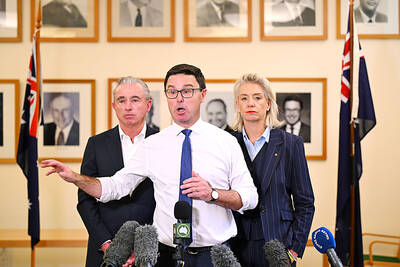
BACKLASH: The National Party quit its decades-long partnership with the Liberal Party after their election loss to center-left Labor, which won a historic third term Australia’s National Party has split from its conservative coalition partner of more than 60 years, the Liberal Party, citing policy differences over renewable energy and after a resounding loss at a national election this month. “Its time to have a break,” Nationals leader David Littleproud told reporters yesterday. The split shows the pressure on Australia’s conservative parties after Prime Minister Anthony Albanese’s center-left Labor party won a historic second term in the May 3 election, powered by a voter backlash against US President Donald Trump’s policies. Under the long-standing partnership in state and federal politics, the Liberal and National coalition had shared power

CONTROVERSY: During the performance of Israel’s entrant Yuval Raphael’s song ‘New Day Will Rise,’ loud whistles were heard and two people tried to get on stage Austria’s JJ yesterday won the Eurovision Song Contest, with his operatic song Wasted Love triumphing at the world’s biggest live music television event. After votes from national juries around Europe and viewers from across the continent and beyond, JJ gave Austria its first victory since bearded drag performer Conchita Wurst’s 2014 triumph. After the nail-biting drama as the votes were revealed running into yesterday morning, Austria finished with 436 points, ahead of Israel — whose participation drew protests — on 357 and Estonia on 356. “Thank you to you, Europe, for making my dreams come true,” 24-year-old countertenor JJ, whose
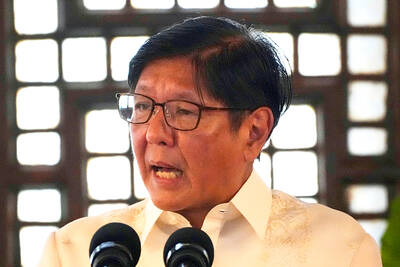
NO EXCUSES: Marcos said his administration was acting on voters’ demands, but an academic said the move was emotionally motivated after a poor midterm showing Philippine President Ferdinand Marcos Jr yesterday sought the resignation of all his Cabinet secretaries, in a move seen as an attempt to reset the political agenda and assert his authority over the second half of his single six-year term. The order came after the president’s allies failed to win a majority of Senate seats contested in the 12 polls on Monday last week, leaving Marcos facing a divided political and legislative landscape that could thwart his attempts to have an ally succeed him in 2028. “He’s talking to the people, trying to salvage whatever political capital he has left. I think it’s
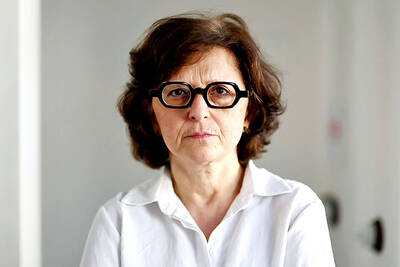
A documentary whose main subject, 25-year-old photojournalist Fatima Hassouna, was killed in an Israeli airstrike in Gaza weeks before it premiered at Cannes stunned viewers into silence at the festival on Thursday. As the cinema lights came back on, filmmaker Sepideh Farsi held up an image of the young Palestinian woman killed with younger siblings on April 16, and encouraged the audience to stand up and clap to pay tribute. “To kill a child, to kill a photographer is unacceptable,” Farsi said. “There are still children to save. It must be done fast,” the exiled Iranian filmmaker added. With Israel


 RSS
RSS