

Overriding the safety concerns of its regulator, the Canadian government is rushing through legislation to reopen a nuclear reactor that produces most of the world's supply of a medically important diagnostic isotope.
Hospitals worldwide have canceled or delayed thousands of nuclear medicine tests because of the prolonged shutdown of the reactor in Chalk River, Ontario, near Ottawa.
Atomic Energy of Canada, the government company that owns the reactor, closed it for regular maintenance on Nov. 18. But inspectors from Canada's nuclear regulatory agency subsequently discovered that the 50-year-old reactor still lacked systems that Atomic Energy was ordered to install to prevent a potentially dangerous reactor failure after a natural disaster like an earthquake.
The legislation, which was pushed through the House of Commons late on Tuesday night, will suspend the Canadian Nuclear Safety Commission's oversight of the reactor for 120 days and allow Atomic Energy to restart it immediately. The bill was approved by Canada's unelected Senate on Wednesday night.
"There will be no nuclear accident," Canadian Prime Minister Stephen Harper told the House of Commons on Tuesday. "On the contrary, what we do know is that the continuing actions of the Liberal-appointed Nuclear Safety Commission will jeopardize the health and safety and lives of tens of thousands of Canadians."
Neither Harper, nor anyone in his government offered any evidence that the commission, a quasi-judicial body headed by a former public servant, acted for partisan reasons. But to support his safety claim, he cited an eight-paragraph report written by the former chief engineer of Atomic Energy and the former manager of two nuclear power stations built by the company.
In a letter submitted to the government this week, Linda Keen, the president of the safety commission, said the Chalk River reactor, which is known as the National Research Universal, or NRU, had an unusual design that required its cooling-water pumps to operate at all times.
The emergency backup for those pumps, she added, "is essential for the safe operation of the NRU reactor."

Japan has started its first nationwide survey of animal cafes amid concerns over animal welfare, hygiene and public health, a government official said, bringing greater scrutiny to the popular but lightly regulated sector. The desktop survey, which began this month, will examine the number of facilities, the types of animals they house and the conditions they are held in, and how visitors interact with the animals. Exotic animal cafes, where visitors can interact with species ranging from otters to owls and marmots, have become popular attractions for Japanese and foreign tourists. However, researchers say some facilities keep threatened species, raising

OLD WOUNDS: Protestant marchers seized on an overturned injunction to stage a march, which drew thousands of counterprotesters to block the road in Portadown UK leaders called for calm as a tense standoff with residents seeking to halt a pro-British Protestant march through a primarily Catholic area stretched into the night on Sunday, in one of the worst crises for Northern Ireland in the past few years. The tensions were triggered after a Belfast appeal court overturned a High Court injunction in the early hours of Sunday to clear the march by the Orange Order to go ahead for the first time since 1997. The Parades Commission, Northern Ireland’s independent body regulating contentious processions, had authorized 35 Orangemen to march silently along Garvaghy Road in Portadown,
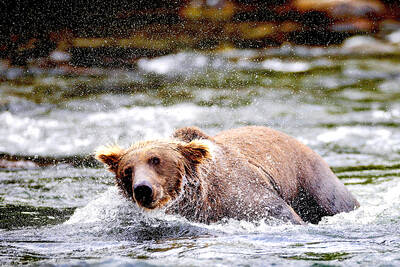
The winner of this year’s Fat Bear Week has been crowned after a nail-biting final — and it’s the son of a former champion. Backpack, a 20-year-old male beloved by rangers in Alaska for his quiet determination, edged out female fellow finalist Dancing Queen in the annual ursine eating competition at Katmai National Park. More than 2.3 million people voted in the week-long competition that sees bears unwittingly jostle in a series of head-to-head contests to decide which one of them has most impressively piled on the pounds ahead of hibernation. Viewers watch a livestream of the enormous animals as they scoop salmon
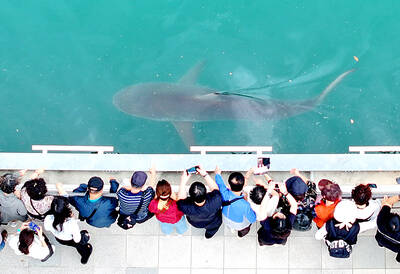
A shark stranded in a canal in the South Korean port of Busan has become the country’s latest wildlife sensation, with the city saying about 600,000 people have flocked to see it over the past two weeks. The 3.5m shark was first spotted in a narrow waterway in North Port on Sept. 18. As the days passed without the shark finding its way back to the ocean, authorities on Tuesday launched a rescue operation to guide it out, but the effort failed. The South Korean Coast Guard and other agencies deployed vessels to spray jets of water behind the shark


 RSS
RSS