


Khieu Samphan, the former Khmer Rouge head of state whose arrest by a UN-backed genocide tribunal had been widely expected, was admitted to a hospital in the capital for medical treatment after suffering a stroke, his daughter said yesterday.
Family members said Khieu Samphan was stricken on Tuesday, just a day after two of his colleagues from the brutal Khmer Rouge regime were arrested by the tribunal.
Cambodian Prime Minister Hun Sen told reporters he had dispatched a helicopter to Pailin in northwestern Cambodia to bring Khieu Samphan to Phnom Penh, where his health would be closely monitored.
The former Khmer Rouge leader's daughter, Khieu Rattana, confirmed his arrival.
Khieu Samphan was admitted to Cambodia's best-equipped medical facility, Calmette Hospital, immediately after arrival.
Khieu Samphan's wife, So Socheat , said he was slowly recovering and could speak more clearly, walk with some help and eat food after receiving home care from doctors in Pailin, the former Khmer Rouge guerrilla stronghold where the couple live.
Reach Sambath, a tribunal spokesman, said the tribunal was not involved in the government's decision to fly Khieu Samphan to Phnom Penh. He said the tribunal does not yet have jurisdiction over Khieu Samphan.
On Monday, authorities arrested Ieng Sary, the Khmer Rouge's ex-foreign minister, and his wife Ieng Thirith, its social affairs minister. Both were charged with crimes against humanity on Tuesday. Ieng Sary was also charged with war crimes.
Khieu Samphan knew his arrest was imminent, said his daughter, Khieu Rattana, who added that she did not think this caused his stroke.
"He has been aware all along that he will be arrested. He is not concerned about it and said he is ready to go to the tribunal," she said.
His blood pressure has been brought down and he has regained normal movement in his arms and legs, said a nurse, who asked not to be named because he is not authorized to speak to the media.
So Socheat said her husband fainted and collapsed to the floor when he tried to get up from a hammock on Tuesday evening.
"His mouth became twisted, and he was not able to pronounce any clear words," she said.
She said that when her husband regained consciousness, he told the doctors present that he could not afford to pay any medical expenses if he were taken to a hospital for treatment.
US Ambassador Joseph Mussomeli said the stroke indicated that Khieu Samphan was getting nervous about being arrested.
"Perhaps justice breathes down his neck and causes his stress," he said.
The 1975-79 Khmer Rouge regime was blamed for the deaths of some 1.7 million people from starvation, disease, overwork and execution. None of the group's leaders has yet faced trial.
The UN-assisted tribunal was created last year after seven years of contentious negotiations between the UN and Cambodia.
The arrests of the Khmer Rouge suspects have come almost three decades after the group fell from power, with many fearing the aging suspects might die before they ever see a courtroom.
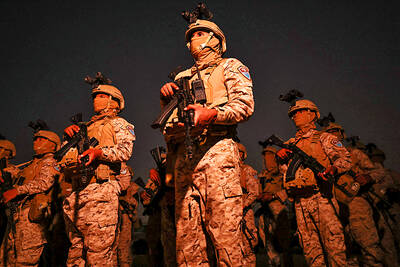
PRECARIOUS RELATIONS: Commentators in Saudi Arabia accuse the UAE of growing too bold, backing forces at odds with Saudi interests in various conflicts A Saudi Arabian media campaign targeting the United Arab Emirates (UAE) has deepened the Gulf’s worst row in years, stoking fears of a damaging fall-out in the financial heart of the Middle East. Fiery accusations of rights abuses and betrayal have circulated for weeks in state-run and social media after a brief conflict in Yemen, where Saudi airstrikes quelled an offensive by UAE-backed separatists. The United Arab Emirates is “investing in chaos and supporting secessionists” from Libya to Yemen and the Horn of Africa, Saudi Arabia’s al-Ekhbariya TV charged in a report this week. Such invective has been unheard of
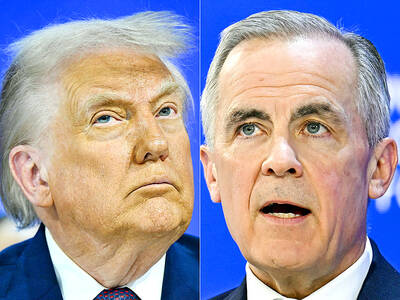
US President Donald Trump on Saturday warned Canada that if it concludes a trade deal with China, he would impose a 100 percent tariff on all goods coming over the border. Relations between the US and its northern neighbor have been rocky since Trump returned to the White House a year ago, with spats over trade and Canadian Prime Minister Mark Carney decrying a “rupture” in the US-led global order. During a visit to Beijing earlier this month, Carney hailed a “new strategic partnership” with China that resulted in a “preliminary, but landmark trade agreement” to reduce tariffs — but
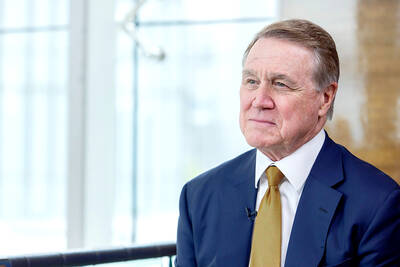
Chinese President Xi Jinping’s (習近平) purge of his most senior general is driven by his effort to both secure “total control” of his military and root out corruption, US Ambassador to China David Perdue said told Bloomberg Television yesterday. The probe into Zhang Youxia (張又俠), Xi’s second-in-command, announced over the weekend, is a “major development,” Perdue said, citing the family connections the vice chair of China’s apex military commission has with Xi. Chinese authorities said Zhang was being investigated for suspected serious discipline and law violations, without disclosing further details. “I take him at his word that there’s a corruption effort under
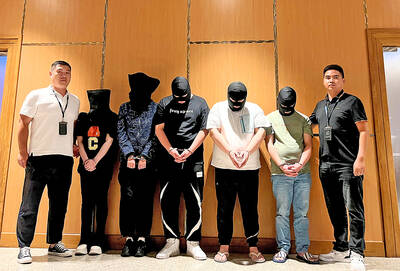
China executed 11 people linked to Myanmar criminal gangs, including “key members” of telecom scam operations, state media reported yesterday, as Beijing toughens its response to the sprawling, transnational industry. Fraud compounds where scammers lure Internet users into fake romantic relationships and cryptocurrency investments have flourished across Southeast Asia, including in Myanmar. Initially largely targeting Chinese speakers, the criminal groups behind the compounds have expanded operations into multiple languages to steal from victims around the world. Those conducting the scams are sometimes willing con artists, and other times trafficked foreign nationals forced to work. In the past few years, Beijing has stepped up cooperation


 RSS
RSS