


Television channels ordered off the air after the airing of footage allegedly exposing government involvement in the 2002 mass killings of Muslims resumed broadcasting late on Saturday, reports said.
The Headlines Today private television network began broadcasting on Thursday an expose of men accused of taking part in the deadly riots apparently admitting they had been encouraged by Hindu groups allied with the government.
On Friday, cable operators in the state's commercial capital Ahmedabad received written orders from a local official to block the Aaj Tak (Until Today) and Headlines Today channels, the Indian Express newspaper reported on Saturday.
Channels that covered the expose, which comes as the state readies for assembly elections in December, were also ordered off the air, it said.
But late on Saturday, cable distribution resumed of the three major networks targeted, the Press Trust of India (PTI) news agency reported.
Ahmedabad's top local administrator Dhananjay Dwivedi told PTI on Saturday that his orders to block the controversial programming had been misinterpreted.
"It was clearly stated to the cable operators that only the particular news program on the sting operation on the riot incidents and other such programs should not be shown," he said. "There was no ban on the networks showing other programs."
State poll officer Ashok Manek was quoted as saying that Dwivedi had ordered the channels off air, citing concerns about sparking "communal feeling," a term often used to describe tensions between religious groups in India.
Police verbally told cable operators in other parts of the state to stop carrying the channels, a Hindustan Times report said.
The channels showed interviews secretly recorded by a reporter of the investigative news magazine Tehelka (Sensation) with several men allegedly involved in riots in Gujarat state that left at least 2,000 Muslims dead.
A leading journalists' body, the Editors Guild of India, denounced the black-out as a "blatant assault" on press freedom, its president Alok Mehta said.
The 2002 rioting broke out after a Muslim mob was accused of torching a train, burning 59 Hindus alive. An inquiry by the state-run railways later ruled that the fire on the train that had sparked the riots had been an accident.
After the riots, many victims and rights groups accused the Hindu nationalist-ruled local government of backing the violence. Tehelka's investigation also pointed to alleged support for the carnage from police and state politicians.
Some men reportedly said that Gujarat's hawkish Chief Minister Narendra Modi, a member of India's main opposition Hindu nationalist Bharatiya Janata Party, gave Hindu mob leaders three days to do "whatever" they wanted.
The expose prompted renewed calls from rights activists for tough court action.
"The courts have heard the charges, but if they don't expedite the hearing, evidence can be lost," said Teesta Setalvad of Citizens for Justice and Peace.
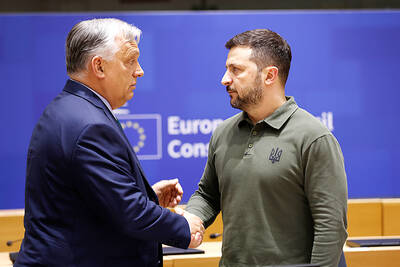
Hungarian authorities temporarily detained seven Ukrainian citizens and seized two armored cars carrying tens of millions of euros in cash across Hungary on suspicion of money laundering, officials said on Friday. The Ukrainians were released on Friday, following their detention on Thursday, but Hungarian officials held onto the cash, prompting Ukraine to accuse Hungary’s Russia-friendly government of illegally seizing the money. “We will not tolerate this state banditism,” Ukrainian Minister of Foreign Affairs Andrii Sybiha said. The seven detained Ukrainians were employees of the Ukrainian state-owned Oschadbank, who were traveling in the two armored cars that were carrying the money between Austria and
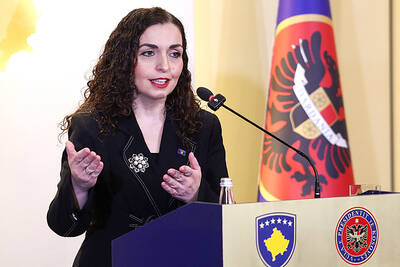
Kosovar President Vjosa Osmani on Friday after dissolving the Kosovar parliament said a snap election should be held as soon as possible to avoid another prolonged political crisis in the Balkan country at a time of global turmoil. Osmani said it is important for Kosovo to wrap up the upcoming election process and form functional institutions for political stability as the war rages in the Middle East. “Precisely because the geopolitical situation is that complex, it is important to finish this electoral process which is coming up,” she said. “It is very hard now to imagine what will happen next.” Kosovo, which declared

MORE BANS: Australia last year required sites to remove accounts held by under-16s, with a few countries pushing for similar action at an EU level and India considering its own ban Indonesia on Friday said it would ban social media access for children under 16, citing threats from online pornography, cyberbullying, online fraud and Internet addiction. “Accounts belonging to children under 16 on high-risk platforms will start to be deactivated, beginning with YouTube, TikTok, Facebook, Instagram, Threads, X, Bigo Live and Roblox,” Indonesian Minister of Communications and Digital Meutya Hafid said. “The government is stepping in so that parents no longer have to fight alone against the giants of the algorithm. Implementation will begin on March 28, 2026,” she said. The social media ban would be introduced in stages “until all platforms fulfill their
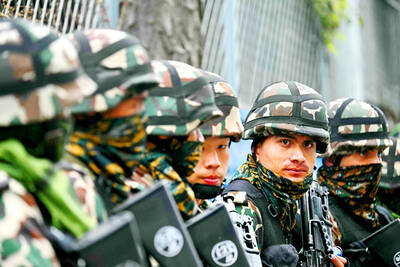
Counting was under way in Nepal yesterday, after a high-stakes parliamentary election to reshape the country’s leadership following protests last year that toppled the government. Key figures vying for power include former Nepalese prime minister K. P. Sharma Oli, rapper-turned-mayor Balendra Shah, who is bidding for the youth vote, and newly elected Nepali Congress party leader Gagan Thapa. In Kathmandu’s tea shops and city squares, people were glued to their phones, checking results as early trends flashed up — suggesting Shah’s centrist Rastriya Swatantra Party (RSP) was ahead. Nepalese Election Commission spokesman Prakash Nyupane said the counting was ongoing “in a peaceful manner”


 RSS
RSS