


Ivory Coast President Laurent Gbagbo has called for an investigation into longstanding accusations that cocoa and coffee boards have embezzled funds meant to aid the producers of the country's lucrative crops, a spokesman said.
Gbagbo has told government lawyers to look into allegations that the boards -- which set prices for crops, oversee exports and provide development assistance -- have used export profits for their own gain rather than for projects to benefit farmers as required by law, according to a statement read by government spokesman Gervais Coulibaly on national television late on Friday.
Ivory Coast, the world's largest cocoa producer and a major coffee supplier, has managed to continue a healthy export business despite being split in two when an attempted coup in 2002 sparked civil war and during the last three years of languishing peace deals -- each promising to bring elections and restore democratic rule. Under the latest deal, elections are planned for late next year.
International analysts have long said that the cocoa sector was rife with corruption, and London-based activist group Global Witness issued a report in June charging that more than US$118 million in cocoa funds were used to fund both the government's and the rebels' war efforts.
Hundreds of Ivorian cocoa growers have demonstrated for weeks, demanding to see more of the export profits, and local newspapers alleged that money supposedly sent abroad to build factories has disappeared.
"They don't give account of their management. They are rich. They can look after their children and send them to school in Europe. During the same time, producers have gotten poorer and can't pay to send their kids to school," said Bile Bile, head of a group of discontented cocoa producers.
Last month, the World Bank called for Ivory Coast's government to reform the sectors to increase wages in the plantations.
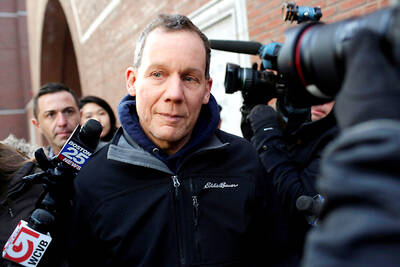
An American scientist convicted of lying to US authorities about payments from China while he was at Harvard University has rebuilt his research lab in Shenzhen, China, to pursue technology the Chinese government has identified as a national priority: embedding electronics into the human brain. Charles Lieber, 67, is among the world’s leading researchers in brain-computer interfaces. The technology has shown promise in treating conditions such as amyotrophic lateral sclerosis and restoring movement in paralyzed people. It also has potential military applications: Scientists at the Chinese People’s Liberation Army have investigated brain interfaces as a way to engineer super soldiers by boosting
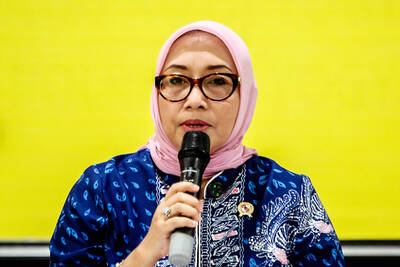
Indonesian police have arrested 13 people after shocking images of alleged abuse against small children at a daycare center went viral, sparking outrage across the nation, officials said on Monday. Police on Friday last week raided Little Aresha, a daycare center in Yogyakarta on Java island, following a report from a former employee. CCTV footage circulating on social media showed children, most younger than two, lying on the floor wearing only diapers, their hands and feet bound with rags. The police have confirmed that the footage is authentic. Police said they also found 20 children crammed into a room just 3m by 3m. “So

A highway bomb attack in a restive region of southwestern Colombia on Saturday killed 14 people and injured at least 38, the latest spate of violence ahead of next month’s presidential election. Authorities blamed the attack in the Cauca department — a conflict-ridden, coca-growing region — on dissidents of the now-disbanded FARC guerrilla army, who have been sowing violence across the country. “Those who carried out this attack ... are terrorists, fascists and drug traffickers,” Colombian President Gustavo Petro said on social media. “I want our very best soldiers to confront them,” he added. The leftist leader blamed the bombing
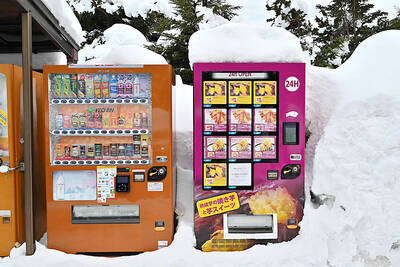
From post offices and parks to stations and even the summit of Mount Fuji, Japan’s vending machines are ubiquitous, but with the rapid pace of inflation cooling demand for their drinks, operators are being forced to rethink the business. Last month beverage giant DyDo Group Holdings announced it would remove about 20,000 vending machines — about 7 percent of their stock nationwide — by January next year, to “reconstruct a profitable network.” Pokka Sapporo Food & Beverage, based in Nagoya, also said last month it would sell its 40,000-machine operation to Osaka-based Lifedrink Co. “The strength of the vending machine


 RSS
RSS