


The US was to announce yesterday that it had taken apart three times as many unneeded nuclear warheads in the just-completed budget year than it had projected and expected the rapid pace of dismantlement to continue.
At the same time, a report by an independent science advisory group has concluded that "substantial work remains" before a new generation of warheads will be fit for certification without underground nuclear testing.
The findings are expected to provide congressional opponents of the warhead program with additional reasons to hold back money for the project. The administration views development of the replacement warhead as essential for keeping a secure and more easily maintained nuclear stockpile as warheads age.
The National Nuclear Security Administration, part of the Energy Department, reports a 146 percent increase in dismantled nuclear warheads during the 2007 budget year, which ended on Sunday. That is triple the agency's original goal.
The agency is believed to be dismantling thousands of warheads, taking out their plutonium, uranium and non-nuclear high explosive components. The agency did not say how many warheads it had taken apart, nor how many remain to be worked on because the numbers are classified.
The progress "sends a clear message to the world that this administration remains committed to reducing the number of nuclear weapons in the US nuclear stockpile," said the agency's administrator, Thomas D'Agostino.
There are believed to be nearly 6,000 warheads that either are deployed or in active reserve.
Under the 2002 treaty with Russia, the US is committed to reducing the number of deployed warheads to between 1,700 and 2,200 by 2012.
Three years ago, US President George W. Bush said he wanted the overall stockpile reduced to half of what it was in the 1950s, or to a level of about one-quarter of its size at the end of the Cold War.
The group of scientists who regularly advise the government on nuclear weapons matters has told Congress that the proposed replacement warhead will require further development and experiments to assure against possible failure, absent actual underground testing.
"Substantial work remains on the physical understanding" of the mechanisms involved to assure the warhead will perform reliably, according to a report to Congress on Friday.
Officials at the nuclear agency said they were gratified that the report supported the idea that the replacement warhead can be developed without actually detonating a device in an underground test. That has been an important criteria for moving forward with the program if Congress provides money.
D'Agostino says the warhead is necessary to make the nuclear arsenal more secure, safer and reliable in the future.
Last May, the agency chose a research effort at Lawrence Livermore National Laboratory in California for the replacement warhead.
The administration hopes to develop a clearer timetable and cost estimate for the project in the next year, but some members of Congress have been skeptical about the program.
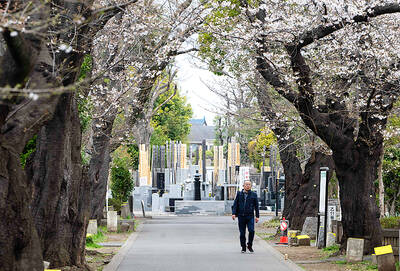
ROCKY RELATIONS: The figures on residents come as Chinese tourist numbers drop following Beijing’s warnings to avoid traveling to Japan The number of Chinese residents in Japan has continued to rise, even as ties between the two countries have become increasingly fractious, data released on Friday showed. As of the end of December last year, the number of Chinese residents had increased by 6.5 percent from the previous year to 930,428. Chinese people accounted for 22.6 percent of all foreign residents in Japan, making them by far the largest group, Japanese Ministry of Justice data showed. Beijing has criticized Tokyo in increasingly strident terms since Japanese Prime Minister Sanae Takaichi last year suggested that a military conflict around Taiwan could
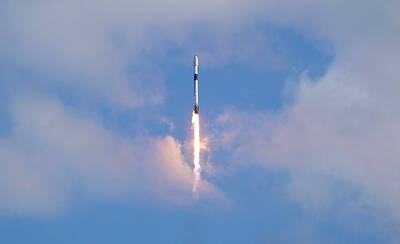
A retired US colonel behind a privately financed rocket launch site in the Dominican Republic sees the project as a response to China’s dominance of the space race in Latin America. Florida-based Launch on Demand is slated to begin building a US$600 million facility in a remote region near the border with Haiti late this year. The project is designed to meet surging demand for the heavy-lift rockets needed to put clusters of satellites into orbit. It is also an answer to China’s growing presence in the region, said CEO Burton Catledge, a former commander of the US Air Force’s 45th Operations
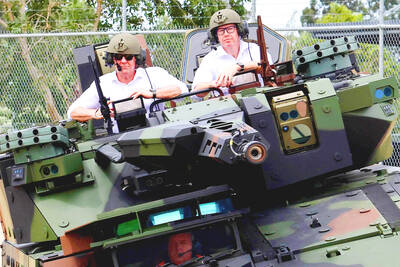
Germany is considering Australia’s Ghost Bat robot fighter as it looks to select a combat drone to modernize its air force, German Minister of Defense Boris Pistorius said yesterday. Germany has said it wants to field hundreds of uncrewed fighter jets by 2029, and would make a decision soon as it considers a range of German, European and US projects developing so-called “collaborative combat aircraft.” Australia has said it will integrate the Ghost Bat, jointly developed by Boeing Australia and the Royal Australian Air Force, into its military after a successful weapons test last year. After inspecting the Ghost Bat in Queensland yesterday,
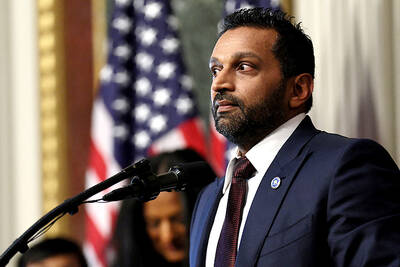
A pro-Iran hacking group claimed to breach FBI Director Kash Patel’s personal e-mail inbox and posted some of the contents online. The e-mails provided by the hacking group include travel details, correspondence with leasing agents in Washington and global entry, and loyalty account numbers. The e-mail address the hackers claim to have compromised has been previously tied to Patel’s personal details, and the leaked e-mails contain photos of Patel and others, in addition to correspondence with family members and colleagues. “The FBI is aware of malicious actors targeting Director Patel’s personal email information,” the agency said in a statement on


 RSS
RSS