


Representatives of 190 countries were to meet in Montreal yesterday for talks aimed at the twin goal of combating global warming and restoring the ozone layer.
The talks come as part of a UN-sponsored conference marking the 20th anniversary of signing of the Montreal Protocol, an international treaty seeking to end production of chemical compounds that contribute to ozone depletion.
Signatories of the Montreal Protocol, which cut emissions of chemicals harmful to Earth's ozone layer, hope to find a way to eliminate the hydrochlorofluorocarbons (HCFCs) that opened a hole in the Antarctic ozone layer.
The UN sponsor of the talks says repair of the ozone layer will also help with the warming of Earth's atmosphere, which has potentially disastrous effects on Earth's weather, sea levels, flora and fauna in coming years.
The US and Europe were expected to call for an accelerated timetable for banning ozone-depleting chemicals, European officials said.
"For the European Union, the schedule for eliminating HCFCs must be pushed up by 10 years -- that will be the benchmark for deciding if the negotiations are successful," said French Environment Minister Nathalie Kosciusko-Morizet ahead of the meeting.
The 1987 Montreal Protocol is one of the most successful international responses to a global problem, according to former UN secretary-general Kofi Annan.
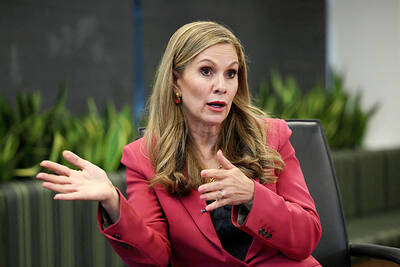
Australians were downloading virtual private networks (VPNs) in droves, while one of the world’s largest porn distributors said it was blocking users from its platforms as the country yesterday rolled out sweeping online age restriction. Australia in December became the first country to impose a nationwide ban on teenagers using social media. A separate law now requires artificial intelligence (AI)-powered chatbot services to keep certain content — including pornography, extreme violence and self-harm and eating disorder material — from minors or face fines of up to A$49.5 million (US$34.6 million). The country also joined Britain, France and dozens of US states requiring
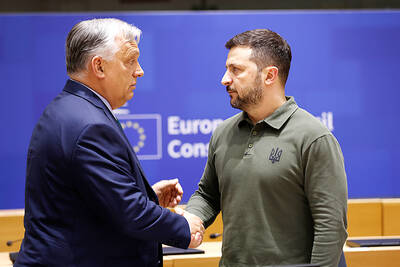
Hungarian authorities temporarily detained seven Ukrainian citizens and seized two armored cars carrying tens of millions of euros in cash across Hungary on suspicion of money laundering, officials said on Friday. The Ukrainians were released on Friday, following their detention on Thursday, but Hungarian officials held onto the cash, prompting Ukraine to accuse Hungary’s Russia-friendly government of illegally seizing the money. “We will not tolerate this state banditism,” Ukrainian Minister of Foreign Affairs Andrii Sybiha said. The seven detained Ukrainians were employees of the Ukrainian state-owned Oschadbank, who were traveling in the two armored cars that were carrying the money between Austria and
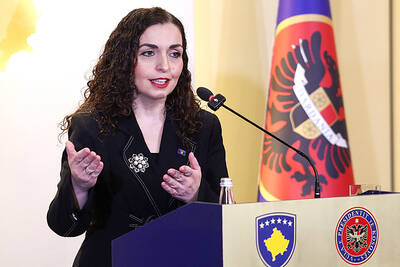
Kosovar President Vjosa Osmani on Friday after dissolving the Kosovar parliament said a snap election should be held as soon as possible to avoid another prolonged political crisis in the Balkan country at a time of global turmoil. Osmani said it is important for Kosovo to wrap up the upcoming election process and form functional institutions for political stability as the war rages in the Middle East. “Precisely because the geopolitical situation is that complex, it is important to finish this electoral process which is coming up,” she said. “It is very hard now to imagine what will happen next.” Kosovo, which declared

MORE BANS: Australia last year required sites to remove accounts held by under-16s, with a few countries pushing for similar action at an EU level and India considering its own ban Indonesia on Friday said it would ban social media access for children under 16, citing threats from online pornography, cyberbullying, online fraud and Internet addiction. “Accounts belonging to children under 16 on high-risk platforms will start to be deactivated, beginning with YouTube, TikTok, Facebook, Instagram, Threads, X, Bigo Live and Roblox,” Indonesian Minister of Communications and Digital Meutya Hafid said. “The government is stepping in so that parents no longer have to fight alone against the giants of the algorithm. Implementation will begin on March 28, 2026,” she said. The social media ban would be introduced in stages “until all platforms fulfill their


 RSS
RSS