


Lebanese soldiers fanned out along the Mediterranean coastline in northern Lebanon yesterday, hunting for fugitives a day after the army crushed the remnants of a militant group and ended a three-month siege at a Palestinian refugee camp.
The army searched buildings and bushes for Fatah Islam fighters who may have escaped Sunday's battle at the Nahr el-Bared camp. Patrol boats were out looking for bodies in the sea.
The camp remained off limits to its Palestinian civilian population which had fled in the early days of the fighting that erupted May 20.
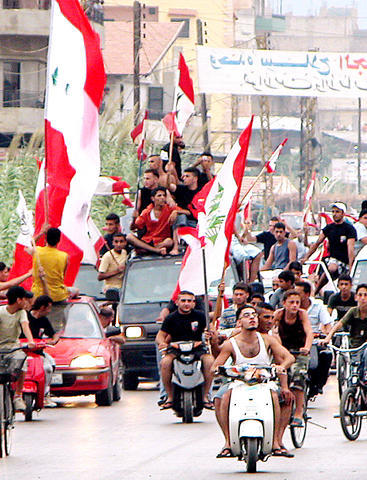
PHOTO: AFP
Inside the camp, military sappers were combing devastated neighborhoods, looking for booby traps, unexploded shells and mines. Investigators, meanwhile, were questioning captured militants.
The search followed Sunday's final battle between the army and al-Qaeda-inspired Fatah Islam militants that left 39 of them and three soldiers dead, as the militants attempted a dawn breakout from Nahr el-Bared.
Some of the militants tried to sneak out through a tunnel, while another group tried to escape through a different path. Outside fighters arrived to help them, said security officials.
The Army quickly deployed reinforcements to the camp, just outside the port city of Tripoli, blocked surrounding roads and set fires to nearby fields to deny fleeing militants a hiding place. Helicopters provided aerial reconnaissance for the military inside the camp, and checkpoints were erected as far as Beirut and southern Lebanon.
Villagers of nearby settlements, armed with guns and sticks, also came out to help the army and protect their houses, the state TV reported.
By the end of the day, the camp was in Lebanese army control and authorities declared victory over Fatah Islam.
Officials said the army killed 39 militants and captured 20. It was not known how many militants managed to escape.
The army said three soldiers were killed in Sunday's fighting and two on Saturday, raising to 158 the number of troops who have died in the conflict -- Lebanon's worst internal fighting since the civil war, which raged from 1975 to 1990.
More than 20 civilians and more than 60 militants have also been killed.
Lebanese Prime Minister Fuad Siniora declared victory on Sunday "over the terrorists in Nahr el-Bared," saying in a televised speech to the country this was "an hour of pride, victory and joy."
At the news of the militants' collapse, celebratory gunfire erupted in villages. Townspeople and troops celebrated in the streets, waving Lebanese flags and flashing victory signs into the night. Other regions celebrated with fireworks, drumming and dancing.
Yesterday, authorities worked on identifying the bodies -- particularly one purported to being that of Fatah Islam's leader, Shaker al-Absi. The militant's wife was sent for to identify him, while a DNA test was being conducted to compare it with family members.
Al-Absi, a Palestinian linked to the late leader of al-Qaeda in Iraq, Abu Musab al-Zarqawi, has not been seen or heard from since early in the fighting.
Fatah Islam had set up its headquarters at the Nahr el-Bared last fall. Some officials say the group is a branch of al-Qaeda that wants to make Lebanon and the Palestinian refugee camps there a safe haven. The US State Department has called the group an offshoot of a Syrian-backed militia, Fatah al-Intifada.
Nahr el-Bared's siege began in late May, when police raided militants' hideouts in Tripoli. Fighters ambushed army troops called in to help, after which the army laid siege to the camp with tanks and artillery.
Families of the militants -- women and children -- were evacuated late last month, the last civilians to leave the camp. Before Sunday, Lebanese officials had said up to 70 militants remained in the bombed-out camp -- down from an estimated 360 fighters when the fighting erupted.
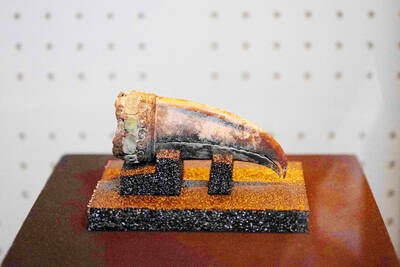
Archeologists in Peru on Thursday said they found the 5,000-year-old remains of a noblewoman at the sacred city of Caral, revealing the important role played by women in the oldest center of civilization in the Americas. “What has been discovered corresponds to a woman who apparently had elevated status, an elite woman,” archeologist David Palomino said. The mummy was found in Aspero, a sacred site within the city of Caral that was a garbage dump for more than 30 years until becoming an archeological site in the 1990s. Palomino said the carefully preserved remains, dating to 3,000BC, contained skin, part of the
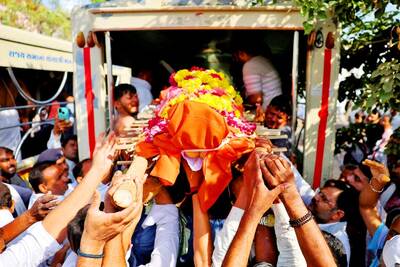
‘WATER WARFARE’: A Pakistani official called India’s suspension of a 65-year-old treaty on the sharing of waters from the Indus River ‘a cowardly, illegal move’ Pakistan yesterday canceled visas for Indian nationals, closed its airspace for all Indian-owned or operated airlines, and suspended all trade with India, including to and from any third country. The retaliatory measures follow India’s decision to suspend visas for Pakistani nationals in the aftermath of a deadly attack by shooters in Kashmir that killed 26 people, mostly tourists. The rare attack on civilians shocked and outraged India and prompted calls for action against their country’s archenemy, Pakistan. New Delhi did not publicly produce evidence connecting the attack to its neighbor, but said it had “cross-border” links to Pakistan. Pakistan denied any connection to

TRUMP EFFECT: The win capped one of the most dramatic turnarounds in Canadian political history after the Conservatives had led the Liberals by more than 20 points Canadian Prime Minister Mark Carney yesterday pledged to win US President Donald Trump’s trade war after winning Canada’s election and leading his Liberal Party to another term in power. Following a campaign dominated by Trump’s tariffs and annexation threats, Carney promised to chart “a new path forward” in a world “fundamentally changed” by a US that is newly hostile to free trade. “We are over the shock of the American betrayal, but we should never forget the lessons,” said Carney, who led the central banks of Canada and the UK before entering politics earlier this year. “We will win this trade war and
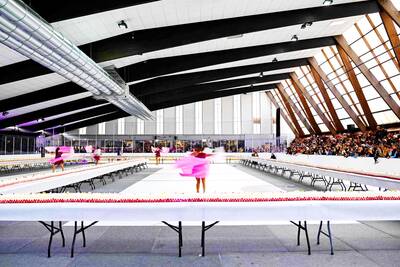
Armed with 4,000 eggs and a truckload of sugar and cream, French pastry chefs on Wednesday completed a 121.8m-long strawberry cake that they have claimed is the world’s longest ever made. Youssef El Gatou brought together 20 chefs to make the 1.2 tonne masterpiece that took a week to complete and was set out on tables in an ice rink in the Paris suburb town of Argenteuil for residents to inspect. The effort overtook a 100.48m-long strawberry cake made in the Italian town of San Mauro Torinese in 2019. El Gatou’s cake also used 350kg of strawberries, 150kg of sugar and 415kg of


 RSS
RSS