

Nearly every Australian city will have to find new water supplies over the next decade as climate change and population growth stretch the nation's already limited water resources, according to a study released yesterday.
The annual report by the Water Services Association of Australia found that after a decade of punishing drought, authorities in all of Australia's mainland capital cities will need to find new ways to provide water for residents, such as desalination and recycling, in the next five to 10 years. Hobart, the capital of the island state of Tasmania, is the exception and is expected to have sufficient water.
The association's chief executive, Ross Young, said the new infrastructure could cost up to A$30 billion (US$25 billion) over the next decade, which would likely be paid for by higher charges to consumers.
"The 10 years of below average rainfall and drought have been a wake-up call for urban Australia," Young said. "This will send a stronger price signal to consumers about conserving what is a very scarce resource."
In its report to urban water utilities, the association said water prices will rise steadily in cities to pay for new infrastructure in the driest continent in the world after Antarctica.
"Climate change, which is reducing inflows into storages, and rapid population growth present significant challenges to the Australian urban water industry," the report said.
"Experience over the last several summers indicates that ongoing harsh water restrictions will not be accepted by the community and the challenge is to develop reliable supplies of water for our growing cities in a sustainable manner," it added.
The report found that in the fiscal year that ended in June, rainfall in catchments serving towns and cities fell by as much as 80 percent below average.
The west coast city of Perth has become the first in Australia to build a large-scale desalination plant while recycled water will be piped into homes in the east coast city of Brisbane next year.

Beijing yesterday dismissed as “groundless speculation” a report that said Nvidia CEO Jensen Huang (黃仁勳) was the target of a Chinese spy plot. The article by the New York Times, published on Thursday, said that US intelligence officials concluded that a Chinese executive linked to a Singapore-based data center company had been funneling information to Beijing. “The report in question is based on groundless speculation and is nothing more than an attempt to smear China,” Chinese Ministry of Foreign Affairs spokesman Guo Jiakun (郭嘉昆) told a regular briefing. China is in a race for tech dominance with the US, which restricts the export
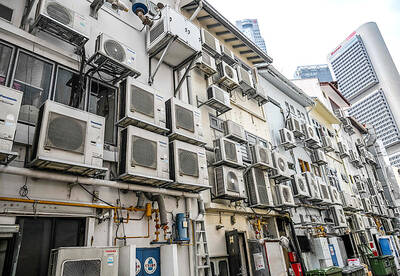
Long dubbed an “air-conditioned nation,” Singapore is experimenting with cooling alternatives from chilled beams to “passive displacement” to curb its thirst for energy-guzzling air-conditioning. The city-state has the highest per-capita air-conditioner ownership rate in Southeast Asia, with about 99 percent of private residences equipped with cooling units. Singapore’s local building sector accounts for one-fifth of its emissions, while cooling itself accounts for 40 to 60 percent of a building’s energy consumption, according to studies. A stroll down Orchard Road highlights that dependence. Shoppers are greeted by blasts of cool air that waft into the street as doors swing open — a major draw
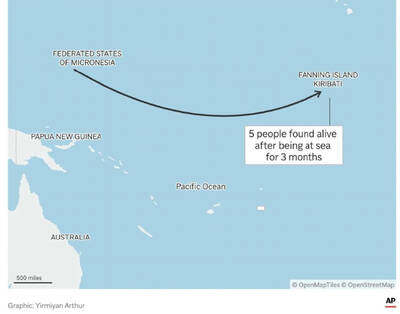
KIRIBATI: Nine people on a skiff had been reported missing after they failed to return to Ruo Island in Micronesia on July 30. Four people remained missing Five people, including two children, were rescued this week in the South Pacific island nation of Kiribati after three months drifting at sea in a 20-foot (6m) skiff, authorities said. Another four remained missing. Villagers rescued the group on Sunday off Fanning Island in Kiribati, the Australian Broadcasting Corp (ABC) reported, after they had drifted an estimated 5,400km east from the Federated States of Micronesia. The US Coast Guard in Guam yesterday confirmed that the skiff with nine people aboard had been reported missing after it failed to return to Ruo Island in Micronesia on July 30. 10-DAY SEARCH A 10-day search covering

33 MISSING: The unprecedented number of empty seats at the fifth plenum, an annual gathering of top officials, serve as a symbol of the extent of the purges under Xi Jinping China expelled a record number of officials from the Chinese Communist party (CCP) as it concluded a major political gathering, which saw an unprecedented number of empty seats indicating the scale of the purges under Chinese President Xi Jinping (習近平). A record 33 members were expelled at this week’s fifth plenum, a gathering of top officials that takes place roughly once a year. Just 279 of the full and alternate members of the CCP’s Central Committee attended this week’s gathering, compared with the 376 originally named as members in 2022. That means that more than 25 percent of the original cohort were


 RSS