


A new analysis of the dental fossils of human ancestors suggests that Asian populations played a larger role than Africans in colonizing Europe millions of years ago, a study released on Monday said.
The findings challenge the prevailing "out of Africa" theory, which holds that anatomically modern man first arose from one point in Africa and fanned out to conquer the globe.
The study also bolsters the notion that Homo sapiens evolved from different populations in different parts of the globe.
The "out of Africa" scenario has been underpinned since 1987 by genetic studies based mainly on the rate of mutations in mitochondrial DNA, a cell material that is inherited from the maternal line of ancestry.
But for this study, European researchers opted to study the tooth fossil record of modern man's ancestors because of their high component of genetic expression.
The investigators examined the shapes of more than 5,000 teeth from human ancestors from Africa, Asia and Europe dating back millions of years.
Asian features
They found that European teeth had more Asian features than African ones.
They also noted the continuity of the Eurasian dental pattern from the Early Pleistocene until the appearance of Upper Pleistocene Neanderthals suggests the evolutionary courses of the Eurasian and African continents were independent for a long period.
`Complex puzzle'
"The history of human populations in Eurasia may not have been the result of a few high-impact replacement waves of dispersals from Africa, but a much more complex puzzle of dispersals and contacts among populations within and outside continents," the researchers wrote.
"In the light of these results, we propose that Asia has played an important role in the colonization of Europe, and that future studies on this issue are obliged to pay serious attention to the `unknown' continent."
The paper was written by researchers at Spain's national center for research into human evolution in Burgos and appears in the journal Proceedings of the National Academy of Sciences.

An American scientist convicted of lying to US authorities about payments from China while he was at Harvard University has rebuilt his research lab in Shenzhen, China, to pursue technology the Chinese government has identified as a national priority: embedding electronics into the human brain. Charles Lieber, 67, is among the world’s leading researchers in brain-computer interfaces. The technology has shown promise in treating conditions such as amyotrophic lateral sclerosis and restoring movement in paralyzed people. It also has potential military applications: Scientists at the Chinese People’s Liberation Army have investigated brain interfaces as a way to engineer super soldiers by boosting
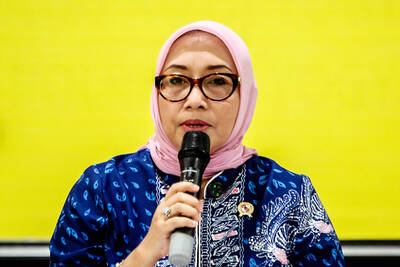
Indonesian police have arrested 13 people after shocking images of alleged abuse against small children at a daycare center went viral, sparking outrage across the nation, officials said on Monday. Police on Friday last week raided Little Aresha, a daycare center in Yogyakarta on Java island, following a report from a former employee. CCTV footage circulating on social media showed children, most younger than two, lying on the floor wearing only diapers, their hands and feet bound with rags. The police have confirmed that the footage is authentic. Police said they also found 20 children crammed into a room just 3m by 3m. “So

About 240 Indians claiming descent from a Biblical tribe landed at Tel Aviv airport on Thursday as part of a government operation to relocate them to Israel. The newcomers passed under a balloon arch in blue and white, the colors of the Israeli flag, as dozens of well-wishers welcomed them with a traditional Jewish song. They were the first “bnei Menashe” (“sons of Manasseh”) to arrive in Israel since the government in November last year announced funding for the immigration of about 6,000 members of the community from the states of Manipur and Mizoram in northeast India. The community claims to descend from
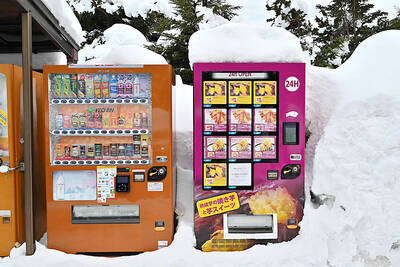
From post offices and parks to stations and even the summit of Mount Fuji, Japan’s vending machines are ubiquitous, but with the rapid pace of inflation cooling demand for their drinks, operators are being forced to rethink the business. Last month beverage giant DyDo Group Holdings announced it would remove about 20,000 vending machines — about 7 percent of their stock nationwide — by January next year, to “reconstruct a profitable network.” Pokka Sapporo Food & Beverage, based in Nagoya, also said last month it would sell its 40,000-machine operation to Osaka-based Lifedrink Co. “The strength of the vending machine


 RSS
RSS