


Planes resumed landing and taking off at the main runway of Congonhas, Brazil's busiest airport, 10 days after a TAM airlines jet crashed there and killed 199 people in the country's worst aviation disaster.
A TAM plane was the first to touch down on the 1,939m main runway on Friday, but the airline has imposed restrictions since the crash and says it will not use Congonhas Airport when it is raining.
Traffic at Congonhas had been restricted to a 1,436m backup since the crash, while investigators tried to determine if the main runway's condition played a role in the accident. Both runways are relatively short by modern standards.
TAM Flight 3054, an Airbus A320, landed in driving rain on July 17 and sped down the runway before crashing into a gas station and an air cargo building at 175kph.
The accident created more chaos in Brazil's already-troubled air travel industry, led to the ouster of the defense minister and prompted a safety advisory from Airbus, though authorities have not yet publicized what they have learned from the plane's data recorders.
Airbus spokeswoman Barbara Kracht would not specify the nature of the information from the data recorder and said on Thursday that the advisory did not imply any conclusion about the causes of the crash. She said the notification to airlines stressed the need for pilots to follow proper landing procedures.
A pilot for a major international airline with a fleet of A320s said on Friday that his company had reminded pilots to pull the thrust lever to idle during the landing flare.
Leaving the throttles even slightly open on the A320 prevents speed-cutting spoilers and the auto-braking system from activating, said the pilot, who declined to be identified because of the airline's policy.
Earlier speculation about factors in the crash have focused on a slick, short runway and a deactivated reverse thruster on the plane. TAM Linhas Aereas SA has said the thruster was turned off in keeping with proper maintenance regulations.
Over the weekend, Brazilian investigators will examine the information from the flight's data recorder and listen to a cockpit recording.
Brigadier General Jorge Kersul, who is heading the probe into the crash, said investigators would use the flight recorder data to evaluate whether the plane's throttle was in the wrong position just before it landed.
Globo TV reported that it obtained a transcript of the conversation between pilots and controllers just before the crash, and that controllers warned the pilots the runway was slick just before the jet touched down.
Someone said "turn, turn, turn" at some point in the conversation recorded in the cockpit, but Globo said it was not clear who said those words or when.
Kersul told reporters he could not confirm the report because he had not heard the recording.
New Defense Minister Nelson Jobim, appointed two days earlier by President Luiz Inacio Lula da Silva, visited the crash site on on Friday.
Jobim says he will consider restructuring Brazil's two primary aviation authorities, amid criticism they failed to improve air infrastructure to keep up with a sharp increase in flights.
He said officials are working on a plan to divert 7 million of the 18 million passengers who fly through Congonhas each year to the international airport and Viracopos, a little-used airport with a long runway about 100km from Sao Paulo.
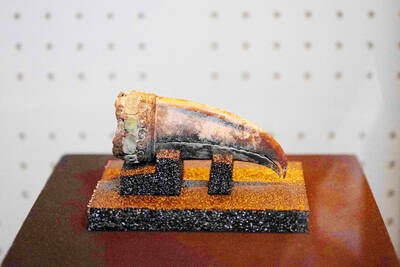
Archeologists in Peru on Thursday said they found the 5,000-year-old remains of a noblewoman at the sacred city of Caral, revealing the important role played by women in the oldest center of civilization in the Americas. “What has been discovered corresponds to a woman who apparently had elevated status, an elite woman,” archeologist David Palomino said. The mummy was found in Aspero, a sacred site within the city of Caral that was a garbage dump for more than 30 years until becoming an archeological site in the 1990s. Palomino said the carefully preserved remains, dating to 3,000BC, contained skin, part of the
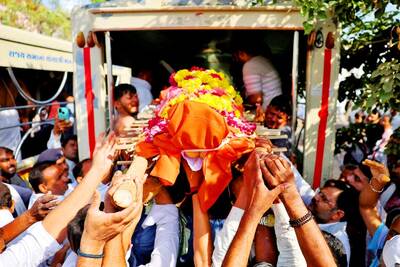
‘WATER WARFARE’: A Pakistani official called India’s suspension of a 65-year-old treaty on the sharing of waters from the Indus River ‘a cowardly, illegal move’ Pakistan yesterday canceled visas for Indian nationals, closed its airspace for all Indian-owned or operated airlines, and suspended all trade with India, including to and from any third country. The retaliatory measures follow India’s decision to suspend visas for Pakistani nationals in the aftermath of a deadly attack by shooters in Kashmir that killed 26 people, mostly tourists. The rare attack on civilians shocked and outraged India and prompted calls for action against their country’s archenemy, Pakistan. New Delhi did not publicly produce evidence connecting the attack to its neighbor, but said it had “cross-border” links to Pakistan. Pakistan denied any connection to

TRUMP EFFECT: The win capped one of the most dramatic turnarounds in Canadian political history after the Conservatives had led the Liberals by more than 20 points Canadian Prime Minister Mark Carney yesterday pledged to win US President Donald Trump’s trade war after winning Canada’s election and leading his Liberal Party to another term in power. Following a campaign dominated by Trump’s tariffs and annexation threats, Carney promised to chart “a new path forward” in a world “fundamentally changed” by a US that is newly hostile to free trade. “We are over the shock of the American betrayal, but we should never forget the lessons,” said Carney, who led the central banks of Canada and the UK before entering politics earlier this year. “We will win this trade war and

Armed with 4,000 eggs and a truckload of sugar and cream, French pastry chefs on Wednesday completed a 121.8m-long strawberry cake that they have claimed is the world’s longest ever made. Youssef El Gatou brought together 20 chefs to make the 1.2 tonne masterpiece that took a week to complete and was set out on tables in an ice rink in the Paris suburb town of Argenteuil for residents to inspect. The effort overtook a 100.48m-long strawberry cake made in the Italian town of San Mauro Torinese in 2019. El Gatou’s cake also used 350kg of strawberries, 150kg of sugar and 415kg of


 RSS
RSS