


Al-Qaeda in Iraq already has its hands full, but US intelligence officials say the militant group's mentors in Pakistan now want to use its formidable resources for attacks on the US.
The war in Iraq has transformed the al-Qaeda affiliate into a battle-hardened organization with piles of money, sophisticated recruiting networks and some of the world's most experienced and innovative bomb makers, officials and analysts say.
A US intelligence estimate released this week said al-Qaeda "core," the parent organization led by Osama bin Laden, "will seek to leverage" those capabilities for attacks on the US.
It offered no evidence that al-Qaeda in Iraq (AQI) is actively involved in such plots, however, and intelligence and military officials say most of its resources are currently tied down in Iraq.
But Ted Gistaro, the assessment's author, told reporters this week that al-Qaeda typically tries to tap into its affiliates' networks, recruitment pool and financial resources.
"Certainly when it comes to finances, we've seen al-Qaeda pull benefit from the relationship with AQI," he said. "And the concern is: what other parts of AQI might al-Qaeda core try to leverage or siphon off to bolster its own capabilities?"
Analyst say the concern raised in the assessment is new, and may reflect undisclosed intelligence of messages from al-Qaeda core urging AQI to carry out operations in Europe or the US.
In late April, the Pentagon revealed it had captured a senior al-Qaeda operative, Abd al Hadi al-Iraqi, as he was trying to reach Iraq to manage al-Qaeda operations and possibly plot attacks in the West.
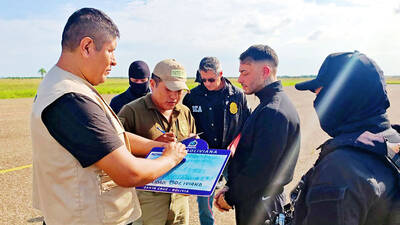
KINGPIN: Marset allegedly laundered the proceeds of his drug enterprise by purchasing and sponsoring professional soccer teams and even put himself in the starting lineups Notorious Latin American narco trafficker Sebastian Marset, who eluded police for years, was handed over to US authorities after his arrest on Friday in Bolivia. Marset, a Uruguayan national who was on the US most-wanted list, was passed to agents of the US Drug Enforcement Administration at Santa Cruz airport in Bolivia, then put on a US airplane, Bolivian state television showed. “The arrest and deportation were carried out pursuant to a court order issued by the US justice system,” Bolivian Minister of Government Marco Antonio Oviedo told reporters. The alleged kingpin was arrested in an upscale neighborhood of Santa
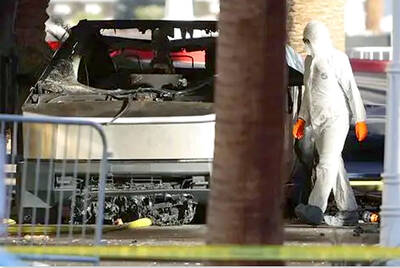
ACTIONABLE ADVICE: The majority of chatbots tested provided guidance on weapons, tactics and target selections, with Perplexity and Meta AI deemed to be the least safe From school shootings to synagogue bombings, leading artificial intelligence (AI) chatbots helped researchers plot violent attacks, according to a study published on Wednesday that highlighted the technology’s potential for real-world harm. Researchers from the nonprofit watchdog Center for Countering Digital Hate and CNN posed as 13-year-old boys in the US and Ireland to test 10 chatbots, including ChatGPT, Google Gemini, Perplexity, Deepseek and Meta AI. Eight of the chatbots assisted the make-believe attackers in more than half the responses, providing advice on “locations to target” and “weapons to use” in an attack, the study said. The chatbots had become a “powerful accelerant for
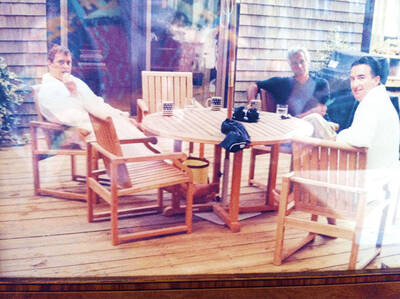
SCANDAL: Other images discovered earlier show Andrew bent over a female and lying across the laps of a number of women, while Mandelson is pictured in his underpants A photograph of former British prince Andrew and veteran politician Peter Mandelson sitting in bathrobes alongside late sex offender Jeffrey Epstein was unearthed on Friday in previously published documents. The image is believed to be the first known photograph of the two men with Epstein. They are currently engulfed in scandal in the UK over their ties to their mutual friend. The undated photograph, first reported by ITV News, shows King Charles III’s disgraced brother and former British ambassador to the US sitting barefoot outside on a wooden deck. They appear to have mugs with a US flag on them
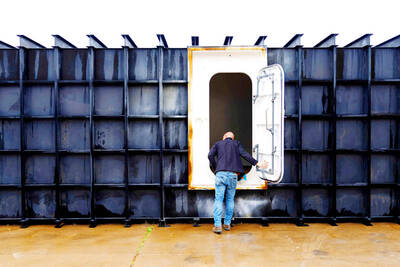
Since the war in the Middle East began nearly two weeks ago, the telephone at Ron Hubbard’s bomb shelter company in Texas has not stopped ringing. Foreign and US clients are rushing to buy his bunkers, seeking refuge in case of air raids, nuclear fallout or apocalypse. With the US and Israel pounding Iran, and Tehran retaliating with strikes across the region, Hubbard has seen demand for his product soar, mostly from Gulf nation customers in Bahrain, Qatar, Kuwait and the United Arab Emirates. “You can imagine how many people are thinking: ‘I wish I had a bomb shelter,’” Hubbard, 63, said in


 RSS
RSS