


Terror suspect Mohamed Haneef told Australian police he knew nothing about the plot to launch attacks in London and Scotland, and freely admitted he knew two suspects being detained in Britain, leaked interview documents have shown.
Australian Federal Police Commissioner Mick Keelty said the leaking of the interview, which was published in yesterday's Australian newspaper, could jeopardize Haneef's trial and was being investigated as possible contempt of court.
The publication came amid intense debate about whether Haneef, an Indian doctor who came to Australia from Britain last year, is being treated fairly by police and the Australian government.
Haneef, 27, was arrested as he tried to leave Australia for India with a one-way ticket on July 2, two days after two men drove a flaming Jeep loaded with gas canisters into the international airport in Glasgow, Scotland.
Unexploded car bombs had been found in London the day before.
Haneef was charged on Saturday with giving support to a terrorist organization for leaving his mobile phone SIM card with two distant cousins, one of whom was in the Glasgow Jeep. The SIM card was also found in the burned-out vehicle, police say.
A magistrate this week granted Haneef conditional bail, saying the prosecution's evidence was not strong enough to keep him in jail. Within hours, the federal government revoked Haneef's visa and said he would be taken into immigration custody if he made bail.
Haneef's lawyers were due to lodge an appeal of the visa decision yesterday.
The Australian posted on the Internet what appeared to be the official transcript of a July 3 police interview with Haneef. Condemning the leak on national radio, Keelty did not challenge the authenticity of the document.
In the interview, Haneef was asked what he knew of the attempted London bombing and said he didn't know anything about it.
Pressed further, he replied: "I gather about Glasgow thing and there was some plot in London. But I don't know, I have not any relation with that at all.''
Separately, he told his interviewers he gave Sabeel Ahmed his mobile phone last year before he left for Australia because it had some unused credit. He also said he borrowed up to ?300 (US$615) from Kafeel Ahmed in 2004 to pay for a medical exam.
Kafeel Ahmed is believed to have set himself ablaze after crashing into the Glasgow airport and remains in a Scottish hospital with critical burns. Sabeel, his brother, has been charged with withholding information that could prevent an act of terrorism.
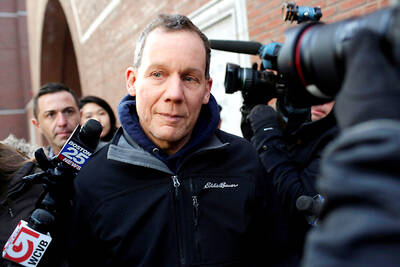
An American scientist convicted of lying to US authorities about payments from China while he was at Harvard University has rebuilt his research lab in Shenzhen, China, to pursue technology the Chinese government has identified as a national priority: embedding electronics into the human brain. Charles Lieber, 67, is among the world’s leading researchers in brain-computer interfaces. The technology has shown promise in treating conditions such as amyotrophic lateral sclerosis and restoring movement in paralyzed people. It also has potential military applications: Scientists at the Chinese People’s Liberation Army have investigated brain interfaces as a way to engineer super soldiers by boosting
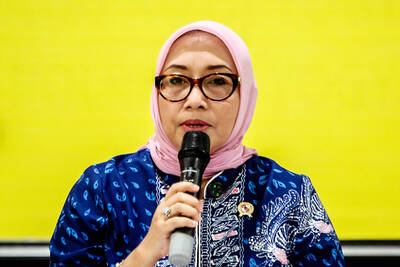
Indonesian police have arrested 13 people after shocking images of alleged abuse against small children at a daycare center went viral, sparking outrage across the nation, officials said on Monday. Police on Friday last week raided Little Aresha, a daycare center in Yogyakarta on Java island, following a report from a former employee. CCTV footage circulating on social media showed children, most younger than two, lying on the floor wearing only diapers, their hands and feet bound with rags. The police have confirmed that the footage is authentic. Police said they also found 20 children crammed into a room just 3m by 3m. “So
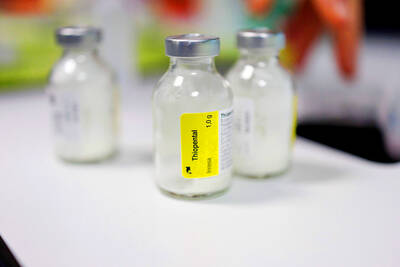
A grieving mother has ended her life at a clinic in Switzerland four years after the death of her only child. Wendy Duffy, 56, a physically healthy woman, died at the Pegasos clinic in Basel after struggling to cope with the death of her 23-year-old son, Marcus. The former care worker, from the West Midlands, England, had previously attempted to take her own life. The case comes as assisted dying would not become law in England and Wales after proposed legislation, branded “hopelessly flawed” by opponents, ran out of time. Ruedi Habegger, the founder of Pegasos, described Duffy’s death as
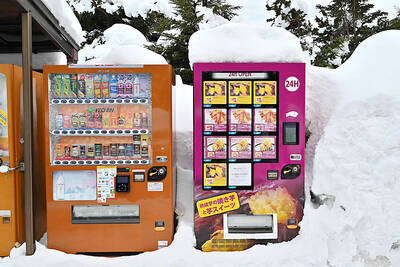
From post offices and parks to stations and even the summit of Mount Fuji, Japan’s vending machines are ubiquitous, but with the rapid pace of inflation cooling demand for their drinks, operators are being forced to rethink the business. Last month beverage giant DyDo Group Holdings announced it would remove about 20,000 vending machines — about 7 percent of their stock nationwide — by January next year, to “reconstruct a profitable network.” Pokka Sapporo Food & Beverage, based in Nagoya, also said last month it would sell its 40,000-machine operation to Osaka-based Lifedrink Co. “The strength of the vending machine


 RSS
RSS