


A typical summer's day in Los Angeles: temperatures nudge the nineties, the sun blazes high in the sky, palm trees sway in the ocean breeze, and sprinklers spray a fine mist of water into the scorching air.
But if the predictions of climatologists, environmentalists, city planners and the head of the water board are correct, the sprinklers and many other of the comforts that have made southern California habitable may have to be turned off.
Experts across the city concur that the conditions are ripe in southern California for the "perfect drought". Los Angeles has recorded just 81.5mm of rain in the year ending June 30, making it the driest year on record since 1877. According to the National Drought Mitigation Center, southern California faces "extreme drought" this year, with no rain forecast before September. One climatologist referred to the temperatures in Los Angeles as "Death Valley numbers."
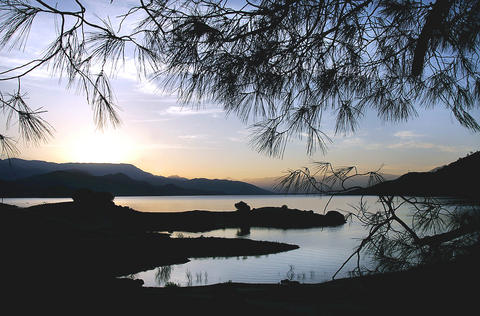
Photo: AP/The Bakersfield Californian
Sierra Nevada
The Sierra Nevada mountains, which typically provide Los Angeles with 50 percent of its water, have provided just 20 percent of their normal volume this year, and the snowpack is at its lowest for 20 years. Pumping from an aquifer in the San Fernando Valley was stopped this month because it was contaminated with chromium 6.
While the waters dry up, demand for the scarce resource increases. Not only has southern California seen a growth in its population of two-to-four times the national average in the last 50 years, but neighboring states such as Nevada and Arizona are also experiencing population booms. And they all claim water from the same source, the Colorado River.
"I call it the dry incendiary summer of 2007," said Bill Patzert, a climatologist at NASA's Jet Propulsion Laboratory in Pasadena. "Mother nature is converging with human nature. With population growth and the decline in the water there are the elements in the equation which you could call the perfect drought."
Although southern California has experienced severe drought before, this time could be different. Climate change, some argue, means that the lack of rainfall and the elevated temperatures will become the norm.
"Nature never intended to support this many people here," said David Nahai, president of the board of the city's water and power commissioners. "If we have two years like we have now then we will have to take some drastic measures. But we're not pushing the panic button."
Just what those drastic measures may entail will be familiar reading to those in more temperate climates, such as the UK. Mandatory hosepipe bans, restrictions on car washing - a twice-weekly activity for many Angelenos - planning measures to force developers to consider water use.
"It's disgusting that Los Angeles parks and golf courses are being irrigated with potable water," Nahai said. "We have to re-educate people about living here."
self-sufficiency
Melanie Winter of the Los Angeles-based River Project said that land use and 20th century flood controls - Los Angeles' storm drains channel rain water into the sea - need to be changed to make the city more self-sufficient and less dependent on water traveling hundreds of miles through pipelines and aqueducts.
"We spend US$1 billion to import water and US$500,000 to throw local [rain] water into the ocean," she said. "In 30 years we may be able to provide 65 percent of our drinking water locally rather than 15 percent."
There may, however, be an upside, Patzert said.
"The last 10 years we've had bumper grape harvests. Two buck Chuck [a local, palatable cheap plonk] is the result of global and regional heat-up," he said.

VAGUE: The criteria of the amnesty remain unclear, but it would cover political violence from 1999 to today, and those convicted of murder or drug trafficking would not qualify Venezuelan Acting President Delcy Rodriguez on Friday announced an amnesty bill that could lead to the release of hundreds of prisoners, including opposition leaders, journalists and human rights activists detained for political reasons. The measure had long been sought by the US-backed opposition. It is the latest concession Rodriguez has made since taking the reins of the country on Jan. 3 after the brazen seizure of then-Venezuelan president Nicolas Maduro. Rodriguez told a gathering of justices, magistrates, ministers, military brass and other government leaders that the ruling party-controlled Venezuelan National Assembly would take up the bill with urgency. Rodriguez also announced the shutdown
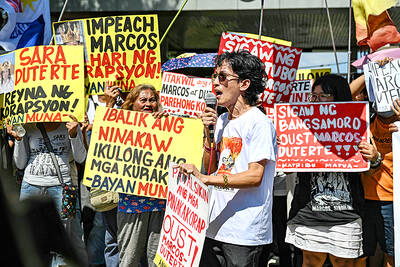
Civil society leaders and members of a left-wing coalition yesterday filed impeachment complaints against Philippine Vice President Sara Duterte, restarting a process sidelined by the Supreme Court last year. Both cases accuse Duterte of misusing public funds during her term as education secretary, while one revives allegations that she threatened to assassinate former ally Philippine President Ferdinand Marcos Jr. The filings come on the same day that a committee in the House of Representatives was to begin hearings into impeachment complaints against Marcos, accused of corruption tied to a spiraling scandal over bogus flood control projects. Under the constitution, an impeachment by the
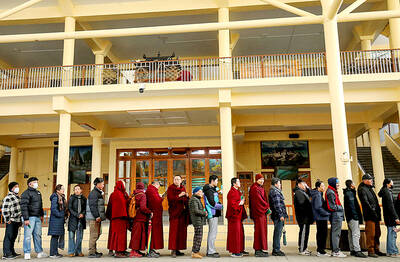
Exiled Tibetans began a unique global election yesterday for a government representing a homeland many have never seen, as part of a democratic exercise voters say carries great weight. From red-robed Buddhist monks in the snowy Himalayas, to political exiles in megacities across South Asia, to refugees in Australia, Europe and North America, voting takes place in 27 countries — but not China. “Elections ... show that the struggle for Tibet’s freedom and independence continues from generation to generation,” said candidate Gyaltsen Chokye, 33, who is based in the Indian hill-town of Dharamsala, headquarters of the government-in-exile, the Central Tibetan Administration (CTA). It

A Virginia man having an affair with the family’s Brazilian au pair on Monday was found guilty of murdering his wife and another man that prosecutors say was lured to the house as a fall guy. Brendan Banfield, a former Internal Revenue Service law enforcement officer, told police he came across Joseph Ryan attacking his wife, Christine Banfield, with a knife on the morning of Feb. 24, 2023. He shot Ryan and then Juliana Magalhaes, the au pair, shot him, too, but officials argued in court that the story was too good to be true, telling jurors that Brendan Banfield set


 RSS
RSS