


When Edith Isabel Rodriguez showed up in the emergency room of an inner-city hospital complaining of severe stomach pain, the staff were familiar with her.
It was at least her third visit to Los Angeles County's public Martin Luther King Junior-Harbor Hospital in as many days.
"You have already been seen, and there is nothing we can do," a nurse told her.
Minutes later, the 43-year-old mother of three collapsed on the floor screaming in pain and began vomiting blood. Employees ignored her, and soon she was dead.
Now state and federal regulators are threatening to close the hospital or pull its funding unless it can be improved, and Rodriguez has become a symbol of everything wrong with the facility derisively known as "Killer King."
After she collapsed, surveillance cameras show that Rodriguez was left on the floor.
Nurses walked past her. A janitor cleaned up around her. No one did anything until police were called to take her away. They did not get far before she went into cardiac arrest and died.
"This needs to stop," state Health Services Director Sandra Shewry said Thursday as the agency moved to revoke the hospital's license.
The hospital, formerly known as Martin Luther King Junior-Drew Medical Center, was built after the 1965 Watts riot to bring health care to poor, minority communities in south Los Angeles.
Autopsy results revealed that Rodriquez died of a perforated bowel that probably developed in the previous 24 hours, a condition that is often treatable if caught early enough.
After Rodriguez's death, federal reports showed that a multimillion-dollar rescue effort to correct the problem was failing and patients were in "immediate jeopardy." Of the 60 cases reviewed between February and June, more than a quarter received substandard care, according to the US Centers for Medicare and Medicaid Services.
The findings have sent county officials scrambling to improve care before a federal inspection due by Aug. 15 that could determine whether the hospital keeps its federal funding. The county might close the facility without that money.
On Friday, the county's Department of Health Services released a contingency plan to deal with the closing of hospital departments and relocating current patients if necessary.
The plan, which also lays out how the hospital could eventually be re-opened if a private partner is found, will be presented to the Board of Supervisors on Tuesday, said Bruce Chernof, director of the department.
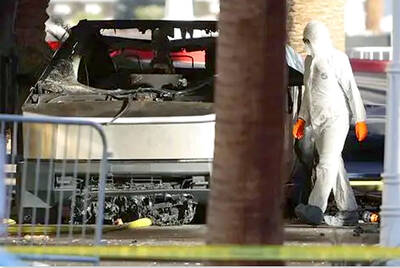
ACTIONABLE ADVICE: The majority of chatbots tested provided guidance on weapons, tactics and target selections, with Perplexity and Meta AI deemed to be the least safe From school shootings to synagogue bombings, leading artificial intelligence (AI) chatbots helped researchers plot violent attacks, according to a study published on Wednesday that highlighted the technology’s potential for real-world harm. Researchers from the nonprofit watchdog Center for Countering Digital Hate and CNN posed as 13-year-old boys in the US and Ireland to test 10 chatbots, including ChatGPT, Google Gemini, Perplexity, Deepseek and Meta AI. Eight of the chatbots assisted the make-believe attackers in more than half the responses, providing advice on “locations to target” and “weapons to use” in an attack, the study said. The chatbots had become a “powerful accelerant for
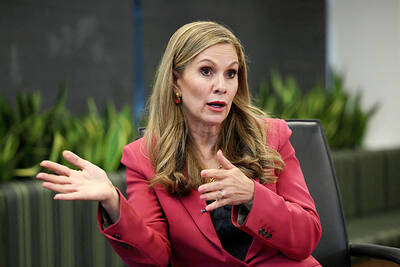
Australians were downloading virtual private networks (VPNs) in droves, while one of the world’s largest porn distributors said it was blocking users from its platforms as the country yesterday rolled out sweeping online age restriction. Australia in December became the first country to impose a nationwide ban on teenagers using social media. A separate law now requires artificial intelligence (AI)-powered chatbot services to keep certain content — including pornography, extreme violence and self-harm and eating disorder material — from minors or face fines of up to A$49.5 million (US$34.6 million). The country also joined Britain, France and dozens of US states requiring
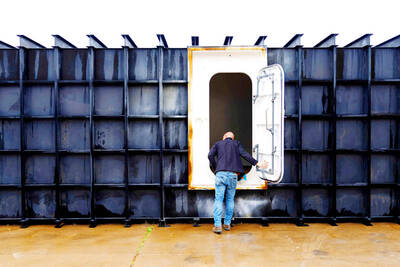
Since the war in the Middle East began nearly two weeks ago, the telephone at Ron Hubbard’s bomb shelter company in Texas has not stopped ringing. Foreign and US clients are rushing to buy his bunkers, seeking refuge in case of air raids, nuclear fallout or apocalypse. With the US and Israel pounding Iran, and Tehran retaliating with strikes across the region, Hubbard has seen demand for his product soar, mostly from Gulf nation customers in Bahrain, Qatar, Kuwait and the United Arab Emirates. “You can imagine how many people are thinking: ‘I wish I had a bomb shelter,’” Hubbard, 63, said in
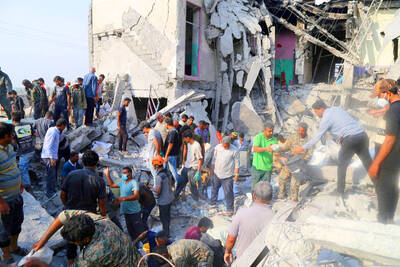
STILL IN POWER: US intelligence reports showed that the Iranian regime is not in danger of collapse and retains control of the public, casting doubt on Trump’s exit Nearly every US Senate Democrat on Wednesday signed a letter sent to US Secretary of Defense Pete Hegseth requesting a “swift investigation” of airstrikes on a girls’ school in Iran that killed scores of children and any other potential US military actions causing civilian harm. Reuters reported on Thursday last week that US military investigators believe it is likely that US forces were responsible for the Feb. 28 strike on the school, as US and Israeli forces launched attacks on Iran. “The results of this school attack are horrific. The majority of those killed in the strikes were girls between the ages


 RSS
RSS