


The trade in hundreds of children smuggled into the UK for sexual exploitation, drug smuggling, under-age marriage, street crime and domestic slavery was exposed on Monday in a British government report.
The Home Office-commissioned survey identifies 330 cases of suspected or confirmed victims of trafficking -- most of them from China or Africa -- but warns of an "unknown quantity" that have not come to the attention of the authorities.
The true scale of child trafficking is believed to be far higher.
Organized gangs, including some highly sophisticated criminal syndicates, are profiting from trafficking children as young as nine months old into the country. In the case of African victims the traffickers have been identified as white British nationals.
The report, produced by the Child Exploitation and Online Protection Center, reveals:
* Concern over the safety of trafficked children placed in the care of local authorities. Over half of those in the study have gone missing;
* Most of the victims are girls and most likely to enter the country through airports to supply the underground sex trade or to work as domestic servants;
* Physical and sexual violence is often used to control and "break in" victims, with children gang-raped, beaten and burned with cigarettes;
* Albanian, Chinese and Vietnamese trafficking gangs are the most organized and are linked to criminal networks involved in drug production, identity fraud, money laundering and the sex trade.
While most of the cases identified concern children aged between 14 and 17, there are fears that the illicit import of much younger children is going undetected.
"These children describe their previous life in terms of wars, abject and relative poverty, years of physical and sexual abuse, miscarried abortions, prison, witnessing murders, neglect and a desire to escape," the report says.

Crowds in Bangladesh are flocking to snap photographs with an unlikely social media star — an albino buffalo with flowing blond hair nicknamed “Donald Trump” that is due to be sacrificed within days. Owner Zia Uddin Mridha, 38, said his brother named the 700kg bull over its flowing helmet of hair resembling the signature look of the US president. “My younger brother picked this name because of the buffalo’s extraordinary hair,” he said at his farm in Narayanganj, just outside the capital, Dhaka. Mridha said that a constant stream of curious visitors — social media fans, onlookers and children — have come throughout
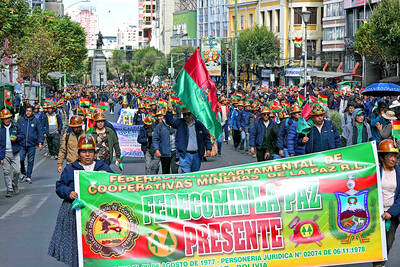
The Bolivian government on Friday struck a deal with protesting miners, but was still grappling with blockades and demonstrations by other workers across La Paz. Other groups are still blocking access roads into the city, which is also the seat of the government. Police on Thursday prevented the miners from entering the main square by using tear gas, while the demonstrators hurled stones and explosives with slingshots. Protests against the policies of Bolivian President Rodrigo Paz have convulsed the Andean nation since early this month, and roadblocks were choking routes into La Paz throughout Friday, the national road authority said. Miners demanded that Paz
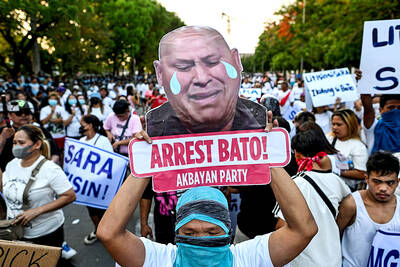
The Philippines said it has asked the country’s Supreme Court to allow it to arrest former Philippine president Rodrigo Duterte’s chief drug war enforcer to stand trial in an international tribunal. The International Criminal Court (ICC) last week unsealed an arrest warrant against Philippine Senator Ronald dela Rosa, accusing him along with Duterte and other “coperpetrators” of the “crime against humanity of murder.” Dela Rosa briefly sought refuge in the Philippine Senate last week while asking the Philippine Supreme Court to stop an ongoing attempt by government agents to arrest him. “By his own conduct, he has placed himself outside the protection of
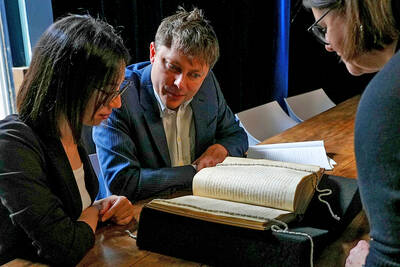
The researchers in Ireland looked at their computer screen, marveling at a medieval book tracked down in a Roman library. They flipped through its digitized pages and found their sought-after treasure: the oldest surviving English poem. “We were extremely surprised. We were speechless. We couldn’t believe our eyes when we first saw that,” said Elisabetta Magnanti, a visiting research fellow at Trinity College Dublin’s school of English. The poem was also within the main body of Latin text, she said, calling it “extraordinary.” Composed in Old English by a Northumbrian agricultural worker in the 7th century, Caedmon’s Hymn appears within some copies of


 RSS
RSS