

The Cabinet took aim at Japan's alarming suicide rate yesterday, approving measures to tackle unemployment, boost workplace counseling and filter Internet sites that promote suicide, just weeks after an agriculture minister took his own life.
The package of measures comes a day after a new police report showed the number of suicides in Japan topped 30,000 for a ninth straight year last year.
Japan's suicide rate is among the highest in the industrialized world. Suicides passed the 30,000 mark in 1998, when a long economic downturn forced massive corporate restructuring that left many people bankrupt or jobless, driving many men in their 40s and 50s to take their own lives.
This year, the country was shocked by the May 28 suicide of agriculture minister Toshikatsu Matsuoka, found hanged in his room just before he was to face questioning in parliament over government scandals.
The latest suicide prevention measures are based on a law enacted last October to bolster suicide prevention, after the sense of crisis had been heightened by the increasing incidence of group suicides arranged among strangers over the Internet.
In past years, the government took steps that were unsuccessful.
A total of 32,155 Japanese took their own lives last year, down 1.2 percent from the year before, National Police Agency statistics showed. Among them were a record total of 886 students -- the highest figure since the agency started taking statistics in 1978.
The new measures, drafted by a government-appointed panel of experts in April and approved by the Cabinet yesterday, aims to cut suicides by 20 percent by 2016 to around 25,000 a year, the Cabinet Office said in a statement.
The measures call for comprehensive efforts, including stepping up efforts to tackle unemployment and bankruptcy and early detection and treatment of depression.
The measures include mental health support services such as work counseling, a network of community psychiatrists and public campaigns to raise awareness of the problem and to reduce prejudice against mental illnesses.
They also call for more support for suicide survivors and victims' families. Students and the elderly were the two groups that had the fastest-growing suicide rates.
Most of the measures are to be funded by the government, though the Cabinet did not release figures on how much money was available.
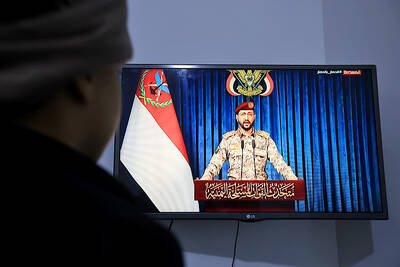
ON THE MOVE: Trump unexpectedly cut short a trip to return to the White House, while the State Department warned Americans to avoid travel to the Middle East The US on Saturday warned that hostilities between Saudi Arabia and Iran-backed Houthis could “escalate rapidly” after a missile attack targeted Riyadh for the first time since the Yemen conflict resumed. US President Donald Trump on Saturday cut short a weekend at Camp David, a secluded presidential complex in rural Maryland, to return unexpectedly to the White House. The White House gave no explanation for the early return, which comes as a new threshold was crossed in the conflict between Saudi Arabia and the Houthis, who control a large part of Yemen and are fighting government forces backed by a coalition led
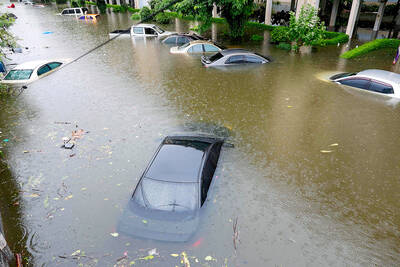
Several areas of Thailand’s capital city Bangkok were inundated by continuous rain from Thursday afternoon to yesterday morning that has disrupted traffic and forced some residents to evacuate. Major canals in Bangkok filled with accumulated rainfall exceeding 20cm, officials said yesterday. Floodwaters spread across the city, particularly in the central and eastern parts, blocking roads and stopping traffic. The Thai Meteorological Department warned that the heavy rain would continue in most parts of the country through today, citing a strong low-pressure system over the central region and strengthening southwest monsoon conditions. More than 84,000 people in 21 provinces nationwide were
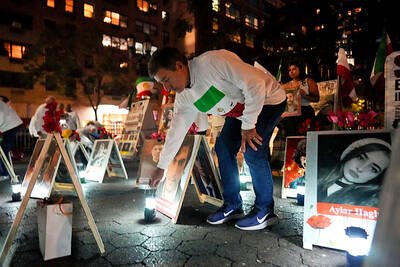
World leaders gather in New York this week for the UN General Assembly, bracing for US President Donald Trump’s return to the rostrum for a second year running, with talks centering on the widening conflicts in the Middle East and Ukraine and the risks of artificial intelligence (AI). Nearly 130 heads of state meet with the post-World War II order under strain and with the UN itself struggling to remain relevant and weathering attacks from Trump, who has slashed the US’ contributions and withdrawn from dozens of UN bodies. Chinese President Xi Jinping (習近平), who last addressed the diplomatic jamboree via video
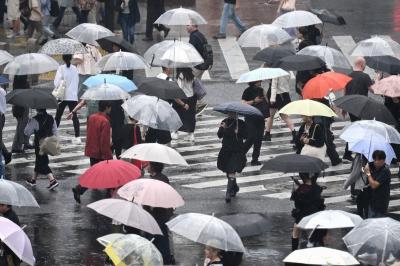
Typhoon Dujuan forced the cancellation of at least 275 flights in Japan today and prompted warnings of potentially record-breaking rainfall as the storm nears Tokyo. The typhoon, which is accompanied by high winds, has also led to the early closure in Tokyo of one the world’s biggest video game trade fairs and knocked out power for thousands. The Japan Meteorological Agency (JMA) warned yesterday that rain and winds were expected to intensify even before the typhoon’s arrival. “The total rainfall through Tuesday could exceed the average monthly rainfall for September, resulting in record-breaking heavy rain,” the agency said. The typhoon’s wind speeds were at


 RSS
RSS