


As Zimbabwe suffered a third day of chronic electricity outages on Tuesday, the state power utility increased its consumer charges by 50 percent.
The Zimbabwe Electricity Supply Authority said in a statement the charges will be reviewed every month and adjusted upward in line with the nation's rampant inflation -- 3,714 percent, the highest in the world -- in the worst economic crisis since independence in 1980 that has led to acute shortages of food, gasoline and most basic goods.
The Harare city council also increased its charges on Tuesday for virtually all its services from rentals to garbage collection by between 30 percent and 300 percent.
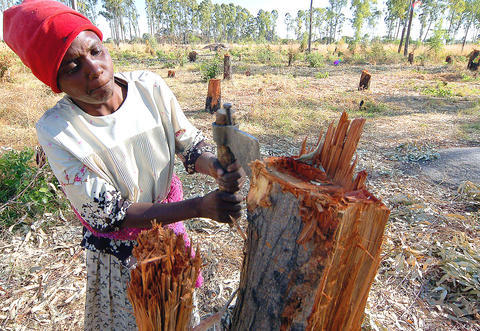
PHOTO: AFP
The independent Consumer Council estimates an average family of five needs about 2 million Zimbabwe dollars (US$130) a month to live modestly and not be classified as living in poverty.
Average incomes are less than half that amount and a varying scale of new household charges added to the burden of homeowners struggling to pay routine costs, including monthly power tariffs for a small house or apartment starting at about US$10 and rising with usage.
Businesses and long-suffering householders across the country -- already plagued by pothole-ridden residential streets, broken traffic signals and most street lighting out of action -- have faced repeated power outages of up to 14 hours since Saturday.
The power utility blamed the latest blackouts on a breakdown at the western Hwange coal mine that stopped coal deliveries to its main generating station nearby.
Three other smaller coal-fired power stations have been shut down for more than a year by breakdowns and shortages of spare parts and replacement equipment.
Zimbabwe imports up to 40 percent of its electricity from the region but is facing an acute shortage of cash to pay for imports.
Regular power cuts of a few hours known as "load shedding" and water outages occur daily, creating a boom in sales of generators and inverters, a power storage device using a rechargeable battery that runs computers, lamps and a television, and water storage tanks and pumps.
But the cheapest alternatives cost around the equivalent of US$1,000 to install.
Earlier this year, authorities in the city of Bulawayo asked householders without power who were cooking on wood fires in the garden or indoor hearth to stop scouring their pots with sand and soil, as is traditionally done, as this was leading to blocked drains.

VAGUE: The criteria of the amnesty remain unclear, but it would cover political violence from 1999 to today, and those convicted of murder or drug trafficking would not qualify Venezuelan Acting President Delcy Rodriguez on Friday announced an amnesty bill that could lead to the release of hundreds of prisoners, including opposition leaders, journalists and human rights activists detained for political reasons. The measure had long been sought by the US-backed opposition. It is the latest concession Rodriguez has made since taking the reins of the country on Jan. 3 after the brazen seizure of then-Venezuelan president Nicolas Maduro. Rodriguez told a gathering of justices, magistrates, ministers, military brass and other government leaders that the ruling party-controlled Venezuelan National Assembly would take up the bill with urgency. Rodriguez also announced the shutdown

Civil society leaders and members of a left-wing coalition yesterday filed impeachment complaints against Philippine Vice President Sara Duterte, restarting a process sidelined by the Supreme Court last year. Both cases accuse Duterte of misusing public funds during her term as education secretary, while one revives allegations that she threatened to assassinate former ally Philippine President Ferdinand Marcos Jr. The filings come on the same day that a committee in the House of Representatives was to begin hearings into impeachment complaints against Marcos, accused of corruption tied to a spiraling scandal over bogus flood control projects. Under the constitution, an impeachment by the
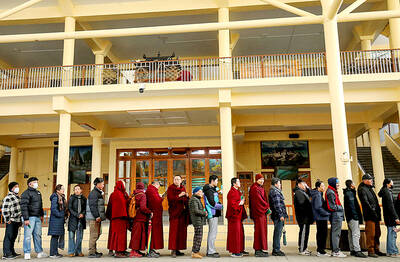
Exiled Tibetans began a unique global election yesterday for a government representing a homeland many have never seen, as part of a democratic exercise voters say carries great weight. From red-robed Buddhist monks in the snowy Himalayas, to political exiles in megacities across South Asia, to refugees in Australia, Europe and North America, voting takes place in 27 countries — but not China. “Elections ... show that the struggle for Tibet’s freedom and independence continues from generation to generation,” said candidate Gyaltsen Chokye, 33, who is based in the Indian hill-town of Dharamsala, headquarters of the government-in-exile, the Central Tibetan Administration (CTA). It

A Virginia man having an affair with the family’s Brazilian au pair on Monday was found guilty of murdering his wife and another man that prosecutors say was lured to the house as a fall guy. Brendan Banfield, a former Internal Revenue Service law enforcement officer, told police he came across Joseph Ryan attacking his wife, Christine Banfield, with a knife on the morning of Feb. 24, 2023. He shot Ryan and then Juliana Magalhaes, the au pair, shot him, too, but officials argued in court that the story was too good to be true, telling jurors that Brendan Banfield set


 RSS
RSS