


The US House voted to expand federal hate crime categories to include violent attacks against gays and people targeted because of gender, acting just hours after the White House threatened a veto.
The legislation, passed 237-180, also would make it easier for federal law enforcement to take part in or assist local prosecutions involving bias-motivated attacks. Similar legislation is also moving through the Senate, setting the stage for a possible veto showdown with US President George W. Bush.
"This is an important vote of conscience, of a statement of what America is, a society that understands that we accept differences," House Majority Leader Steny Hoyer said.
Hate crimes under current federal law apply to acts of violence against individuals on the basis of race, religion, color, or national origin. Federal prosecutors have jurisdiction only if the victim is engaged in a specific federally protected activity such as voting.
Representative Barney Frank, the only openly gay man in the House, presided over the chamber as the final vote was taken.
The vote came after fierce lobbying from opposite sides by civil rights groups, who have been pushing for years for added protections against hate crimes, and social conservatives, who say the bill threatens the right to express moral opposition to homosexuality and singles out groups of citizens for special protection.
The White House said state and local criminal laws already cover the new crimes defined under the bill and there was "no persuasive demonstration of any need to federalize such a potentially large range of violent crime enforcement."
It also noted that the bill leaves other classes, such as the elderly, the military and police officers, without similar special status.
"Our criminal justice system has been built on the ideal of equal justice for all," said Representative Lamar Smith, the top Republican on the Judiciary Committee. "Under this bill justice will no longer be equal, but depend on the race, sex, sexual orientation, disability or status of the victim."
Republicans, in a parliamentary move that would have effectively killed the bill, tried to add seniors and the military to those qualifying for hate crimes protection. It was defeated on a mainly party-line vote.
The House bill would extend the hate crimes category to include sexual orientation, gender, gender identity or disability and give federal authorities greater room to participate in hate crime investigations.
Federal investigators could step in if local authorities were unwilling or unable to act.
The Human Rights Campaign said federal intervention could have made a difference in the case of Brandon Teena, the young transsexual who was raped after two friends discovered that he was biologically female and then murdered after local police did not arrest those responsible.
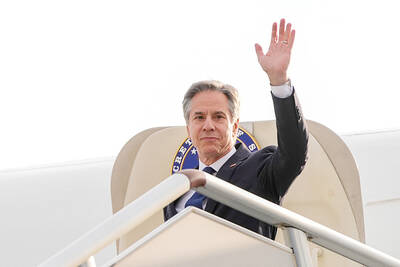
‘IN A DIFFERENT PLACE’: The envoy first visited Shanghai, where he attended a Chinese basketball playoff match, and is to meet top officials in Beijing tomorrow US Secretary of State Antony Blinken yesterday arrived in China on his second visit in a year as the US ramps up pressure on its rival over its support for Russia while also seeking to manage tensions with Beijing. The US diplomat tomorrow is to meet China’s top brass in Beijing, where he is also expected to plead for restraint as Taiwan inaugurates president-elect William Lai (賴清德), and to raise US concerns on Chinese trade practices. However, Blinken is also seeking to stabilize ties, with tensions between the world’s two largest economies easing since his previous visit in June last year. At the
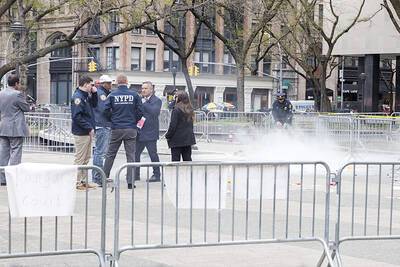
UNSETTLING IMAGES: The scene took place in front of TV crews covering the Trump trial, with a CNN anchor calling it an ‘emotional and unbelievably disturbing moment’ A man who doused himself in an accelerant and set himself on fire outside the courthouse where former US president Donald Trump is on trial has died, police said yesterday. The New York City Police Department (NYPD) said the man was declared dead by staff at an area hospital. The man was in Collect Pond Park at about 1:30pm on Friday when he took out pamphlets espousing conspiracy theories, tossed them around, then doused himself in an accelerant and set himself on fire, officials and witnesses said. A large number of police officers were nearby when it happened. Some officers and bystanders rushed
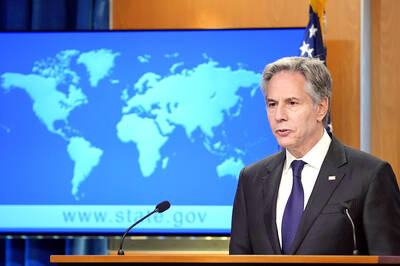
Beijing is continuing to commit genocide and crimes against humanity against Uyghurs and other Muslim minorities in its western Xinjiang province, U.S. Secretary of State Antony Blinken said in a report published on Monday, ahead of his planned visit to China this week. The State Department’s annual human rights report, which documents abuses recorded all over the world during the previous calendar year, repeated language from previous years on the treatment of Muslims in Xinjiang, but the publication raises the issue ahead of delicate talks, including on the war in Ukraine and global trade, between the top U.S. diplomat and Chinese

RIVER TRAGEDY: Local fishers and residents helped rescue people after the vessel capsized, while motorbike taxis evacuated some of the injured At least 58 people going to a funeral died after their overloaded river boat capsized in the Central African Republic’s (CAR) capital, Bangui, the head of civil protection said on Saturday. “We were able to extract 58 lifeless bodies,” Thomas Djimasse told Radio Guira. “We don’t know the total number of people who are underwater. According to witnesses and videos on social media, the wooden boat was carrying more than 300 people — some standing and others perched on wooden structures — when it sank on the Mpoko River on Friday. The vessel was heading to the funeral of a village chief in


 RSS
RSS