


In Tokyo, the fast food of choice is a towering concoction of four hamburger patties, with all the trimmings, crammed into a single bun, while children happily line up around the block for a calorie-laden doughnut.
But while the queues outside the Krispy Kreme doughnuts in the Shinjuku area of the capital, which opened recently, point to an extraordinary Japanese success story for the fast-food industry, they also symbolize a health disaster in the making for consumers.
Up to a fifth of Japanese children aged between five and 12 who are overweight suffer, or are at risk of developing, metabolic syndrome, a range of symptoms including high cholesterol and large waistlines, according to a study released last week. Left untreated, it can lead to serious illnesses such as strokes and heart disease.
Nationwide, the condition afflicts an estimated 23 million Japanese, the health ministry warns.
Though middle-aged "salarymen" are at greatest risk, children as young as nine are now suffering from type-2 diabetes, a phenomenon unheard of in Japan only a few years ago. Experts say the looming health crisis is being fomented by a surge in demand for highly calorific food sold by the top US food chains.
Experts blame adults for setting a poor example.
"Ultimately it is up to parents to take greater responsibility for what their children eat," said Fumi Hayashi, a researcher at the National Institute of Health and Nutrition. "The problem is that they are just as guilty of bad habits rather than eating a balanced diet."
Now diseases associated with obesity will strike Japan faster, and with greater ferocity, than anything seen in the West.
"When you have rapid trans-formations in lifestyles, that's when you see the worst health outcomes," Asia-Pacific regional coordinator for the International Obesity Task Force Tim Gill said.
The rapid changes taking place in the Japanese diet, combined with a greater susceptibility to metabolic illness, will lead to dramatic rises in strokes, diabetes and hypertension, he said.
"The potential is there for a disaster," he warned.
In the absence of government intervention -- limiting TV advertising aimed at children, or banning special promotions -- the fast-food industry is enjoying unprecedented success in Japan.
Held responsible for contributing to health problems of US and British children, the same firms are setting their sights on a lucrative market in Asia, the world's most populous region.
Krispy Kreme's marketing machine is proving irresistible to Japanese teens.
"Krispy Kreme is the epitome of how to cram maximum calories into the smallest amount of food," Gill said. "All you can do with doughnuts is to point out what crap they are."

‘IN A DIFFERENT PLACE’: The envoy first visited Shanghai, where he attended a Chinese basketball playoff match, and is to meet top officials in Beijing tomorrow US Secretary of State Antony Blinken yesterday arrived in China on his second visit in a year as the US ramps up pressure on its rival over its support for Russia while also seeking to manage tensions with Beijing. The US diplomat tomorrow is to meet China’s top brass in Beijing, where he is also expected to plead for restraint as Taiwan inaugurates president-elect William Lai (賴清德), and to raise US concerns on Chinese trade practices. However, Blinken is also seeking to stabilize ties, with tensions between the world’s two largest economies easing since his previous visit in June last year. At the

UNSETTLING IMAGES: The scene took place in front of TV crews covering the Trump trial, with a CNN anchor calling it an ‘emotional and unbelievably disturbing moment’ A man who doused himself in an accelerant and set himself on fire outside the courthouse where former US president Donald Trump is on trial has died, police said yesterday. The New York City Police Department (NYPD) said the man was declared dead by staff at an area hospital. The man was in Collect Pond Park at about 1:30pm on Friday when he took out pamphlets espousing conspiracy theories, tossed them around, then doused himself in an accelerant and set himself on fire, officials and witnesses said. A large number of police officers were nearby when it happened. Some officers and bystanders rushed
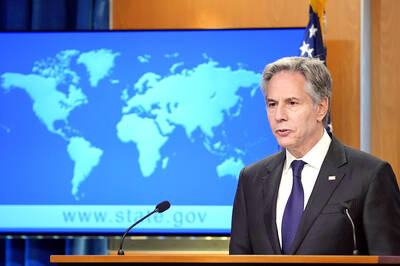
Beijing is continuing to commit genocide and crimes against humanity against Uyghurs and other Muslim minorities in its western Xinjiang province, U.S. Secretary of State Antony Blinken said in a report published on Monday, ahead of his planned visit to China this week. The State Department’s annual human rights report, which documents abuses recorded all over the world during the previous calendar year, repeated language from previous years on the treatment of Muslims in Xinjiang, but the publication raises the issue ahead of delicate talks, including on the war in Ukraine and global trade, between the top U.S. diplomat and Chinese
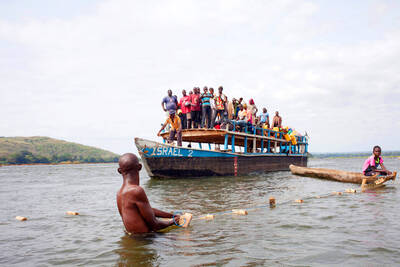
RIVER TRAGEDY: Local fishers and residents helped rescue people after the vessel capsized, while motorbike taxis evacuated some of the injured At least 58 people going to a funeral died after their overloaded river boat capsized in the Central African Republic’s (CAR) capital, Bangui, the head of civil protection said on Saturday. “We were able to extract 58 lifeless bodies,” Thomas Djimasse told Radio Guira. “We don’t know the total number of people who are underwater. According to witnesses and videos on social media, the wooden boat was carrying more than 300 people — some standing and others perched on wooden structures — when it sank on the Mpoko River on Friday. The vessel was heading to the funeral of a village chief in


 RSS
RSS