


Dragica Besovic and her sister-in-law were back in Kosovo last week on a sad and macabre mission: to dig up their dead relatives and rebury them by her new home in Serbia.
Besovic had fled Kosovo in 1999. Fear drove the 77-year-old Serb away, but it also drew her back -- fear that if the mostly ethnic Albanian province gains independence as expected later this year, Serb-haters will unearth her relatives' remains and scatter the bones.
Dozens of Serb families are exhuming their dead, reflecting the deep mistrust and unhealed scars of war that bedevil Western efforts to forge a multiethnic society in Kosovo.
"I came into the world here, and this is where I aged," Besovic said, choking back tears as gravediggers in white overalls dug up her husband, Milivoje, who died nine years ago.
"What else am I supposed to do?" she asked.
The question takes on added urgency tomorrow, when the UN Security Council is expected to review a proposal to grant Kosovo internationally supervised independence -- a plan bitterly opposed by Serbia, which regards the province as the cradle of its nationhood.
Most of Kosovo's Serbs fled after NATO bombing stopped Yugoslavian president Slobodan Milosevic's brutal 1998 to 1999 crackdown on separatists. An estimated 10,000 ethnic Albanians were killed, more than 1 million lost their homes and 2,000 are still missing.
When the war ended, some Albanians sought to avenge their dead by targeting Serbs. About 200,000 Serbs and other minorities fled, and only about 100,000 remain, most in isolated enclaves.
Besovic's sister-in-law is Dusanka Ivanovic, 60. She was here to exhume her brother -- Besovic's husband -- along with her father and uncle. The two women watched as the remains were stuffed into white plastic bags, sealed into coffins and loaded into a van for the 225km journey to Kraljevo, Serbia.
Although the Security Council is divided over the Kosovo blueprint -- backed by the US and the EU but opposed by Russia -- many Serbs appear resigned to the province becoming independent.
In the western Kosovo town of Pec, the Serbs are gone and the rundown Serbian Orthodox cemetery reflects the contempt the ethnic Albanians feel toward their former rulers.
Some Serb graves have been desecrated. Jagged chunks of black and white tombstone marble and blobs of old candle wax lie among the pine needles.
But despite rumors in Serbia that brought the two women back to the graveyard, there is no sign of large-scale desecration. Similar rumors sparked a brief rush to exhume Serbian bodies in Bosnia after its war ended in 1995, and it was not uncommon to see refugees transporting coffins in ragtag convoys.
In Pec, Besovic and Ivanovic wept at seeing the broken tombstones, but expressed relief that the graves themselves were intact and the bones undisturbed.
Ivanovic thinks it's a shame that Serbs are demonized for the misery that Milosevic inflicted on Kosovo.
"Ordinary people are never guilty," she said.
Ivanovic left Kosovo 35 years ago, and the newly emptied graves sever her last family link with the province.

‘IN A DIFFERENT PLACE’: The envoy first visited Shanghai, where he attended a Chinese basketball playoff match, and is to meet top officials in Beijing tomorrow US Secretary of State Antony Blinken yesterday arrived in China on his second visit in a year as the US ramps up pressure on its rival over its support for Russia while also seeking to manage tensions with Beijing. The US diplomat tomorrow is to meet China’s top brass in Beijing, where he is also expected to plead for restraint as Taiwan inaugurates president-elect William Lai (賴清德), and to raise US concerns on Chinese trade practices. However, Blinken is also seeking to stabilize ties, with tensions between the world’s two largest economies easing since his previous visit in June last year. At the

UNSETTLING IMAGES: The scene took place in front of TV crews covering the Trump trial, with a CNN anchor calling it an ‘emotional and unbelievably disturbing moment’ A man who doused himself in an accelerant and set himself on fire outside the courthouse where former US president Donald Trump is on trial has died, police said yesterday. The New York City Police Department (NYPD) said the man was declared dead by staff at an area hospital. The man was in Collect Pond Park at about 1:30pm on Friday when he took out pamphlets espousing conspiracy theories, tossed them around, then doused himself in an accelerant and set himself on fire, officials and witnesses said. A large number of police officers were nearby when it happened. Some officers and bystanders rushed
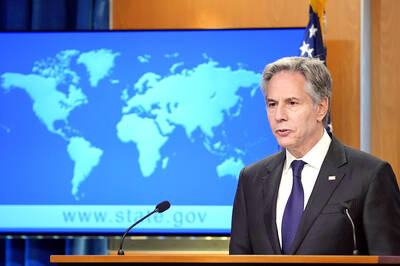
Beijing is continuing to commit genocide and crimes against humanity against Uyghurs and other Muslim minorities in its western Xinjiang province, U.S. Secretary of State Antony Blinken said in a report published on Monday, ahead of his planned visit to China this week. The State Department’s annual human rights report, which documents abuses recorded all over the world during the previous calendar year, repeated language from previous years on the treatment of Muslims in Xinjiang, but the publication raises the issue ahead of delicate talks, including on the war in Ukraine and global trade, between the top U.S. diplomat and Chinese
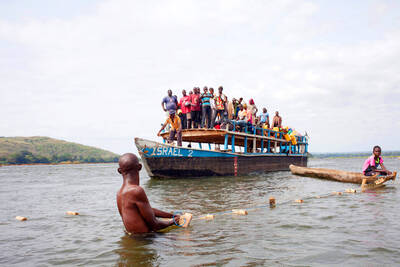
RIVER TRAGEDY: Local fishers and residents helped rescue people after the vessel capsized, while motorbike taxis evacuated some of the injured At least 58 people going to a funeral died after their overloaded river boat capsized in the Central African Republic’s (CAR) capital, Bangui, the head of civil protection said on Saturday. “We were able to extract 58 lifeless bodies,” Thomas Djimasse told Radio Guira. “We don’t know the total number of people who are underwater. According to witnesses and videos on social media, the wooden boat was carrying more than 300 people — some standing and others perched on wooden structures — when it sank on the Mpoko River on Friday. The vessel was heading to the funeral of a village chief in


 RSS
RSS