


Two ski resorts near Beijing have closed early this year because there wasn't enough snow, and the balmy weather has made it difficult for Mongolian families -- most of whom don't own freezers -- to store meat-filled buns and other traditional food.
Winter is under threat in many parts of Asia, and most scientists say global climate change is the cause.
"Winter is becoming shorter," said Benjamin Preston, a researcher at the Australian Commonwealth Scientific and Industrial Research Organization who coauthored a report last year on the impact of climate change on the Asia-Pacific region.
"Things that you associate with winter such as snowfall and frost are on the decline," he continued.
In places like South Korea, for example, some rivers reportedly failed to consistently freeze, for the first time ever. The warmer weather in Japan is expected to bring its famed cherry blossoms into bloom some 10 days early this year.
Warmer winters in Asia are part of a larger trend that saw record-high temperatures worldwide in January, according to the US National Oceanic & Atmospheric Administration's National Climate Data Center.
The combined average global land and ocean surface temperature for the month was 0.85oC warmer than the previous record set in 2002 which was itself 0.71oC above the norm.
Japan this year had one of the warmest winters on record and downtown Tokyo went without snow for the first time in 130 years, according to the Japan Meteorological Agency.
Temperatures from December to last month matched the previous record high between December 1948 and February 1949 and Tokyo had no days that dipped below freezing this winter, the agency said.
The average temperature during winter months from December through February in Tokyo from 1971 and 2000 was 6.7oC, the agency said.
From December to Feb. 27 the average temperature was nearly a full 2oC higher, at 8.6oC, it said, which was the warmest on record.
Similar trends have been seen in other parts of Asia, with the Beijing Daily newspaper reporting that January temperatures across China were 1.4oC warmer than average.
Australia, New Zealand and Afghanistan have also seen warmer winters in recent years.
The effects of these trends are starting to become obvious.
Officials with the ski resorts in Xueshijie and Jundushan in China told reporters they had closed about a week early because of higher temperatures this year. Snowfall across Japan has also been lighter than usual.
Yulan Magnolia trees on Chang'an Avenue in downtown Beijing -- which normally blossom in late March -- were already in bud last month.
In Nanjing, the capital of China's Jiangsu Province, sweet-scented osmanthus also blossomed early.
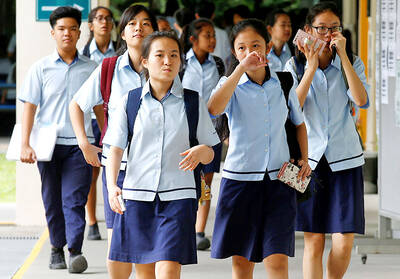
School bullies in Singapore are to face caning under new guidelines, but the education minister on Tuesday said it would be meted out only as a last resort with strict safeguards. Human rights groups regularly criticize Singapore for the use of corporal punishment, which remains part of the school and criminal justice systems, but authorities have defended it as a deterrent to crime and serious misconduct. Caning was discussed in the parliament after legislators asked how it would be used in relation to bullying in schools. The debate followed stricter guidelines on serious student misconduct, including bullying, unveiled by the Singaporean Ministry of
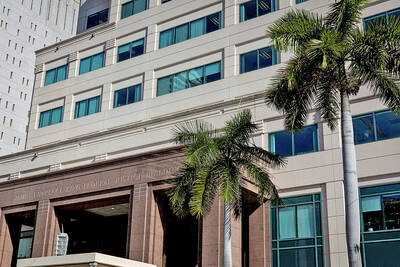
‘GROSS NEGLIGENCE?’ Despite a spleen typically being significantly smaller than a liver, the surgeon said he believed Bryan’s spleen was ‘double the size of what is normal’ A Florida surgeon who is facing criminal charges after allegedly removing a patient’s liver instead of his spleen has said he is “forever traumatized” by that person’s death. In a deposition from November last year that was recently obtained by NBC, 44-year-old Thomas Shaknovsky described the death of 70-year-old William Bryan as an “incredibly unfortunate event that I regret deeply.” Bryan died after the botched surgery; and last month, a grand jury in Tallahassee indicted Shaknovsky on a charge of manslaughter. “I’m forever traumatized by it and hurt by it,” Shaknovsky added, also saying that wrong-site surgeries can happen “during

A MESSAGE: Japan’s participation in the Balikatan drills is a clear deterrence signal to China not to attack Taiwan while the US is busy in the Middle East, an analyst said The Japan Self-Defense Forces yesterday fired a Type 88 anti-ship missile during a joint maritime exercise with US, Australian and Philippine forces, hitting a decommissioned Philippine Navy ship in waters facing the disputed South China Sea, in drills that underscore Tokyo’s rising willingness to project military power on China’s doorstep. The drill took place as Manila and Tokyo began talks on a potential defense equipment transfer, made possible by Japan’s decision to scrap restrictions on military exports. The discussions include the possible early transfer of Abukuma-class destroyers and TC-90 aircraft to the Philippines, Japanese Minister of Defense Shinjiro Koizumi said. Philippine Secretary of

A South Korean judge who last week more than doubled former South Korean first lady Kim Keon-hee’s prison sentence was found dead yesterday, police said. Shin Jong-o was found unconscious at about 1am at the Seoul High Court building, an investigator at the Seocho District Police Station in Seoul said. Shin was taken to a hospital and pronounced dead, he said. “There is no sign of foul play in the death,” the investigator added. Local media reported that Shin had left a suicide note, but the investigator said there was none. On Tuesday last week, Shin presided over 53-year-old Kim’s appeal trial, finding her guilty


 RSS
RSS