


North Korean demands for large amounts of energy aid bedeviled negotiators trying to reach a deal on dismantling the North's nuclear programs, as plodding negotiations entered a fourth day yesterday.
Envoys at the six-nation talks in Beijing have shown rising frustration at North Korea's intransigence, saying negotiations over the past two days were hanging on a single issue.
Japan's Kenichiro Sasae said the sole sticking point was how much energy assistance North Korea should be given in return for taking steps to disarm.
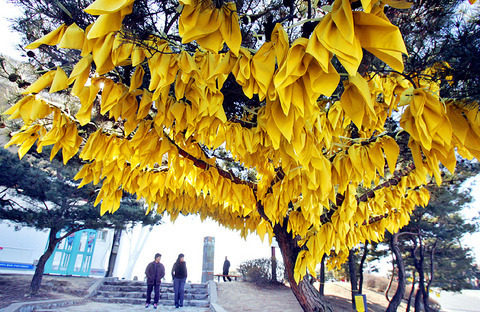
PHOTO: AP
"North Korea has excessive expectations on energy aid," Sasae told reporters.
"This is the problem, and unless they change their thinking, an agreement will be difficult," he said.
In an attempt to move forward, the negotiators -- from the US, China, Russia and South Korea as well as Japan and North Korea -- held a series of two-way meetings at a Chinese government guesthouse.
Negotiators hoped to get North Korea to take the first concrete steps toward dismantling its nuclear programs since talks began in 2003. That task was made more urgent after Pyongyang detonated a nuclear device in October, giving North Korea a sense, analysts have said, that it would have greater leverage at the talks.
A rough outline of a deal was reached 18 months ago: In return for giving up its nuclear programs, North Korea would receive energy assistance for its listless economy and guarantees that its security would not be undermined.
But the exact steps to be taken by all parties, and how and when they would be phased in, have remained subject to negotiation.
US Assistant Secretary of State Christopher Hill refused to indicate which issue was dragging out the negotiations but said envoys should try to bypass the sticking point, leaving it for follow-up talks.
"We've got this one issue, and we've got to wrap this up," Hill told reporters yesterday.
He reiterated that the dispute centered on a single paragraph in China's written draft agreement.
South Korean Assistant Foreign Minister Chun Yung-woo struck a more pessimistic note.
"It's difficult to expect to see a breakthrough today," he said before yesterday's meetings.
While comments by Japan's Sasae and Russian envoy Alexander Lusyukov pointed to energy aid as the heart of the disagreement, Chun disputed South Korean and Japanese media reports that North Korea was demanding 2 million kilowatts in electricity, a long-standing demand by Pyongyang.
"For 13 years, whenever there were de-nuclearization talks, North Korea has demanded 2 million kilowatts of electricity," Chun said.
"This is the first time that North Korea has not made such demands," he added.
Energy concerns have been a key part of North Korean compensation demands. Earlier this month, North Korea's envoy to the talks, Kim Kye-gwan, told two US experts visiting Pyongyang that it wanted massive shipments of heavy fuel oil or electricity and two light-water reactors, the construction of which the US and its partners suspended two years ago.
Hill said the nuclear reactor had not emerged as a problem this time.
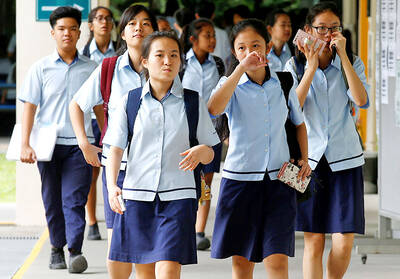
School bullies in Singapore are to face caning under new guidelines, but the education minister on Tuesday said it would be meted out only as a last resort with strict safeguards. Human rights groups regularly criticize Singapore for the use of corporal punishment, which remains part of the school and criminal justice systems, but authorities have defended it as a deterrent to crime and serious misconduct. Caning was discussed in the parliament after legislators asked how it would be used in relation to bullying in schools. The debate followed stricter guidelines on serious student misconduct, including bullying, unveiled by the Singaporean Ministry of
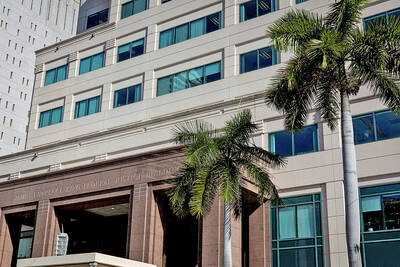
‘GROSS NEGLIGENCE?’ Despite a spleen typically being significantly smaller than a liver, the surgeon said he believed Bryan’s spleen was ‘double the size of what is normal’ A Florida surgeon who is facing criminal charges after allegedly removing a patient’s liver instead of his spleen has said he is “forever traumatized” by that person’s death. In a deposition from November last year that was recently obtained by NBC, 44-year-old Thomas Shaknovsky described the death of 70-year-old William Bryan as an “incredibly unfortunate event that I regret deeply.” Bryan died after the botched surgery; and last month, a grand jury in Tallahassee indicted Shaknovsky on a charge of manslaughter. “I’m forever traumatized by it and hurt by it,” Shaknovsky added, also saying that wrong-site surgeries can happen “during
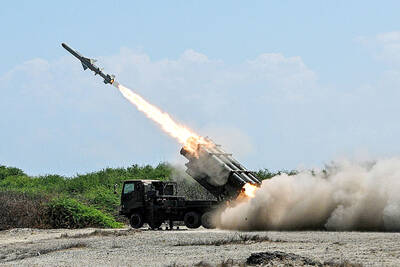
A MESSAGE: Japan’s participation in the Balikatan drills is a clear deterrence signal to China not to attack Taiwan while the US is busy in the Middle East, an analyst said The Japan Self-Defense Forces yesterday fired a Type 88 anti-ship missile during a joint maritime exercise with US, Australian and Philippine forces, hitting a decommissioned Philippine Navy ship in waters facing the disputed South China Sea, in drills that underscore Tokyo’s rising willingness to project military power on China’s doorstep. The drill took place as Manila and Tokyo began talks on a potential defense equipment transfer, made possible by Japan’s decision to scrap restrictions on military exports. The discussions include the possible early transfer of Abukuma-class destroyers and TC-90 aircraft to the Philippines, Japanese Minister of Defense Shinjiro Koizumi said. Philippine Secretary of
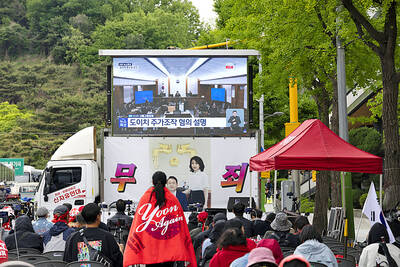
A South Korean judge who last week more than doubled former South Korean first lady Kim Keon-hee’s prison sentence was found dead yesterday, police said. Shin Jong-o was found unconscious at about 1am at the Seoul High Court building, an investigator at the Seocho District Police Station in Seoul said. Shin was taken to a hospital and pronounced dead, he said. “There is no sign of foul play in the death,” the investigator added. Local media reported that Shin had left a suicide note, but the investigator said there was none. On Tuesday last week, Shin presided over 53-year-old Kim’s appeal trial, finding her guilty


 RSS
RSS