

Incumbent President Joseph Kabila was declared the winner of the Democratic Republic of Congo's bitterly contested presidential election on Wednesday, sparking celebrations in the east and protests from his challenger's camp.
Kabila, Africa's youngest head of state at 35, took 58 percent of the vote in the Oct. 29 second-round ballot, compared with 42 percent for his rival, Vice President Jean-Pierre Bemba, the Independent Electoral Commission (CEI) said.
In a televised statement shortly afterwards, Kabila appealed to his countrymen to demonstrate "brotherhood and tolerance" in the election aftermath.
While Bemba was not expected to react officially until yesterday, his head of Cabinet protested on Wednesday night that the election had been rigged.
"This is an electoral hold-up," said Fidele Babala, the top aide to Bemba.
"The speed with which the Independent Electoral Commission announced the results, while there were still questions pending that had a bearing on the outcome, raises doubts about its impartiality," Babala added, stressing that he was voicing his personal view.
Under electoral rules, the candidates have three days to challenge the provisional result before the Supreme Court, which is expected to formally declare the winner at the end of this month.
Kabila had earlier called for calm amid mounting fears of violence between the heavily armed rival camps in the nation's capital, Kinshasa.
The UN mission in the country also appealed for calm.
It stressed that the CEI had "met frequently with both parties to discuss any concerns and [had] looked thoroughly into allegations of irregularities."
Tensions had been running high in Kinshasa after Bemba's camp complained of "systematic errors" in the compiling of figures from a country that is almost the size of western Europe but has few roads and ruined infrastructure.
On Wednesday night, however, the capital, where the majority had voted for Bemba, was still quiet and under heavy UN protection.
"There are no celebrations. It's more like a funeral wake," Babala said.
By contrast the streets of the eastern cities, which had mainly supported Kabila, were filled with people celebrating his victory.
"Victory at last. The sun has just risen. Kabila and Bemba should agree to get on so that Congo can prosper," chanted a group of students in the eastern city of Bukavu.
Bemba's representative on the CEI walked out before the commission had completed its deliberations on Wednesday, CEI spokesman Delion Kimbulungu said.
In an apparent effort to calm tensions, UN special envoy William Swing, the head of the UN peacekeeping force, Defense Minister Tharcisse Habarugira and other top military and civilian officials had gathered at Bemba's heavily guarded residence before the result was announced.
After first-round results were released in August, heavy fighting broke out in Kinshasa between Kabila's guard and troops supporting Bemba, claiming at least 23 lives. Four people were killed in renewed clashes near Bemba's official residence on Saturday.
Kabila pledged earlier on Wednesday to bring in a coalition government if he won the election.
Barring a legal setback, he is due to be sworn in on Dec. 10.
Kabila was first appointed president in 2001 after the assassination of his father, Laurent-Desire Kabila, who had ousted the country's dictator, Mobutu Sese Seko in 1997.
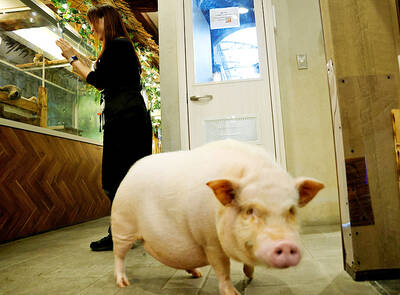
Japan has started its first nationwide survey of animal cafes amid concerns over animal welfare, hygiene and public health, a government official said, bringing greater scrutiny to the popular but lightly regulated sector. The desktop survey, which began this month, will examine the number of facilities, the types of animals they house and the conditions they are held in, and how visitors interact with the animals. Exotic animal cafes, where visitors can interact with species ranging from otters to owls and marmots, have become popular attractions for Japanese and foreign tourists. However, researchers say some facilities keep threatened species, raising
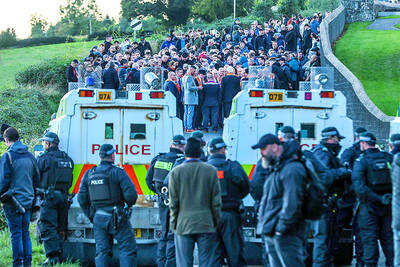
OLD WOUNDS: Protestant marchers seized on an overturned injunction to stage a march, which drew thousands of counterprotesters to block the road in Portadown UK leaders called for calm as a tense standoff with residents seeking to halt a pro-British Protestant march through a primarily Catholic area stretched into the night on Sunday, in one of the worst crises for Northern Ireland in the past few years. The tensions were triggered after a Belfast appeal court overturned a High Court injunction in the early hours of Sunday to clear the march by the Orange Order to go ahead for the first time since 1997. The Parades Commission, Northern Ireland’s independent body regulating contentious processions, had authorized 35 Orangemen to march silently along Garvaghy Road in Portadown,
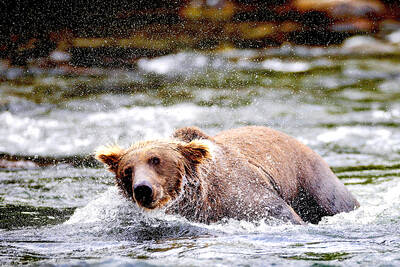
The winner of this year’s Fat Bear Week has been crowned after a nail-biting final — and it’s the son of a former champion. Backpack, a 20-year-old male beloved by rangers in Alaska for his quiet determination, edged out female fellow finalist Dancing Queen in the annual ursine eating competition at Katmai National Park. More than 2.3 million people voted in the week-long competition that sees bears unwittingly jostle in a series of head-to-head contests to decide which one of them has most impressively piled on the pounds ahead of hibernation. Viewers watch a livestream of the enormous animals as they scoop salmon
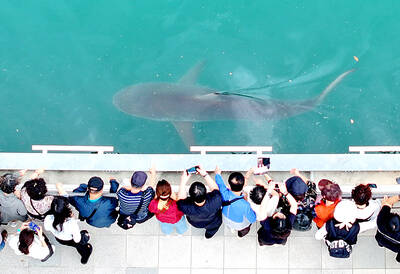
A shark stranded in a canal in the South Korean port of Busan has become the country’s latest wildlife sensation, with the city saying about 600,000 people have flocked to see it over the past two weeks. The 3.5m shark was first spotted in a narrow waterway in North Port on Sept. 18. As the days passed without the shark finding its way back to the ocean, authorities on Tuesday launched a rescue operation to guide it out, but the effort failed. The South Korean Coast Guard and other agencies deployed vessels to spray jets of water behind the shark


 RSS
RSS