


Amsterdam's red light district has seen better days.
A morning stroll on Friday through this most picturesque part of the Dutch capital reveals signs advertising windows for hire and an atmosphere of general depression.
The decline in "window prostitution" -- where the working women display themselves behind glass for the passing clientele -- has been documented in a new survey revealing that the number of window prostitutes in the Netherlands halved between 1999 and last year.
The survey, conducted by the Rode Draad organization that looks after the interests of prostitutes, found that many women were working 16-hour days for a pittance.
Legislation passed in 2000 that legalized brothels with the intention of improving conditions for prostitutes, had not led to better security or conditions, the report found.
Amsterdam's Wallen red light district bears this out. In an alleyway near the Oude Kerk (Old Church) that traces its history to the 13th century, a row of girls smiles tautly at passers-by.
A blonde with an eastern European accent calls out an invitation in English, but an attempt to engage her in conversation meets with an increasingly frosty response.
"You are in, you pay 50 euros {US$65]," she says.
A second attempt to ask her name and where she comes from, meets with: "What do you want? I'm not here to talk. Fifty euros."
The other girls avert their gaze as the visitor passes -- another time-waster.
The response is a typical one in the narrow alleyways off the canals.
The city authorities are investing large sums in the area, where most of the buildings are 17th century and many even older. The canal side roads are being repaved and the canals themselves repaired.
The Rode Draad report describes the atmosphere in many establishments as "depressing" and notes that younger men show little interest in old-style brothels and window prostitution.
It points to the rise in more upmarket businesses where sex is available for money, like massage salons, and saunas and to the "eroticization" of social life in general. The kind of kinky sex once sought in brothels is now to be had in the bedroom or at sex parties.
The Wallen bear out another conclusion. Virtual sex slavery based on the abuse of foreign women, whether from eastern Europe or from Africa remains widespread.
Prostitutes regularly have to pay exorbitant fees for the facilities in brothels, are often required to live on the premises and are forced into unsafe practices to keep the clients happy.
Local authorities are failing to act to ensure appropriate standards, and tax evasion is rampant, the report says.
As a wintry dusk descends, the pubs in the Wallen fill up and the atmosphere becomes livelier.
There is also little activity outside the establishments offering live shows, the doormen soliciting passers-by with scant success.


Showcasing phallus-shaped portable shrines and pink penis candies, Japan’s annual fertility festival yesterday teemed with tourists, couples and families elated by its open display of sex. The spring Kanamara Matsuri near Tokyo features colorfully dressed worshipers carrying a trio of giant phallic-shaped objects as they parade through the street with glee. The festival, as legend has it, honors a local blacksmith in the Edo Period (1603-1868) who forged an iron dildo to break the teeth of a sharp-toothed demon inhabiting a woman’s vagina that had been castrating young men on their wedding nights. A 1m black steel phallus sits in the courtyard of

JAN. 1 CLAUSE: As military service is voluntary, applications for permission to stay abroad for over three months for men up to age 45 must, in principle, be granted A little-noticed clause in sweeping changes to Germany’s military service policy has triggered an uproar after it emerged that the law requires men aged up to 45 to get permission from the armed forces before any significant stay abroad, even in peacetime. The legislation, which went into effect on Jan. 1 aims to bolster the military and demands all 18-year-old men fill out a questionnaire to gauge their suitability to serve in the armed forces, but stops short of conscription. If the “modernized” model fails to pull in enough recruits, parliament will be compelled to discuss the reintroduction of compulsory service, German
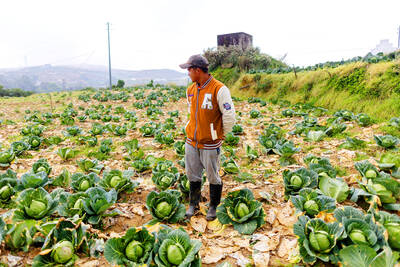
Filipino farmers like Romeo Wagayan have been left with little choice but to let their vegetables rot in the field rather than sell them at a loss, as rising oil prices linked to the Iran war drive up the cost of harvesting, labor and transport. “There’s nothing we can do,” said Wagayan, a 57-year old vegetable farmer in the northern Philippine province of Benguet. “If we harvest it, our losses only increase because of labor, transportation and packing costs. We don’t earn anything from it. That’s why we decided not to harvest at all,” he said. Soaring costs caused by the Middle East

Hungarian Prime Minister Viktor Orban’s officially declared wealth is fairly modest: some savings and a jointly owned villa in Budapest. However, voters in what Transparency International deems the EU’s most corrupt country believe otherwise — and they might make Orban pay in a general election this Sunday that could spell an end to his 16-year rule. The wealth amassed by Orban’s inner circle is fueling the increasingly palpable frustration of a population grappling with sluggish growth, high inflation and worsening public services. “The government’s communication machine worked well as long as our economic situation remained relatively good,” said Zoltan Ranschburg, a political analyst


 RSS
RSS