


Eighteen months ago, Thaksin Shinawatra won a landslide election victory and became a rising star on the regional stage. Today, he is out of a job after a coup d'etat and considering life in exile.
It was a dramatic fall for the 57-year-old billionaire known as the CEO prime minister for his corporate style but also a fate that critics said was deserved.
He had no shortage of enemies in Thailand who claimed he was authoritarian, arrogant and someone who survived by pitting the rural majority against the country's urban elite.
Thaksin, who hails from a family of silk merchants and was educated in the US, was yesterday reportedly headed to London to meet his family and it remains unclear whether he will return to Thailand.
He rose to power in 2001 on a raft of populist policies, but came under fire for his war on drugs in 2003 that left 2,300 Thais dead over a three-month period. He was also accused of mishandling the Muslim insurgency in the south.
Despite his problems, Thaksin was overwhelmingly re-elected last year to a second term when his Thai Rak Thai party won 377 of the 500 seats in the House of Representatives.
But that didn't stop protesters mostly in Bangkok from launching a campaign to oust Thaksin in October. What started as a quirky protest led by publisher Sondhi Limthongkul caught fire in January, after Thaksin sold the family's controlling stake of Shin Corp to Singapore's Temasek Holdings for 73.3 billion baht (US$1.9 billion).
Anger over the sale helped the movement attract middle class voters, students and business leaders, prompting street rallies that became nightly protests and at times drew over 100,000 people who demanded his resignation.
Thaksin responded by dissolving Parliament in February and called snap elections to defuse the protests. But opposition parties boycotted the polls and millions of voters marked an abstention box on their ballots as a protest against the prime minister.
Because a minimum vote rule was not met in some constituencies, the parliament could not be convened. The vote was later ruled invalid by the courts, forcing the new polls to be held later this year.
Thaksin initially said he would step down to ease the crisis but in recent weeks has been acting and talking like a politician on the come back trail.
Just days ago in New York, Thaksin seemed to unaware of the events unfolding back home. He made light of the ongoing political crisis, comparing Thailand to a "child learning to walk" but refusing to say what his future held.

The Bolivian government on Friday struck a deal with protesting miners, but was still grappling with blockades and demonstrations by other workers across La Paz. Other groups are still blocking access roads into the city, which is also the seat of the government. Police on Thursday prevented the miners from entering the main square by using tear gas, while the demonstrators hurled stones and explosives with slingshots. Protests against the policies of Bolivian President Rodrigo Paz have convulsed the Andean nation since early this month, and roadblocks were choking routes into La Paz throughout Friday, the national road authority said. Miners demanded that Paz
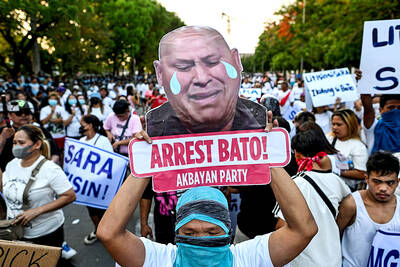
The Philippines said it has asked the country’s Supreme Court to allow it to arrest former Philippine president Rodrigo Duterte’s chief drug war enforcer to stand trial in an international tribunal. The International Criminal Court (ICC) last week unsealed an arrest warrant against Philippine Senator Ronald dela Rosa, accusing him along with Duterte and other “coperpetrators” of the “crime against humanity of murder.” Dela Rosa briefly sought refuge in the Philippine Senate last week while asking the Philippine Supreme Court to stop an ongoing attempt by government agents to arrest him. “By his own conduct, he has placed himself outside the protection of

A ship anchored off the United Arab Emirates (UAE) was seized and taken toward Iran and another — a cargo ship near Oman — sank after being attacked, authorities said on Thursday, as tensions escalated near the Strait of Hormuz. It was not immediately clear who was behind these incidents, but they happened as a senior Iranian official reiterated his country’s claim of control over the waterway and another said it had a right to seize oil tankers connected to the US. The turmoil in the strait has been a sticking point for weeks in talks between the US and Iran to

The researchers in Ireland looked at their computer screen, marveling at a medieval book tracked down in a Roman library. They flipped through its digitized pages and found their sought-after treasure: the oldest surviving English poem. “We were extremely surprised. We were speechless. We couldn’t believe our eyes when we first saw that,” said Elisabetta Magnanti, a visiting research fellow at Trinity College Dublin’s school of English. The poem was also within the main body of Latin text, she said, calling it “extraordinary.” Composed in Old English by a Northumbrian agricultural worker in the 7th century, Caedmon’s Hymn appears within some copies of


 RSS
RSS