


Mayor Frank Melton promised a hands-on approach to this city's chronic crime problem, and he made good from the moment he took office, donning a bulletproof vest and black fatigues and leading nightly police patrols that illuminated the streets with flashing blue lights.
But the pistol-packing mayor soon ran up against the harsh reality that crime actually increased 26 percent during the first half of 2006. Melton responded with another get-tough gesture: imposing a month-long state of emergency across the city.
"There comes a time when you just have to stand up," Melton said during a recent patrol, with his Rottweiler mix, Abby, by his side.
Some prosecutors and others say he is going way too far -- and perhaps breaking the law himself.
His state of emergency, which ended this week, tightened an earlier curfew on young people and was later expanded to include the homeless. At least 19 homeless people were taken to a city-run gymnasium after 10pm, and at least eight of them were given jobs picking up trash in the city.
Michael Stoops, acting executive director for the National Coalition for the Homeless in Washington, said Melton is the first mayor in the country to put a curfew on the homeless. Stoops said his organization is considering legal action to keep other cities from following suit.
"For a liberal Democratic African American mayor to consider homeless people as vagrants is a way to defame an entire group of people," Stoops said.
Some prosecutors have objected to Melton's practice of putting on police gear and picking up a shotgun, and his habit of taking crime witnesses into his home in a sort of self-styled witness protection program. And some business leaders say the state of emergency is hurting the city's image.
"We do support the mayor in what he's trying to do. Crime is a major problem," said MetroJackson Chamber of Commerce Chairman Eddie Maloney. "The only problem we have is the state of emergency tag. It gives a negative context to the city."
Melton said he knows his tactics are not popular with everyone, but he sees his approach as the only salvation from a crime rate that is nearly twice the national average, and which he believes is driving investment away from his city of 180,000.
Police Commander Tyrone Lewis, a city spokesman, said there was a decrease in crime during the state of emergency, but he provided no statistics. Melton has said he hopes to work with city leaders to pass even stronger ordinances on crime.
Marty Wiseman, director of Mississippi State University's Stennis Institute of Government, said it is too early to tell how Melton's unorthodox approach will play out.
"I'd hate to tally all of the times the constitution has been played loose and fast with, but maybe we need to experiment a little," Wiseman said. "At the end of four years, we will have tried the nice way and we will have tried the Wild West way."
Melton took office last July after getting elected with 88 percent of the vote.
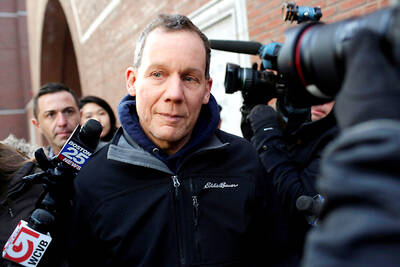
An American scientist convicted of lying to US authorities about payments from China while he was at Harvard University has rebuilt his research lab in Shenzhen, China, to pursue technology the Chinese government has identified as a national priority: embedding electronics into the human brain. Charles Lieber, 67, is among the world’s leading researchers in brain-computer interfaces. The technology has shown promise in treating conditions such as amyotrophic lateral sclerosis and restoring movement in paralyzed people. It also has potential military applications: Scientists at the Chinese People’s Liberation Army have investigated brain interfaces as a way to engineer super soldiers by boosting

Indonesian police have arrested 13 people after shocking images of alleged abuse against small children at a daycare center went viral, sparking outrage across the nation, officials said on Monday. Police on Friday last week raided Little Aresha, a daycare center in Yogyakarta on Java island, following a report from a former employee. CCTV footage circulating on social media showed children, most younger than two, lying on the floor wearing only diapers, their hands and feet bound with rags. The police have confirmed that the footage is authentic. Police said they also found 20 children crammed into a room just 3m by 3m. “So
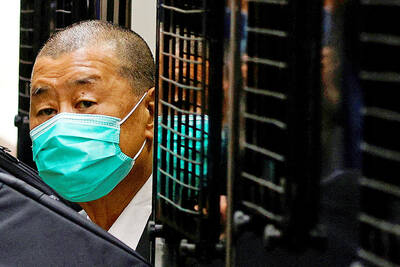
Jailed media entrepreneur Jimmy Lai (黎智英) has been awarded Deutsche Welle’s (DW) freedom of speech award for his contribution to Hong Kong’s pro-democracy movement. The German public broadcaster on Thursday said Lai would be presented in absentia with the 12th iteration of the award on June 23 at the DW Global Media Forum in Bonn. Deutsche Welle director-general Barbara Massing praised the 78-year-old founder of the now-shuttered news outlet Apple Daily for standing “unwaveringly for press freedom in Hong Kong at great personal risk.” “With Apple Daily, he gave journalists a platform for free reporting and a voice to the democracy movement in
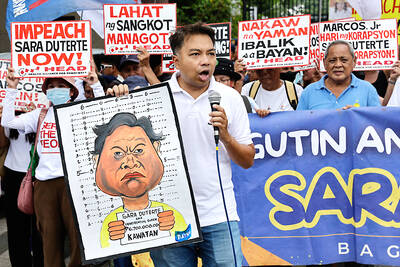
PHILIPPINE COMMITTEE: The head of the committee that made the decision said: ‘If there is nothing to hide, there is no reason to hide, there is no reason to obstruct’ A Philippine congressional committee on Wednesday ruled that there was “probable cause” to impeach Philippine Vice President Sara Duterte after hearing allegations of unexplained wealth, misuse of state funds and threats to have the president assassinated. The unanimous decision of the 53-member committee in the Philippine House of Representatives sends the two impeachment complaints to deliberations and voting by the entire lower chamber, which has more than 300 lawmakers. The complaints centered on Duterte’s alleged illegal use and mishandling of intelligence funds from the vice president’s office, and from her time as education secretary under Philippine President Ferdinand Marcos Jr. Duterte and the


 RSS
RSS