


Torrential rains from Typhoon Kaemi caused widespread flooding in southeastern China yesterday, with more bad weather that has already forced the evacuation of 700,000 people expected this week.
The typhoon, which hit China's Fujian Province on Tuesday packing winds of 120kph, was downgraded to a tropical storm yesterday morning but was still causing widespread chaos.
Chinese television showed footage of torrential rains lashing the provincial capital of Fuzhou, as workers struggled to fasten power cables and make other preparations for the onslaught of the typhoon.
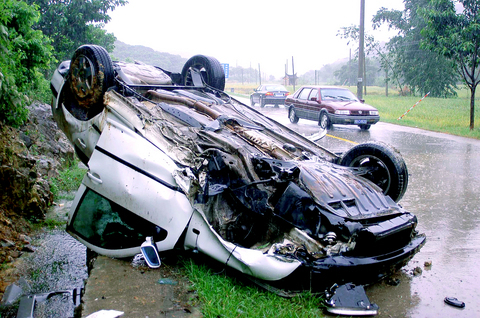
PHOTO: AFP
Local governments urged beleaguered citizens, still reeling from Tropical Storm Bilis -- which killed more than 600 people in the area after hitting on July 14 -- to brace for continued rainfall in the coming days.
Following Kaemi's landfall, the Fujian meteorological bureau issued an emergency order to prepare for flooding and landslides with up to 12cm of rain along the coast.
Warnings were also issued in China's southern Guangdong Province and Zhejiang Province to the north of Fujian.
"Although Kaemi did not hit our province, we cannot sit idly by, we must prepare for the aftermath of the typhoon and prevent flood disasters caused by heavy rains," the Southern Daily quoted Guangdong Vice Governor Li Ronggen (李榮根) as saying.
"We must place special attention to the safety of reservoirs and disasters like landslides, evacuate those in dangerous areas and prevent mishaps that can kill or injure people."
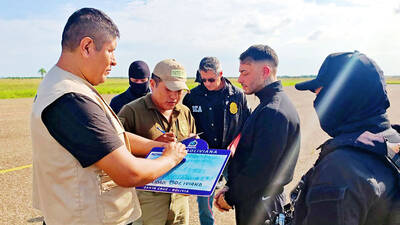
KINGPIN: Marset allegedly laundered the proceeds of his drug enterprise by purchasing and sponsoring professional soccer teams and even put himself in the starting lineups Notorious Latin American narco trafficker Sebastian Marset, who eluded police for years, was handed over to US authorities after his arrest on Friday in Bolivia. Marset, a Uruguayan national who was on the US most-wanted list, was passed to agents of the US Drug Enforcement Administration at Santa Cruz airport in Bolivia, then put on a US airplane, Bolivian state television showed. “The arrest and deportation were carried out pursuant to a court order issued by the US justice system,” Bolivian Minister of Government Marco Antonio Oviedo told reporters. The alleged kingpin was arrested in an upscale neighborhood of Santa
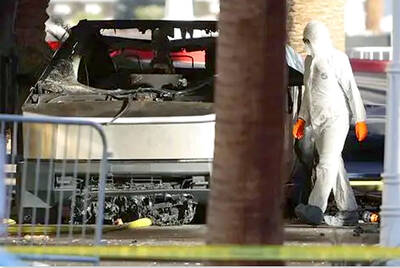
ACTIONABLE ADVICE: The majority of chatbots tested provided guidance on weapons, tactics and target selections, with Perplexity and Meta AI deemed to be the least safe From school shootings to synagogue bombings, leading artificial intelligence (AI) chatbots helped researchers plot violent attacks, according to a study published on Wednesday that highlighted the technology’s potential for real-world harm. Researchers from the nonprofit watchdog Center for Countering Digital Hate and CNN posed as 13-year-old boys in the US and Ireland to test 10 chatbots, including ChatGPT, Google Gemini, Perplexity, Deepseek and Meta AI. Eight of the chatbots assisted the make-believe attackers in more than half the responses, providing advice on “locations to target” and “weapons to use” in an attack, the study said. The chatbots had become a “powerful accelerant for
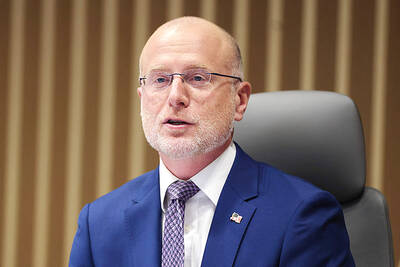
FAKE NEWS? ‘When the government demands the press become a state mouthpiece under the threat of punishment, something has gone very wrong,’ a civic group said The top US broadcast regulator on Saturday threatened media outlets over negative coverage of the Middle East war, after US President Donald Trump slammed critical headlines from the “Fake News Media.” The US president since his first term has derided mainstream media as “fake news” and has sued major outlets over what he sees as unfair coverage. Brendan Carr, head of the US Federal Communications Commission — which oversees the nation’s radio, television and Internet media — said broadcasters risked losing their licenses over news coverage. “The law is clear. Broadcasters must operate in the public interest, and they will

SCANDAL: Other images discovered earlier show Andrew bent over a female and lying across the laps of a number of women, while Mandelson is pictured in his underpants A photograph of former British prince Andrew and veteran politician Peter Mandelson sitting in bathrobes alongside late sex offender Jeffrey Epstein was unearthed on Friday in previously published documents. The image is believed to be the first known photograph of the two men with Epstein. They are currently engulfed in scandal in the UK over their ties to their mutual friend. The undated photograph, first reported by ITV News, shows King Charles III’s disgraced brother and former British ambassador to the US sitting barefoot outside on a wooden deck. They appear to have mugs with a US flag on them


 RSS
RSS