


Queen's iconic anthem We Will Rock You takes on a new meaning when you hear it in a Beirut bar just a few kilometers from the booms of Israeli missiles.
But in the capital of besieged Lebanon, once the top nightclub destination in the Middle East, the choice of music is very deliberate -- a message of defiance shared by the dozens of Lebanese patrons pressed into one of the handful of trendy bars still open on a weekend night.
"It's a form a resistance. We want to show that we can still go out and live like before, show that the bombings will never annihilate us," said Tony Kairouz, a 32-year-old who looks like he's stepped out of an Italian summer fashion shoot.

PHOTO: AP
"The war's not our problem. I'm a human being, I want to live normally. We have to breathe, you know?" said Mary Hanna, 26, his glamorous, almond-eyed girlfriend.
The bar they are in, the Dragonfly, and the three or four establishments around it form a pocket of illusion in Beirut's Gemmayzeh area that everything is normal.
Pink Floyd's Another Brick in the Wall succeeds Queen, followed by the Rolling Stones' Satisfaction. Beer and cocktails are delivered by a white-coated waiter amid laughter and light-hearted chatter.
In another bar, a television shows the day's destruction, but the sound is off, and the customers are ignoring it, bopping to the pop music and knocking back g;asses of chilled vodka.
But the rest of the street is deserted. Taxi drivers standing around outside shake their heads, muttering that two weeks ago, just before the Israeli offensive, this place was a bustling chaos of flashy cars and brazen, moneyed youths looking for a good time. Tourism was booming. Beirut was busy carving out its place alongside Ibiza and Miami as a red-hot partying capital.
Now that dynamism has been wiped out. Almost.
With no other way of responding to Israeli bombs, a hard core group of young Beirutis -- those who can shake off their parents' strident demands to remain in the safety of their homes -- are intent on showing they will not be cowed.
"It's their sole form of expression in what's going on. I mean, look around and think to yourself: this is a war zone after all. And they are going out regardless," said Nida, an expatriate Lebanese who had come from France to help get his elderly parents out of the country.
A barman, Eli Issa, said that with most of the Israeli attacks taking place in the Shiite-dominated southern suburbs of Beirut, people felt relatively secure in the Christian district of Gemmayzeh, just 4km distant but thus far untouched.
"They feel safe here," he said.
In one of the cheaper cafes, a couple of old men -- refugees from Tyre in the blitzed south of the country -- talk at a table over cups of strong Arabic coffee, the sea framed behind them.
"We had to get away from the television. It's 24-hour stress," Ahmad Hijazi, 60, said.
"Staying in, all we do is look at the television or keep the radio next to the ear," he said, adding that, after 12 days of bombardments, Lebanon's population is tired of being constantly on edge.
"We're no longer afraid," he said.

‘IN A DIFFERENT PLACE’: The envoy first visited Shanghai, where he attended a Chinese basketball playoff match, and is to meet top officials in Beijing tomorrow US Secretary of State Antony Blinken yesterday arrived in China on his second visit in a year as the US ramps up pressure on its rival over its support for Russia while also seeking to manage tensions with Beijing. The US diplomat tomorrow is to meet China’s top brass in Beijing, where he is also expected to plead for restraint as Taiwan inaugurates president-elect William Lai (賴清德), and to raise US concerns on Chinese trade practices. However, Blinken is also seeking to stabilize ties, with tensions between the world’s two largest economies easing since his previous visit in June last year. At the
Nearly half of China’s major cities are suffering “moderate to severe” levels of subsidence, putting millions of people at risk of flooding, especially as sea levels rise, according to a study of nationwide satellite data released yesterday. The authors of the paper, published by the journal Science, found that 45 percent of China’s urban land was sinking faster than 3mm per year, with 16 percent at more than 10mm per year, driven not only by declining water tables, but also the sheer weight of the built environment. With China’s urban population already in excess of 900 million people, “even a small portion

UNSETTLING IMAGES: The scene took place in front of TV crews covering the Trump trial, with a CNN anchor calling it an ‘emotional and unbelievably disturbing moment’ A man who doused himself in an accelerant and set himself on fire outside the courthouse where former US president Donald Trump is on trial has died, police said yesterday. The New York City Police Department (NYPD) said the man was declared dead by staff at an area hospital. The man was in Collect Pond Park at about 1:30pm on Friday when he took out pamphlets espousing conspiracy theories, tossed them around, then doused himself in an accelerant and set himself on fire, officials and witnesses said. A large number of police officers were nearby when it happened. Some officers and bystanders rushed
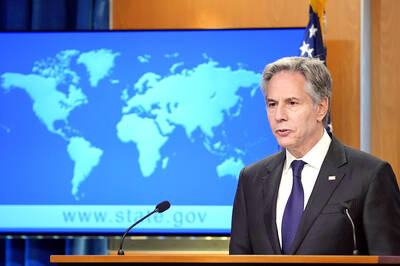
Beijing is continuing to commit genocide and crimes against humanity against Uyghurs and other Muslim minorities in its western Xinjiang province, U.S. Secretary of State Antony Blinken said in a report published on Monday, ahead of his planned visit to China this week. The State Department’s annual human rights report, which documents abuses recorded all over the world during the previous calendar year, repeated language from previous years on the treatment of Muslims in Xinjiang, but the publication raises the issue ahead of delicate talks, including on the war in Ukraine and global trade, between the top U.S. diplomat and Chinese


 RSS
RSS