


Western aid agencies "brushed aside" the work of local community groups in a rush to spend the record-breaking donations raised after the Indian Ocean tsunami, according to a report published on Friday.
A failure to consult local people meant a quarter of the fishing boats that were donated were unseaworthy, while some aid money was wasted on the construction of sweltering corrugated-metal houses in the tropical jungle.
The tsunami was the world's biggest natural disaster in 40 years and prompted a huge public response, but humanitarian agencies felt under pressure to produce results quickly because of the unprecedented generosity, the report by the Tsunami Evaluation Coalition found.
The TEC, a group of UN bodies and aid agencies reviewing the response to the tragedy, said the donations amounted to the biggest ever international response to a disaster; at least US$13.5 billion was pledged or donated, 41 percent of it from private sources. It was also the fastest response ever recorded, partly because of increased use of the Internet.
But it was the relatives and neighbors of those affected who were first to respond, and their efforts were often ignored, the study said. John Cosgrave, one of the report's authors, said: "Because there was no consultation with local people, the fishing boats were in some cases too narrow or unstable. I think the UN Food and Agriculture Organization estimated that at least a quarter of them were unseaworthy."
Aid agencies failed to consult partly because of the scale of the crisis -- which killed 227,000 people in 14 countries around the Indian Ocean -- and partly because armed conflicts prevented proper access. Cosgrave said the worst damage was in Aceh, which was closed to international agencies because of the civil war.
"There were people in Sri Lanka who knew the country, but they were swamped by all of the emergency people who came in," he added.
Examples of inappropriate aid also included corrugated metal homes built in the Thai jungle.
The report praised the public's generosity but said it also showed up how little was given to less-advertised tragedies such as the floods in Bangladesh in 2004, which affected 36 million people. Among the factors in the west's response may have been the time of the disaster, just after Christmas, and the fact that popular holiday destinations for Western tourists were involved.
Thousands of well-intentioned people rushed to the region in the aftermath to try to help, but Cosgrave said such hands-on assistance often ended up doing more harm than good: "Like anything else, the more experience you have, the harder it is for you to make basic mistakes."
"What was positive was the relief phase, which went quite well. There were no large-scale deaths and people were able to restart their lives quite quickly," he said. "People who gave money can be happy that it helped people and is continuing to help people."
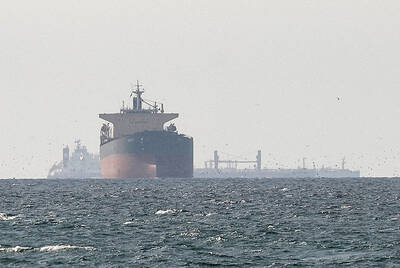
A ship that appears to be taking on the identity of a scrapped gas carrier exited the Strait of Hormuz on Friday, showing how strategies to get through the waterway are evolving as the Middle East war progresses. The vessel identifying as liquefied natural gas (LNG) carrier Jamal left the Strait on Friday morning, ship-tracking data show. However, the same tanker was also recorded as having beached at an Indian demolition yard in October last year, where it is being broken up, according to market participants and port agent’s reports. The ship claiming to be Jamal is likely a zombie vessel that

German Chancellor Friedrich Merz’s conservative Christian Democratic Union (CDU) yesterday faced a regional election battle in Rhineland-Palatinate, now held by the center-left Social Democratic Party (SPD). Merz’s CDU has enjoyed a narrow poll lead over the SPD — their coalition partners at the national level — who have ruled the mid-sized state for 35 years. Polling third is the far-right Alternative for Germany (AfD), which spells a greater threat to the two centrist parties in several state elections in September in the country’s ex-communist east. The picturesque state of Rhineland-Palatinate, bordering France, Belgium and Luxembourg and with a population of about 4 million,

LAW CONSTRAINTS: The US has been pressing allies to send warships to open the Strait, but Tokyo’s military actions are limited under its postwar pacifist constitution Japan could consider deploying its military for minesweeping in the Strait of Hormuz if a ceasefire is reached in the war on Iran, Japanese Minister of Foreign Affairs Toshimitsu Motegi said yesterday. “If there were to be a complete ceasefire, hypothetically speaking, then things like minesweeping could come up,” Motegi said. “This is purely hypothetical, but if a ceasefire were established and naval mines were creating an obstacle, then I think that would be something to consider.” Japan’s military actions are limited under its postwar pacifist constitution, but 2015 security legislation allows Tokyo to use its Self-Defense Forces overseas if an attack,

Ugandan wildlife authorities have reintroduced rhinos into a remote protected area where they were once poached into extinction, an event seen by conservationists as a milestone in efforts to support the recovery of a species threatened by poaching. On Tuesday, two southern white rhinos from a private ranch in the East African country were reintroduced into Kidepo Valley National Park in the country’s northeast. Two more rhinos in metallic crates arrived on Thursday. There have been no rhinos in the park since 1983, the result of poaching. However, a private ranch in central Uganda — the Ziwa Rhino Sanctuary — has been


 RSS
RSS