


Handsome and well-mannered, the crown prince of Bhutan has become the talk of Thailand.
Women have swooned over the bachelor prince's shiny, neatly combed hair and easy smile. Front pages have featured him as "Prince Charming," and a poll named him the most popular of all 25 royals who visited Thailand this month to celebrate King Bhumibol Adulyadej's 60th anniversary on the throne.
Now, a small scandal -- involving one woman in particular -- has spiced things up.

PHOTO: AP
Among the many pictures of Crown Prince Jigme Khesar Namgyel Wangchuck that circulated around Thai Internet sites after his visit is one that has sparked an uproar.
It shows the 26-year-old prince staring into the camera, leaned in close to a smiling mystery woman. He looks relaxed, with his chin resting on the head of the woman, who is wearing a halter top and dangling earrings.
The picture has trees in the background, leading some to speculate it was taken in his Himalayan kingdom, and it suggests a close relationship -- which is precisely the problem.
In Thailand, a royal's private life is not for public consumption.
Thai media never intrudes on the personal life of the country's royals, who are respected with a genuine reverence. Much of the country is honoring 78-year-old King Bhumibol during this celebratory year by wearing yellow shirts every Monday, the color that symbolizes the day of the week he was born.
Out of respect for the Bhutanese prince, police this week called for a halt to the online distribution of the photo and are searching for the culprit who initially posted it. Questions have arisen over whether the picture was doctored, which police say would carry criminal charges.
Police have asked the Bhutanese Embassy, which declined comment, to help determine its authenticity.
Thai authorities say it's their job to protect Jigme, who returned to his Himalayan kingdom more than a week ago after visiting a Thai beach resort following the king's June 9-12 celebrations.
"This may violate the prince's reputation. It requires thorough and careful examination," said police Major General Prachin Waree of the national police force's cyber crimes unit.
One Thai-language newspaper splashed the image across the top of its front page on Tuesday, but apparently sought to deflect criticism with an accompanying banner headline that denounced the picture as "very inappropriate."
Online chat rooms are abuzz with criticism over the photograph's circulation, speculation that it's a fake and general disgust over the prospect of offending the Oxford-educated prince, who became a media darling during his trip to Thailand.
Much talk was generated by widely publicized images of the prince giving a "wai" -- the Thai greeting of palms pressed together with a head bow -- during his outings in Thailand. A sign of humility and respect, it showed his "charm and easy manners," the Nation newspaper reported.
As a result of all the attention, tourism from Thailand to Bhutan is projected to increase this year, said Somyos Limthongkam, vice president of the Thai Travel Agents Association.
"Ever since Prince Jigme's visit, TV, radio and newspapers have been talking nonstop about Bhutan," he said. "Many people are interested in traveling to the country -- and they're mostly women."
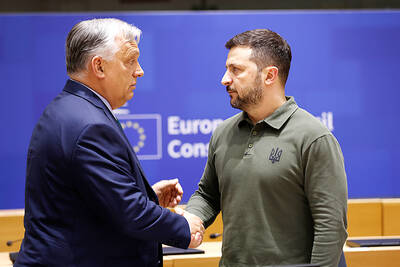
Hungarian authorities temporarily detained seven Ukrainian citizens and seized two armored cars carrying tens of millions of euros in cash across Hungary on suspicion of money laundering, officials said on Friday. The Ukrainians were released on Friday, following their detention on Thursday, but Hungarian officials held onto the cash, prompting Ukraine to accuse Hungary’s Russia-friendly government of illegally seizing the money. “We will not tolerate this state banditism,” Ukrainian Minister of Foreign Affairs Andrii Sybiha said. The seven detained Ukrainians were employees of the Ukrainian state-owned Oschadbank, who were traveling in the two armored cars that were carrying the money between Austria and
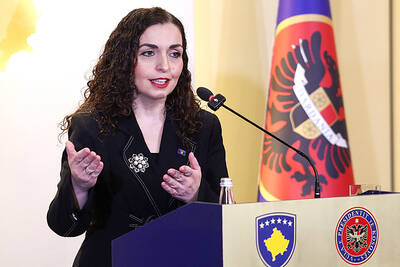
Kosovar President Vjosa Osmani on Friday after dissolving the Kosovar parliament said a snap election should be held as soon as possible to avoid another prolonged political crisis in the Balkan country at a time of global turmoil. Osmani said it is important for Kosovo to wrap up the upcoming election process and form functional institutions for political stability as the war rages in the Middle East. “Precisely because the geopolitical situation is that complex, it is important to finish this electoral process which is coming up,” she said. “It is very hard now to imagine what will happen next.” Kosovo, which declared

MORE BANS: Australia last year required sites to remove accounts held by under-16s, with a few countries pushing for similar action at an EU level and India considering its own ban Indonesia on Friday said it would ban social media access for children under 16, citing threats from online pornography, cyberbullying, online fraud and Internet addiction. “Accounts belonging to children under 16 on high-risk platforms will start to be deactivated, beginning with YouTube, TikTok, Facebook, Instagram, Threads, X, Bigo Live and Roblox,” Indonesian Minister of Communications and Digital Meutya Hafid said. “The government is stepping in so that parents no longer have to fight alone against the giants of the algorithm. Implementation will begin on March 28, 2026,” she said. The social media ban would be introduced in stages “until all platforms fulfill their
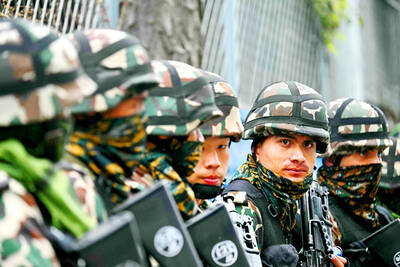
Counting was under way in Nepal yesterday, after a high-stakes parliamentary election to reshape the country’s leadership following protests last year that toppled the government. Key figures vying for power include former Nepalese prime minister K. P. Sharma Oli, rapper-turned-mayor Balendra Shah, who is bidding for the youth vote, and newly elected Nepali Congress party leader Gagan Thapa. In Kathmandu’s tea shops and city squares, people were glued to their phones, checking results as early trends flashed up — suggesting Shah’s centrist Rastriya Swatantra Party (RSP) was ahead. Nepalese Election Commission spokesman Prakash Nyupane said the counting was ongoing “in a peaceful manner”


 RSS
RSS