


Chileans have learned to live with the political traumas bequeathed them by the dictatorship of General Augusto Pinochet, which ended in 1990 and left about 4,000 people dead or missing. But two years ago, they were surprised to discover that he had also amassed an illicit fortune.
The source of that wealth, estimated at US$28 million or more, was never clear. But Chilean officials say an investigation begun last year into the mysterious death of a high-ranking military officer, Colonel Gerardo Huber, is providing important clues.
Huber's death was ruled a suicide after his body was found on the banks of a river here early in 1992, just as he was poised to testify in a case of a covert arms deal gone bad. That multimillion-dollar transaction was handled by what current government officials suspect was a syndicate that generated wealth for Pinochet and his inner circle.
More than that, government officials say, the Huber case suggests that Pinochet and his associates were willing to use the military intelligence service not only to eliminate political threats to their power -- standard practice for them during the dictatorship -- but also to protect the fortunes they were surreptitiously accumulating.
In March, the investigating judge, Claudio Pavez Ahumada, concluded that Huber was "neutralized" as part of a plot by the Chilean military to prevent arms deals and other "irregular operations" from becoming public.
Six high-ranking retired military officers, including a former chief of the intelligence service and another general, have been arrested and charged with "illicit association" in the case. Pavez said that his inquiry had not ended, and that he aimed to discover who ordered Huber's execution and who carried it out.
He and other government officials investigating the case would not rule out that the trail could even lead to Pinochet. Withered by age and disease at 90, the discredited former dictator still casts a shadow over the life of the nation, but has escaped prosecution in the 16 years since he left the presidency.
"This was clearly a homicide," Pavez said in an interview here.
Court records, testimony and interviews with people involved in the case suggest that Pinochet's role in arms deals is greater than he has admitted. So, too, some say, may be his knowledge of the circumstances surrounding Huber's death.
At the moment, the Huber case is one of four judicial inquiries under way here, all of which have touched on the question of illegal arms transactions and the possibility that they were one of the main sources of the former dictator's fortune.
Among the other matters being looked at, investigators said, are several that took place after Pinochet stepped down as president in 1990. These were arms sales to Ecuador and the purchase of 200 Leopard tanks from the Netherlands in 1998.
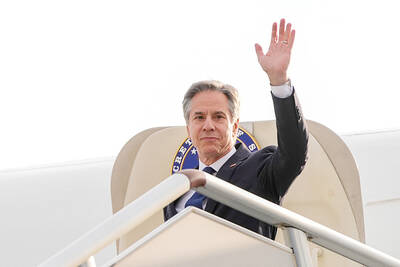
‘IN A DIFFERENT PLACE’: The envoy first visited Shanghai, where he attended a Chinese basketball playoff match, and is to meet top officials in Beijing tomorrow US Secretary of State Antony Blinken yesterday arrived in China on his second visit in a year as the US ramps up pressure on its rival over its support for Russia while also seeking to manage tensions with Beijing. The US diplomat tomorrow is to meet China’s top brass in Beijing, where he is also expected to plead for restraint as Taiwan inaugurates president-elect William Lai (賴清德), and to raise US concerns on Chinese trade practices. However, Blinken is also seeking to stabilize ties, with tensions between the world’s two largest economies easing since his previous visit in June last year. At the
Nearly half of China’s major cities are suffering “moderate to severe” levels of subsidence, putting millions of people at risk of flooding, especially as sea levels rise, according to a study of nationwide satellite data released yesterday. The authors of the paper, published by the journal Science, found that 45 percent of China’s urban land was sinking faster than 3mm per year, with 16 percent at more than 10mm per year, driven not only by declining water tables, but also the sheer weight of the built environment. With China’s urban population already in excess of 900 million people, “even a small portion

UNSETTLING IMAGES: The scene took place in front of TV crews covering the Trump trial, with a CNN anchor calling it an ‘emotional and unbelievably disturbing moment’ A man who doused himself in an accelerant and set himself on fire outside the courthouse where former US president Donald Trump is on trial has died, police said yesterday. The New York City Police Department (NYPD) said the man was declared dead by staff at an area hospital. The man was in Collect Pond Park at about 1:30pm on Friday when he took out pamphlets espousing conspiracy theories, tossed them around, then doused himself in an accelerant and set himself on fire, officials and witnesses said. A large number of police officers were nearby when it happened. Some officers and bystanders rushed
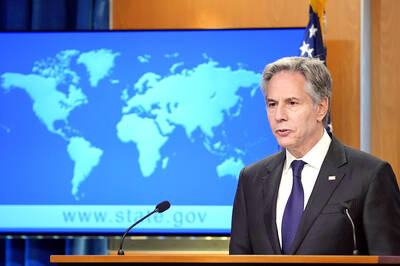
Beijing is continuing to commit genocide and crimes against humanity against Uyghurs and other Muslim minorities in its western Xinjiang province, U.S. Secretary of State Antony Blinken said in a report published on Monday, ahead of his planned visit to China this week. The State Department’s annual human rights report, which documents abuses recorded all over the world during the previous calendar year, repeated language from previous years on the treatment of Muslims in Xinjiang, but the publication raises the issue ahead of delicate talks, including on the war in Ukraine and global trade, between the top U.S. diplomat and Chinese


 RSS
RSS