


Nepal's new multi-party government and Maoist rebels said yesterday they may request the UN to monitor a ceasefire in the Himalayan nation after holding further talks.
The government, formed after last month's violent pro-democracy protests that forced King Gyanendra to hand back power to political parties, matched a ceasefire this month declared earlier by the Maoist guerrillas.
On Friday, government and rebel negotiators held their first meeting since 2003, and agreed to a 25-point code of conduct vowing to push the peace process forward including a commitment to end provocations and stop using arms to intimidate people.
Pradip Gyanwali, a government negotiator, said a formal ceasefire agreement and a human rights accord were expected to be signed with the rebels soon.
"Once we have those agreements in place, it will be easy for us to request the Office of the United Nations High Commissioner for Human Rights in Nepal to monitor the truce," Gyanwali said. "This is our understanding."
Maoist negotiator Dinanath Sharma said both sides had agreed in principle to engage a third party, possibly the UN, to monitor the truce.
"This may be discussed in our next meeting," Sharma said, adding they were expected to meet later this week.
Both sides have agreed to hold early elections for an assembly to draft a new constitution and decide the future of the monarchy, a key rebel demand to end the insurgency.
The initial talks are also expected to prepare for a meeting between rebel chief Prachanda and Prime Minister Girija Prasad Koirala.
Hopes for an end to Nepal's decade-long insurgency have been raised since the multi-party government took power last month after King Gyanendra ended nearly 15-months of absolute rule.
The insurgency, aimed at toppling the monarchy, has claimed more than 13,000 lives and wrecked impoverished Nepal's economy.
Previous peace talks in 2001 and 2003 failed.
Meanwhile, hundreds of doctors returned to work yesterday after a three-day strike to protest attacks on at least two hospitals following the deaths of patients, the Nepal Medical Association said.
The attacks came amid public anger at widespread medical malpractice in Nepal, where there is no system to punish offenders.
Kiran Shrestha, general secretary of the association, said the doctors ended the strike after police arrested three people suspected of involvement in the attacks and gave assurances that there would full investigations.

Showcasing phallus-shaped portable shrines and pink penis candies, Japan’s annual fertility festival yesterday teemed with tourists, couples and families elated by its open display of sex. The spring Kanamara Matsuri near Tokyo features colorfully dressed worshipers carrying a trio of giant phallic-shaped objects as they parade through the street with glee. The festival, as legend has it, honors a local blacksmith in the Edo Period (1603-1868) who forged an iron dildo to break the teeth of a sharp-toothed demon inhabiting a woman’s vagina that had been castrating young men on their wedding nights. A 1m black steel phallus sits in the courtyard of

JAN. 1 CLAUSE: As military service is voluntary, applications for permission to stay abroad for over three months for men up to age 45 must, in principle, be granted A little-noticed clause in sweeping changes to Germany’s military service policy has triggered an uproar after it emerged that the law requires men aged up to 45 to get permission from the armed forces before any significant stay abroad, even in peacetime. The legislation, which went into effect on Jan. 1 aims to bolster the military and demands all 18-year-old men fill out a questionnaire to gauge their suitability to serve in the armed forces, but stops short of conscription. If the “modernized” model fails to pull in enough recruits, parliament will be compelled to discuss the reintroduction of compulsory service, German

For two decades, researchers observed members of the Ngogo chimpanzee group of Kibale National Park in Uganda spend their days eating fruits and leaves, resting, traveling and grooming in their tropical rainforest abode, but this stable community then fractured and descended into years of deadly violence. The researchers are now describing the first clearly documented example of a group of wild chimpanzees splitting into two separate factions, with one launching a series of coordinated attacks against the other. Adult males and infants were targeted, with 28 deaths. “Biting, pounding the victim with their hands, dragging them, kicking them — mostly adult males,
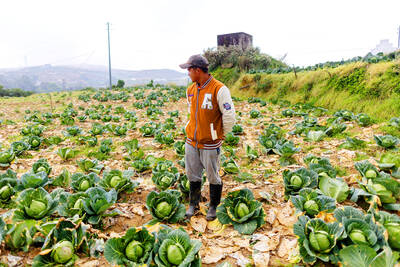
Filipino farmers like Romeo Wagayan have been left with little choice but to let their vegetables rot in the field rather than sell them at a loss, as rising oil prices linked to the Iran war drive up the cost of harvesting, labor and transport. “There’s nothing we can do,” said Wagayan, a 57-year old vegetable farmer in the northern Philippine province of Benguet. “If we harvest it, our losses only increase because of labor, transportation and packing costs. We don’t earn anything from it. That’s why we decided not to harvest at all,” he said. Soaring costs caused by the Middle East


 RSS
RSS