


The US government is making public a huge trove of documents seized during the invasion of Iraq, posting them on the Internet in a step that is at once a nod to the Web's power and an admission that US intelligence resources are overloaded.
Republican leaders in Congress pushed for the release, which was first proposed by conservative commentators and bloggers hoping to find evidence about the fate of Iraq's nuclear, chemical and biological weapons programs, or possible links to terror groups.
The Web surfers have begun posting translations and comments, digging through the documents with gusto. The idea of the government turning over a massive database to volunteers is revolutionary -- and not only to them.
"Let's unleash the power of the Internet on these documents," said House Intelligence Chairman Peter Hoekstra. "I don't know if there's a smoking gun on WMD or not. But it will give us a better understanding of what was going on in Iraq before the war."
The documents' value is uncertain -- intelligence officials say that they are giving each one a quick review to remove anything sensitive. Skeptics of the war, suspicious of the Bush administration, believe that means the postings are either useless or cherry-picked to bolster arguments for the war.
The documents -- Iraqi memos, training guides, reports, transcripts of conversations, audiotapes and videotapes -- have spurred a flurry of news reports. The Associated Press, for instance, reported on memos from former Iraqi president Saddam Hussein in 1987 ordering plans for a chemical attack on Kurds and comments from him and his aides in the 1990s, searching for ways to prove they didn't have weapons.
Hoekstra said it took months of arguing with intelligence officials before he and Director of National Intelligence John Negroponte agreed to make the documents public. None contain current information about the Iraqi insurgency, and US intelligence officials say they are focusing their limited resources on learning about what's happening on the ground now.
There are up to 55,000 boxes, with possibly millions of pages. The documents are being posted a few at a time -- so far, about 600 -- on a Pentagon Web site, often in Arabic with an English summary.
Regardless of what they reveal, open-government advocates like the decision to make them available.
It's a "radical notion," said Steve Aftergood at the Federation of American Scientists government secrecy project, which tracks work by US intelligence agencies.
That "members of the public could contribute to the intelligence analysis process ... That is a bold innovation," he said.
Champions of the Internet as a "citizen's media" have embraced the step. But some remain doubtful, suspecting that the administration only releases information that puts President George W. Bush and his arguments for war in a good light.

‘IN A DIFFERENT PLACE’: The envoy first visited Shanghai, where he attended a Chinese basketball playoff match, and is to meet top officials in Beijing tomorrow US Secretary of State Antony Blinken yesterday arrived in China on his second visit in a year as the US ramps up pressure on its rival over its support for Russia while also seeking to manage tensions with Beijing. The US diplomat tomorrow is to meet China’s top brass in Beijing, where he is also expected to plead for restraint as Taiwan inaugurates president-elect William Lai (賴清德), and to raise US concerns on Chinese trade practices. However, Blinken is also seeking to stabilize ties, with tensions between the world’s two largest economies easing since his previous visit in June last year. At the

UNSETTLING IMAGES: The scene took place in front of TV crews covering the Trump trial, with a CNN anchor calling it an ‘emotional and unbelievably disturbing moment’ A man who doused himself in an accelerant and set himself on fire outside the courthouse where former US president Donald Trump is on trial has died, police said yesterday. The New York City Police Department (NYPD) said the man was declared dead by staff at an area hospital. The man was in Collect Pond Park at about 1:30pm on Friday when he took out pamphlets espousing conspiracy theories, tossed them around, then doused himself in an accelerant and set himself on fire, officials and witnesses said. A large number of police officers were nearby when it happened. Some officers and bystanders rushed
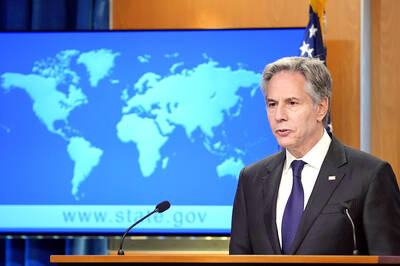
Beijing is continuing to commit genocide and crimes against humanity against Uyghurs and other Muslim minorities in its western Xinjiang province, U.S. Secretary of State Antony Blinken said in a report published on Monday, ahead of his planned visit to China this week. The State Department’s annual human rights report, which documents abuses recorded all over the world during the previous calendar year, repeated language from previous years on the treatment of Muslims in Xinjiang, but the publication raises the issue ahead of delicate talks, including on the war in Ukraine and global trade, between the top U.S. diplomat and Chinese
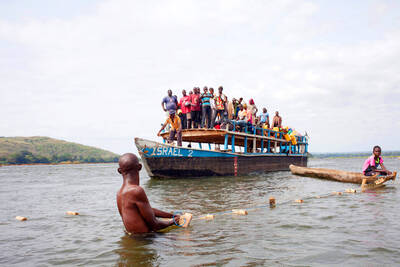
RIVER TRAGEDY: Local fishers and residents helped rescue people after the vessel capsized, while motorbike taxis evacuated some of the injured At least 58 people going to a funeral died after their overloaded river boat capsized in the Central African Republic’s (CAR) capital, Bangui, the head of civil protection said on Saturday. “We were able to extract 58 lifeless bodies,” Thomas Djimasse told Radio Guira. “We don’t know the total number of people who are underwater. According to witnesses and videos on social media, the wooden boat was carrying more than 300 people — some standing and others perched on wooden structures — when it sank on the Mpoko River on Friday. The vessel was heading to the funeral of a village chief in


 RSS
RSS