


Thai Prime Minister Thaksin Shinawatra dismissed calls for his resignation yesterday, heightening tension after thousands of anti-government activists marched to his office and vowed to rally every day until he steps down.
"I will not resign because my resignation will not resolve anything," Thaksin told reporters.
The commander in chief of the army, meanwhile, sought to ease speculation of the army intervening and staging a coup, as it did in 1992 and more than a dozen other times during earlier political crises.

PHOTO: EPA
"The army will not get involved in the political conflict. Political troubles should be resolved by politicians," said General Sondhi Boonyaratkalin, echoing comments of other top military officials. "Military coups are a thing of the past."
At least 100,000 protesters filled the streets around Government House on Sunday and stayed until well past midnight following a boisterous rally. Some 2,000 remained early yesterday and vowed to regroup in larger numbers later in the day.
Thaksin said he had not personally followed the events of the rally but was informed by aides that protesters "were insisting on ousting me." He left Bangkok early on Sunday to campaign in the northeast for snap elections he has called for April 2.

PHOTO: EPA
"As long as the people support me, I will still work because that is how a democracy works," Thaksin told a cheering crowd of supporters in northeastern Khon Kaen Province yesterday.
Tens of thousands of protesters have been demanding his resignation at regular weekend rallies in recent months, putting him on the defensive and leading to the country's biggest political crisis since 1992, when street protests forced the ouster of a military backed government.
The anti-Thaksin campaign swelled last month after the prime minister's family sold its controlling stake in telecom giant Shin Corp to a Singapore state-owned investment company netting 73.3 billion baht (US$1.9 billion). Critics allege the sale involved insider trading and tax dodges.
A group of activists seeking to have the elections declared unconstitutional had filed a petition to Administrative Court. But the court, which handles complaints against state bodies, said yesterday that it was unqualified to accept the petition, said Ampol Singakowin, the court's spokesman.
Meanwhile, in rural areas, where about two-thirds of Thailand's 63 million people live, Thaksin's popularity remains untarnished. In the country's vast and populous rice-farming heartland, it approaches adoration. Farmers and owners of small businesses say their lives have been transformed and that their incomes have doubled during Thaksin's five years in power.
"Even if someone paid me I wouldn't go to an anti-Thaksin demonstration," said Suwat Laocharuen, the village chief of Baan Nonsawan. "We just love him."
Both Thaksin and his opponents expect his party to win the most seats in next month's election. But in a sign of the deepening split between Bangkok and the provinces, the opposition, which draws much of its support from Bangkok and parts of the south, has decided to boycott the poll.
Thaksin's critics have accused him of corruption and abuse of power, charging that he has stripped key institutions of their independence -- the courts, the press, the anti-corruption authorities -- and that he uses his office to further his business interests.
But the argument that Thaksin must therefore resign does not wash with Suwat, the village chief.
"It's not fair that a leader gets two-thirds of the vote and then is brought down by street demonstrations," he said.
In the election in February last year, Thaksin won 61 percent of the vote, a landslide by Thai standards.
He cemented the loyalty of rural Thais with a three-year moratorium on their debts and a government program that offered US$26,000 to every village, from which residents could borrow for small business ventures.
Partly as a result, rural incomes increased 29 percent in 2001, the first year Thaksin was in power, 23 percent the next year and by double digits each year since. Last year, the average rural income reached US$821, according to the Rural Development Information Center of the Interior Ministry.
Baan Suksomboon residents said they would be bitter if Thaksin is removed from power.
"Of course I will be angry," said Muthita Shinpromma, who works at a factory stitching Nike sweatpants for US$3.70 a day. "
Thaksin is helping people at the grassroots," she said.
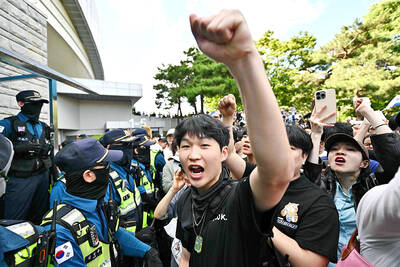
‘ABSURD MISTAKE’: The election commission said that there had been a failure to anticipate turnout after 14 polling stations ran short of ballot papers South Korean riot police yesterday cleared protesters from a Seoul polling station after a 35-hour blockade sparked by a shortage of ballot papers during local elections earlier this week. Wednesday’s election was the first nationwide vote since South Korean President Lee Jae-myung took office following the ouster of Yoon Suk-yeol over his short-lived martial law declaration. Lee’s ruling Democratic Party swept most races, but failed to flip the crucial Seoul mayoral seat. The South Korean National Election Commission apologized, blaming a failure to anticipate turnout after 14 polling stations in Seoul ran short of ballot papers. Some polling stations stayed open until 10pm to

France experienced its hottest spring on record, the French weather service said on Tuesday, after an exceptional early heat wave that also broke highs for the season in England and Wales. Meteo-France said the average nationwide temperature over March to May was 13.8°C — about 1.7°C above the norm, and surpassing records set in 2011 and 2020. “The warmest spring since records began in 1900,” it said in a bulletin. All three months were warmer than average, but the onset of an “unprecedented heatwave” late last month pushed the mercury to highs typically seen at the height of the summer. “Our country had never

A Sherpa guide was found crawling to base camp on Mount Everest a week after he went missing and was reunited with his family, who had given up hope he would return. Dawa Sherpa was last seen on Friday last week descending the mountain, but he did not reach base camp even though his client did. The pair were among the last climbers on the mountain as the climbing season came to an end and the route was dismantled. Dawa was located by a cleaning crew on Thursday morning as he was crawling down the snowy slopes around the Khumbu Icefall, just above
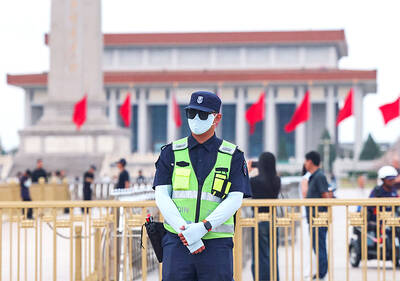
Chinese authorities are snuffing out any remembrance of the deadly 1989 military crackdown on student-led pro-democracy protests in Tiananmen Square, which happened 37 years ago yesterday, in a further tightening of a years-long campaign to erase what happened from public memory. Police told relatives of the victims they would not be allowed to visit a cemetery in Beijing on the anniversary of the crackdown, a person with knowledge of the matter said. Relatives of the victims visited the cemetery on the anniversary for more than 30 years to read memorial statements with police keeping watch, Amnesty International said. Hundreds of people,


 RSS
RSS