


The full extent of the recruitment and overstretch crisis facing Britain's forces is laid bare in a highly damaging report which the government is accused of "burying." The problem is so grave that the UK is struggling to fulfil its military commitments due to "serious manning shortfalls" in 80 key operational areas.
As the government prepares to send 3,300 troops into Afghanistan on top of its Iraq deployment, a detailed report by the Armed Forces Pay Review Body reveals that some army units are already so overstretched they "routinely breach" guidelines on the amount of tour duty considered healthy.
The findings come amid speculation that Britain could start withdrawing troops from Iraq next month, weeks earlier than previously announced. Military sources claim a "thinning" of certain units had already begun and that hun-dreds will begin leaving next month as part of the government "drawdown" from the conflict. The move will be confirmed by Defense Secretary John Reid later this month when he unveils Britain's Iraq deployment from next month to November.
Reid himself, in evidence for the report, airs concern over a series of issues. Among these is worry that the quality of housing available to service families is "way behind where it should be" and "strong concerns" over the level of pay for junior ranks on the front line.
Elsewhere, the Ministry of Defense admits the manpower crisis will continue until at least 2008, with the army predicting a shortfall of more than 12,400 recruits this year, while the Royal Navy has a staffing "black hole." Overall, the ministry admits for the first time that the army is 50 percent short of its recruitment targets, and the navy is short by 35 percent.
The report, which offers independent advice to the prime minister and Reid, was released on the final day before the parliamentary recess last month, leading to claims from the opposition Liberal Democrats that the ministry attempted to suppress it. The party's defense spokesman, Michael Moore, called on Reid on Saturday to explain how the government planned to tackle the problems the study identified.
"This scathing report is a wake-up call for ministers, and paints a damning picture of overstretch, manning shortages and recruiting problems," he said. "It is breathtaking that the report merited only a six-line parliamentary statement."
The board concedes that the Iraq conflict and the bullying scandals at Deepcut barracks in Surrey are chiefly to blame for the crisis.
Imminent deployments to Afghanistan and the presence of 8,000 troops in Iraq was creating such pressure that morale was being affected.
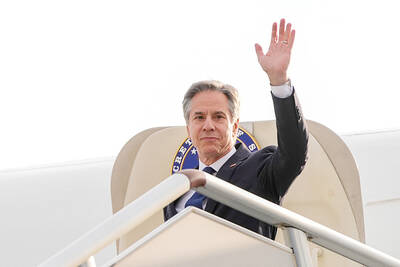
‘IN A DIFFERENT PLACE’: The envoy first visited Shanghai, where he attended a Chinese basketball playoff match, and is to meet top officials in Beijing tomorrow US Secretary of State Antony Blinken yesterday arrived in China on his second visit in a year as the US ramps up pressure on its rival over its support for Russia while also seeking to manage tensions with Beijing. The US diplomat tomorrow is to meet China’s top brass in Beijing, where he is also expected to plead for restraint as Taiwan inaugurates president-elect William Lai (賴清德), and to raise US concerns on Chinese trade practices. However, Blinken is also seeking to stabilize ties, with tensions between the world’s two largest economies easing since his previous visit in June last year. At the
Nearly half of China’s major cities are suffering “moderate to severe” levels of subsidence, putting millions of people at risk of flooding, especially as sea levels rise, according to a study of nationwide satellite data released yesterday. The authors of the paper, published by the journal Science, found that 45 percent of China’s urban land was sinking faster than 3mm per year, with 16 percent at more than 10mm per year, driven not only by declining water tables, but also the sheer weight of the built environment. With China’s urban population already in excess of 900 million people, “even a small portion

UNSETTLING IMAGES: The scene took place in front of TV crews covering the Trump trial, with a CNN anchor calling it an ‘emotional and unbelievably disturbing moment’ A man who doused himself in an accelerant and set himself on fire outside the courthouse where former US president Donald Trump is on trial has died, police said yesterday. The New York City Police Department (NYPD) said the man was declared dead by staff at an area hospital. The man was in Collect Pond Park at about 1:30pm on Friday when he took out pamphlets espousing conspiracy theories, tossed them around, then doused himself in an accelerant and set himself on fire, officials and witnesses said. A large number of police officers were nearby when it happened. Some officers and bystanders rushed
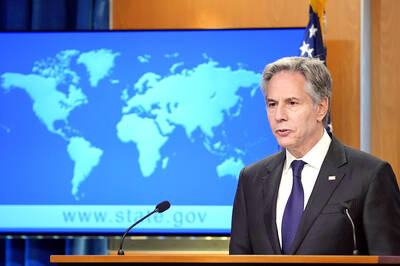
Beijing is continuing to commit genocide and crimes against humanity against Uyghurs and other Muslim minorities in its western Xinjiang province, U.S. Secretary of State Antony Blinken said in a report published on Monday, ahead of his planned visit to China this week. The State Department’s annual human rights report, which documents abuses recorded all over the world during the previous calendar year, repeated language from previous years on the treatment of Muslims in Xinjiang, but the publication raises the issue ahead of delicate talks, including on the war in Ukraine and global trade, between the top U.S. diplomat and Chinese


 RSS
RSS