


Inspectors from the UN nuclear watchdog agency have stripped most surveillance cameras and agency seals from Iranian nuclear sites and equipment as demanded by Tehran in response to its referral to the UN Security Council, diplomats said.
The diplomats, who spoke on condition of anonymity said on Saturday that the move was part of retaliatory measures announced by Iran that have left the International Atomic Energy Agency (IAEA) with only the most basic means to monitor Iran's nuclear activities.
It came as Iran's president suggested his country might pull out of the Nuclear Nonproliferation Treaty. (NPT).
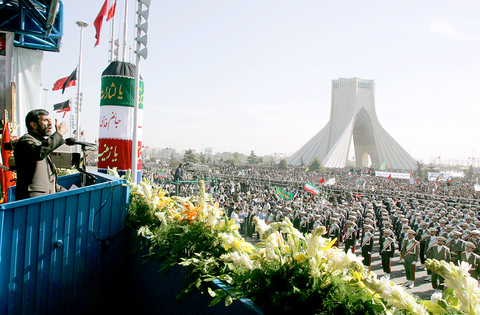
PHOTO: AFP
With most surveillance equipment and seals from Iran's nascent uranium enrichment facilities at Natanz now removed -- and Iran recently ending the agency's rights to in-depth nuclear probes at short notice -- the IAEA has few means to monitor the progress of Tehran's enrichment efforts, which can create either nuclear fuel or the fissile core of warheads.
It also is crippled its efforts to look for secret sites and experiments that could be linked to nuclear arms.
A diplomat familiar with IAEA efforts in Iran said the cameras and seals were removed within "the last day or so" by a team of inspectors now in Iran in compliance with a written Iranian demand presented to the agency less than a week ago.
That request to IAEA head Mohamed ElBaradei came two days after the IAEA's 35-nation board of governors reported Tehran to the Security Council on Feb. 4 over its decision to resume enrichment activity and suspicions that its atomic program represented a threat to world peace. Iran also announced a sharp reduction in the number and kind of IAEA inspections.
Iranian officials had repeatedly warned they would stop honoring the so-called "Additional Protocol" to the NPT if the IAEA board referred their country to the council.
The Additional Protocol had given the agency extra inspecting powers that allowed for inspections on short notice of areas and programs suspected of being misused for weapons activity.
Iranian officials have previously said they will continue honoring the NPT. Still, the agreements linked to that treaty are insufficient for agency inspectors trying to establish whether Iran has had a secret nuclear arms program.
And even the commitment to the NPT was in doubt on Saturday, after Iranian President Mahmoud Ahmadinejad suggested his country might walk away from it.
"Until now, we have worked inside the agency [IAEA] and the NPT [Nuclear Nonproliferation Treaty] regulations," he told tens of thousands of Iranians massed in the Iranian capital to mark the 27th anniversary of the Islamic Revolution.
"If we see you want to violate the right of the Iranian people by using those regulations [against us], you should know that the Iranian people will revise it's policies. You should do nothing that will lead to such a revision in our policy," Ahmadinejad said.
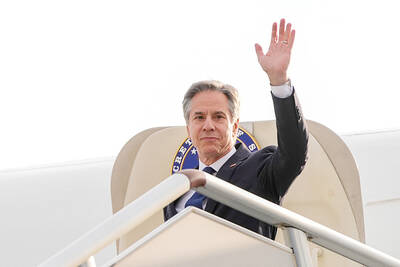
‘IN A DIFFERENT PLACE’: The envoy first visited Shanghai, where he attended a Chinese basketball playoff match, and is to meet top officials in Beijing tomorrow US Secretary of State Antony Blinken yesterday arrived in China on his second visit in a year as the US ramps up pressure on its rival over its support for Russia while also seeking to manage tensions with Beijing. The US diplomat tomorrow is to meet China’s top brass in Beijing, where he is also expected to plead for restraint as Taiwan inaugurates president-elect William Lai (賴清德), and to raise US concerns on Chinese trade practices. However, Blinken is also seeking to stabilize ties, with tensions between the world’s two largest economies easing since his previous visit in June last year. At the

UNSETTLING IMAGES: The scene took place in front of TV crews covering the Trump trial, with a CNN anchor calling it an ‘emotional and unbelievably disturbing moment’ A man who doused himself in an accelerant and set himself on fire outside the courthouse where former US president Donald Trump is on trial has died, police said yesterday. The New York City Police Department (NYPD) said the man was declared dead by staff at an area hospital. The man was in Collect Pond Park at about 1:30pm on Friday when he took out pamphlets espousing conspiracy theories, tossed them around, then doused himself in an accelerant and set himself on fire, officials and witnesses said. A large number of police officers were nearby when it happened. Some officers and bystanders rushed
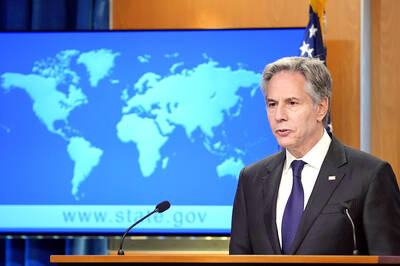
Beijing is continuing to commit genocide and crimes against humanity against Uyghurs and other Muslim minorities in its western Xinjiang province, U.S. Secretary of State Antony Blinken said in a report published on Monday, ahead of his planned visit to China this week. The State Department’s annual human rights report, which documents abuses recorded all over the world during the previous calendar year, repeated language from previous years on the treatment of Muslims in Xinjiang, but the publication raises the issue ahead of delicate talks, including on the war in Ukraine and global trade, between the top U.S. diplomat and Chinese
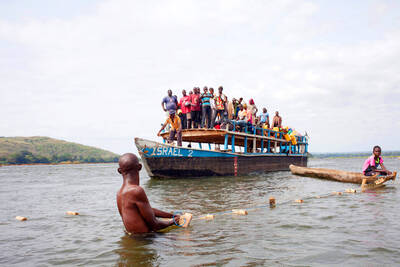
RIVER TRAGEDY: Local fishers and residents helped rescue people after the vessel capsized, while motorbike taxis evacuated some of the injured At least 58 people going to a funeral died after their overloaded river boat capsized in the Central African Republic’s (CAR) capital, Bangui, the head of civil protection said on Saturday. “We were able to extract 58 lifeless bodies,” Thomas Djimasse told Radio Guira. “We don’t know the total number of people who are underwater. According to witnesses and videos on social media, the wooden boat was carrying more than 300 people — some standing and others perched on wooden structures — when it sank on the Mpoko River on Friday. The vessel was heading to the funeral of a village chief in


 RSS
RSS