

In a stinging defeat for US prosecutors, a former Florida professor accused of helping lead a terrorist group that has carried out suicide bombings against Israel was acquitted on nearly half the charges against him. The jury deadlocked on the rest.
The case against Sami Al-Arian, 47, had been seen as one of the biggest courtroom tests yet of the Patriot Act's expanded search-and-surveillance powers.
After a five-month trial and 13 days of deliberations, the jury acquitted Al-Arian on Tuesday of eight of the 17 counts against him, including a key charge of conspiring to maim and murder people overseas. The jurors deadlocked on the others, including charges he aided terrorists.
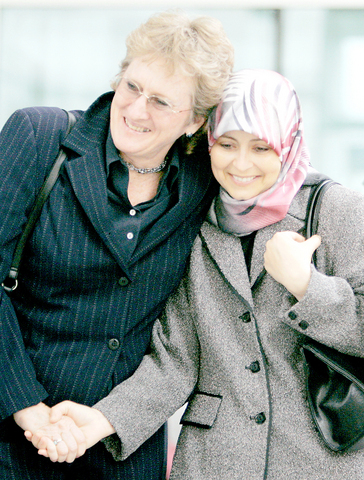
PHOTO: AP
Al-Arian, a former University of South Florida computer engineering professor, wept after the verdicts, and his attorney, Linda Moreno hugged him. He will return to jail until prosecutors decide whether to retry him on the deadlocked charges.
Two co-defendants, Sameeh Hammoudeh and Ghassan Zayed Ballut, were acquitted of all charges. A third, Hatem Naji Fariz, was found not guilty on 25 counts, and jurors deadlocked on the remaining eight.
"While we respect the jury's verdict, we stand by the evidence we presented in court," Department of Justice spokeswoman Tasia Scolinos said.
Al-Arian's wife Nahla celebrated outside the courthouse with family members and supporters.
"I'm ecstatic," she said. "My husband is an outspoken Palestinian activist who loved this country, believed in the system, and the system did not fail him."
Al-Arian was considered one of the most important terrorist figures to be brought to trial in the US since the Sept. 11, 2001, attacks. His indictment in 2003 was hailed by then-attorney general John Ashcroft as one of the first triumphs of the Patriot Act, which was enacted in the weeks after Sept. 11.
The Patriot Act gave the government greatly expanded powers and broke down the wall between foreign intelligence investigations and domestic law enforcement. In the Al-Arian case, officials said, it allowed separate FBI investigations -- one of them a years-long secret foreign intelligence probe of the professor's activities -- to be combined and all the evidence used against him.
A male juror, whose name was being kept secret by the court, said he did not see the case as a First Amendment issue, as defense attorneys had claimed, explaining that the decision came down to lack of proof.
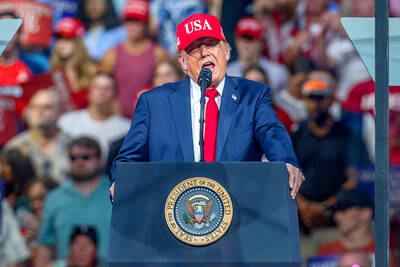
US President Donald Trump on Wednesday threatened to take action against the EU if it moves forward with European Commission President Ursula von der Leyen’s proposal to make Canada the bloc’s first associate member. “If they do that, if I think it’s at all a hostile act; I will put very serious tariffs or stop trading with Europe on many things,” Trump told reporters en route to an event in North Carolina, calling the proposal “laughable.” “If it’s a good intention, that’s fine. If it’s a bad intention, we’ll put very heavy tariffs on Europe,” he said. Von der Leyen made the proposal
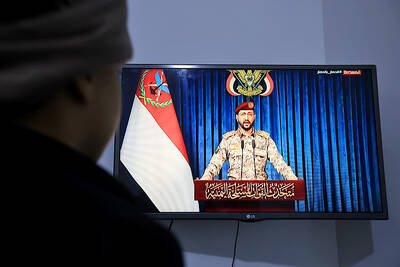
ON THE MOVE: Trump unexpectedly cut short a trip to return to the White House, while the State Department warned Americans to avoid travel to the Middle East The US on Saturday warned that hostilities between Saudi Arabia and Iran-backed Houthis could “escalate rapidly” after a missile attack targeted Riyadh for the first time since the Yemen conflict resumed. US President Donald Trump on Saturday cut short a weekend at Camp David, a secluded presidential complex in rural Maryland, to return unexpectedly to the White House. The White House gave no explanation for the early return, which comes as a new threshold was crossed in the conflict between Saudi Arabia and the Houthis, who control a large part of Yemen and are fighting government forces backed by a coalition led
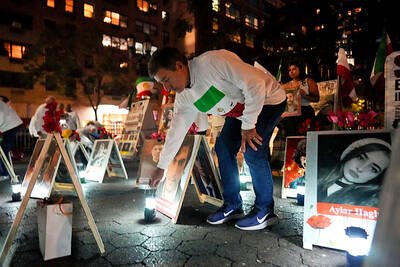
World leaders gather in New York this week for the UN General Assembly, bracing for US President Donald Trump’s return to the rostrum for a second year running, with talks centering on the widening conflicts in the Middle East and Ukraine and the risks of artificial intelligence (AI). Nearly 130 heads of state meet with the post-World War II order under strain and with the UN itself struggling to remain relevant and weathering attacks from Trump, who has slashed the US’ contributions and withdrawn from dozens of UN bodies. Chinese President Xi Jinping (習近平), who last addressed the diplomatic jamboree via video
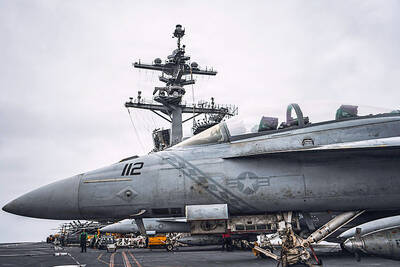
The US military came close to boarding a Chinese vessel in the Middle East earlier this year based on a flawed intelligence report prepared with the help of artificial intelligence (AI), CNN said on Friday. US intelligence indicated the ship was carrying nuclear weapons-related components, leading US forces to prepare to intercept it, the broadcaster reported, citing four anonymous sources familiar with the incident. However, the operation was called off after officials determined that an AI chatbot used by an analyst had misidentified the material the ship was carrying. The report was “entirely false,” but “almost started a war,” CNN quoted one source


 RSS
RSS