


In a triumph of svelte youth over rugged experience, Britain's opposition Conservatives chose David Cameron on Tuesday as their new leader and likely candidate for prime minister in the next elections.
Cameron, a 39-year-old product of some of Britain's elite places of learning -- Eton College and Oxford University -- defeated David Davis, 56, a former Special Forces reservist brought up by a single mother in a housing project.
Cameron had been the favorite despite sustained efforts by interviewers to establish whether he had abused drugs as a student.
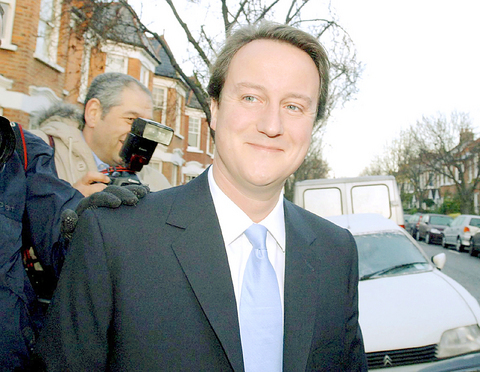
PHOTO: EPA
With his youthful looks and sleek self-confidence in front of the cameras, Cameron has been compared with the young Tony Blair, who took over the Labor Party in 1994 at the age of 41. Like Cameron today, Blair was described at the time as a telegenic political moderate. And like Cameron, Blair's self-confidence reflected educational credentials from private schools and Oxford.
The leadership contest began when the Tories, led by Michael Howard, suffered their third successive election defeat in May by Blair and the Labor Party.
Conservative legislators in the House of Commons narrowed a field of five contenders to the final two, Cameron and Davis. The final choice was made in a lengthy ballot among some 250,000 party members across the country. Cameron got 134,446 votes, more than double the 64,398 given to his opponent. He is now positioned to bid for the prime minister's job; elections must be held by 2010.
Before that, Cameron says, he wants to renew the Tories to win back the center in British politics, which the governing Labor Party has occupied since it expelled them from power in 1997.
"We have to change in order for people to trust us," Cameron said in an acceptance speech as he became the fifth leader in eight years for the Conservatives, who ruled Britain for much of the 20th century under former prime ministers such as Winston Churchill and Margaret Thatcher.
Pledging to end what he called the "scandalous" under-representation of women in the party, he declared: "I want us to give this country a modern compassionate Conservatism that is right for our times and right for our country."
Blair renewed his party when he took over, abolishing its historic commitment to state ownership. But the Conservatives face even deeper troubles as they seek a new identity without a single issue to symbolize renewal.
Cameron has promised to give the party a more youthful and inclusive profile, looking for support beyond its power base, largely among middle-class southerners. He has shied away from the tax-cutting promises and the harsh anti-Europe sentiments of the Conservative right and has promised a more compassionate party to win the votes of inner-city dwellers and women.
In parliament he voted in favor of the Iraq invasion, but against proposed terror laws providing for 90 days' detention of suspects without charge. He was against Britain's ban on hunting with dogs.
His critics maintain that his talk is just that: talk bereft of well thought out policies on crucial issues like the future of public services, which are still creaky despite Labor's extensive investments in health and schooling.
Some argue that he is inexperienced, with only four years as a legislator. But his supporters point to his years working as an aide alongside older politicians both before and after becoming a communications executive at a commercial television station from 1994 to 2001.
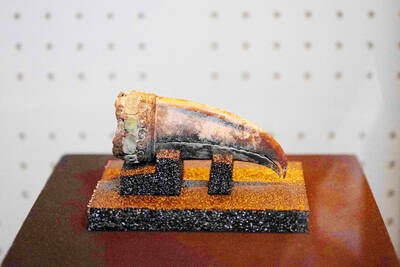
Archeologists in Peru on Thursday said they found the 5,000-year-old remains of a noblewoman at the sacred city of Caral, revealing the important role played by women in the oldest center of civilization in the Americas. “What has been discovered corresponds to a woman who apparently had elevated status, an elite woman,” archeologist David Palomino said. The mummy was found in Aspero, a sacred site within the city of Caral that was a garbage dump for more than 30 years until becoming an archeological site in the 1990s. Palomino said the carefully preserved remains, dating to 3,000BC, contained skin, part of the
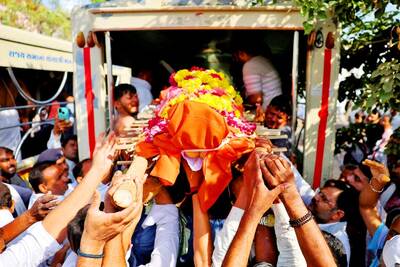
‘WATER WARFARE’: A Pakistani official called India’s suspension of a 65-year-old treaty on the sharing of waters from the Indus River ‘a cowardly, illegal move’ Pakistan yesterday canceled visas for Indian nationals, closed its airspace for all Indian-owned or operated airlines, and suspended all trade with India, including to and from any third country. The retaliatory measures follow India’s decision to suspend visas for Pakistani nationals in the aftermath of a deadly attack by shooters in Kashmir that killed 26 people, mostly tourists. The rare attack on civilians shocked and outraged India and prompted calls for action against their country’s archenemy, Pakistan. New Delhi did not publicly produce evidence connecting the attack to its neighbor, but said it had “cross-border” links to Pakistan. Pakistan denied any connection to

TRUMP EFFECT: The win capped one of the most dramatic turnarounds in Canadian political history after the Conservatives had led the Liberals by more than 20 points Canadian Prime Minister Mark Carney yesterday pledged to win US President Donald Trump’s trade war after winning Canada’s election and leading his Liberal Party to another term in power. Following a campaign dominated by Trump’s tariffs and annexation threats, Carney promised to chart “a new path forward” in a world “fundamentally changed” by a US that is newly hostile to free trade. “We are over the shock of the American betrayal, but we should never forget the lessons,” said Carney, who led the central banks of Canada and the UK before entering politics earlier this year. “We will win this trade war and

Armed with 4,000 eggs and a truckload of sugar and cream, French pastry chefs on Wednesday completed a 121.8m-long strawberry cake that they have claimed is the world’s longest ever made. Youssef El Gatou brought together 20 chefs to make the 1.2 tonne masterpiece that took a week to complete and was set out on tables in an ice rink in the Paris suburb town of Argenteuil for residents to inspect. The effort overtook a 100.48m-long strawberry cake made in the Italian town of San Mauro Torinese in 2019. El Gatou’s cake also used 350kg of strawberries, 150kg of sugar and 415kg of


 RSS
RSS