


Surgeons in France have performed the world's first face transplant, on a 38-year-old woman whose nose and lips had been torn off by a dog. The complex, high-risk operation, which involved grafting on a triangle of facial material from a deceased donor, was carried out over Sunday and Monday at the University Hospital in Amiens, the hospital said in a statement on Wednesday.
It said the team of doctors for "the first partial face transplant" was led by Professor Jean-Michel Dubernard, who performed the world's first hand transplant at Lyon's Edouard Herriot hospital in 1998, and Professor Bernard Devauchelle, head of maxillo-facial surgery at the Amiens hospital in northern France.
The French team took the surgical world by surprise. Many had expected the first face transplant to take place in the US, after an announcement in the summer that Cleveland clinic in Ohio had finally got ethical approval and was about to start interviewing prospective patients.
But on Wednesday, Michael Earley, specialist plastic surgeon and a member of the [London] Royal College of Surgeons' working party on facial transplantation, said that it was an operation waiting to happen.
"It could have been done anywhere where there are trained microsurgeons and plastic surgeons -- China, Australia or other countries -- from a technical point of view. What has been holding it back are ethical issues."
A team at the Royal Free hospital in London, under Professor Peter Butler, has done extensive work modelling what a transplanted face would look like -- neither like donor nor recipient -- and carrying out psychological studies.
But, said Mr Earley, the ethical climate, in the UK at any rate, was not right.
"I think there would be a number of objections to it from experts in ethics and psychologists and the general public," he said.
There were long-term risks of rejection, which would leave the patient worse off than before. They would also have to take immuno-suppressant drugs for life.
These risks had to be balanced against the benefit the patient would receive. Inevitably, patients hoped for a better result than they might get.
Nobody yet knew whether a transplanted face would look more natural than reconstructive plastic surgery. The mobility of the new face would be in question.
"Your brain moves your face in a particular way. It would still try to move the transplanted face in the same way," said Earley.
"A better looking face would be the object, but it seems likely that the face would still not move in the normal way."
Neither French surgeon was available for comment yesterday. But Professor Dubernard told Le Point magazine that he would give a full account of the groundbreaking operation "with the whole team, and with the patient's agreement, when the time is right to do so."
Le Point said relatives had given permission for the mouth-nose triangle of skin, subcutaneous tissue, facial muscles and veins to be removed from the donor on Sunday morning at a hospital in nearby Lille, shortly after she was declared brain dead.
The operation then had to take place within 24 hours.
The unidentified recipient, who was savaged by a dog last May, had been awaiting a suitable donor since August, when French health authorities finally allowed her name to be added to a list of patients for reconstructive surgery.
She has now reportedly been transferred to another nearby hospital for further intensive treatment, including immuno-suppressant and anti-rejection drugs that she will have to continue taking for life.

As the sun sets on another scorching Yangon day, the hot and bothered descend on the Myanmar city’s parks, the coolest place to spend an evening during yet another power blackout. A wave of exceptionally hot weather has blasted Southeast Asia this week, sending the mercury to 45°C and prompting thousands of schools to suspend in-person classes. Even before the chaos and conflict unleashed by the military’s 2021 coup, Myanmar’s creaky and outdated electricity grid struggled to keep fans whirling and air conditioners humming during the hot season. Now, infrastructure attacks and dwindling offshore gas reserves mean those who cannot afford expensive diesel
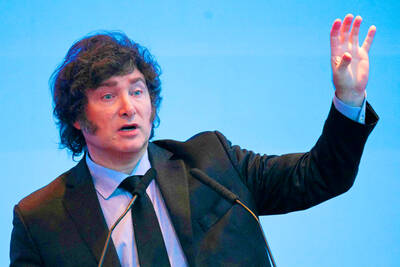
Does Argentine President Javier Milei communicate with a ghost dog whose death he refuses to accept? Forced to respond to questions about his mental health, the president’s office has lashed out at “disrespectful” speculation. Twice this week, presidential spokesman Manuel Adorni was asked about Milei’s English Mastiff, Conan, said to have died seven years ago. Milei, 53, had Conan cloned, and today is believed to own four copies he refers to as “four-legged children.” Or is it five? In an interview with CNN this month, Milei referred to his five dogs, whose faces and names he had engraved on the presidential baton. Conan,

French singer Kendji Girac, who was seriously injured by a gunshot this week, wanted to “fake” his suicide to scare his partner who was threatening to leave him, prosecutors said on Thursday. The 27-year-old former winner of France’s version of The Voice was found wounded after police were called to a traveler camp in Biscarrosse on France’s southwestern coast. Girac told first responders he had accidentally shot himself while tinkering with a Colt .45 automatic pistol he had bought at a junk shop, a source said. On Thursday, regional prosecutor Olivier Janson said, citing the singer, that he wanted to “fake” his suicide
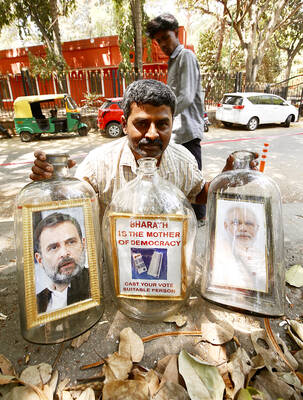
Indian Prime Minister Narendra Modi reaffirmed his pledge to replace India’s religion-based marriage and inheritance laws with a uniform civil code if he returns to office for a third term, a move that some minority groups have opposed. In an interview with the Times of India listing his agenda, Modi said his government would push for making the code a reality. “It is clear that separate laws for communities are detrimental to the health of society,” he said in the interview published yesterday. “We cannot be a nation where one community is progressing with the support of the Constitution while the other


 RSS
RSS