


In one book, crazed Chinese Communist guerrillas spray benevolent Japanese troops with cyanide. In another, savage Korean immigrants massacre innocent Tokyo residents in the wake of World War II.
If this sounds like a reversal of Japan's history of aggression in Asia, that is just what the authors intend. The scenes appear in two best-selling examples of a growing literary genre in Japan: nationalist comics.
The trend, typified by the runaway hits Hate Korea: A Comic and Introduction to China, has struck a chord among young readers who resent Japan being cast as the bully in 20th century history -- and say it is time for a change.
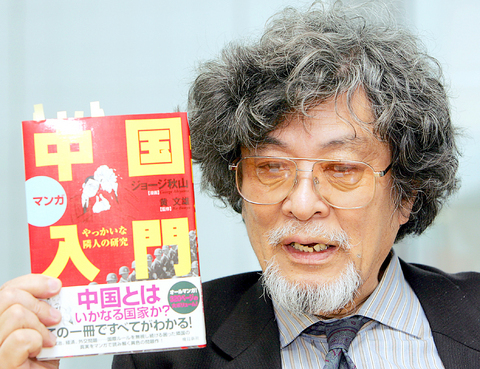
PHOTO: AP
"These books finally depict history from a Japanese perspective, and there is nothing wrong with that," says Atsushi Iwata, 22, a student at Tokyo's prestigious Waseda University who attends a weekly seminar by a co-author of Introduction to China.
"It's the right of any nation to interpret history as it feels it should," he said.
The interpretation in the recent comic books is nothing short of provocative -- at a time of rising tensions between Tokyo and its neighbors, and as Japan takes a decided tilt toward an unapologetic view of previous military action.
Hate Korea tells the tale of wide-eyed Japanese college freshmen who discover that Japan's colonial rule over the Korean peninsula from 1910-45 -- seen in Korea as brutal subjugation -- was a well-intentioned attempt to bring civilization to a backward country.
"It's not an exaggeration to say modern Korea was built by Japan," one of the Japanese students, eyes shining, declares toward the end of the book. Her Korean debate opponent, fuming at the mouth, is unable to respond.
The China tome covers similar territory, vehemently denying Japanese atrocities in China during its invasion in the 1930s and 1940s, such as biological experiments carried out by the Imperial Army's top-secret Unit 731.
Even more venom is reserved for modern Chinese. The book accuses Beijing of distorting history, running crime syndicates in Japan and flooding the country with "AIDS-infested prostitutes," and calls for stricter immigration controls against Chinese workers.
The formula sells: The Korea book has gone through five reprints and sold more than 320,000 copies since its release in September. The China book has sold 180,000 copies since its appearance in August.
The comics build on a genre established by comic artist Yoshinori Kobayashi in the 1990s.
His Manifesto of New Pride series of comics -- which claim Japan waged a noble war to liberate Asia from a racist world order -- have sold over a million copies.
Proponents expect the trend to expand. But many Japanese are disturbed by the trend.
Toshio Hanafusa, an activist who has campaigned for compensation for Korean women forced to work as wartime prostitutes for Japan's Imperial army, blames the insecurity and disillusionment of younger Japanese for the popularity of the books.
"Perhaps they seek pride in the idea of a more assertive Japan," he said. "And cleansing Japan's history of any sense of guilt bolsters that pride."


When a hiker fell from a 55m waterfall in wild New Zealand bush, rescuers were forced to evacuate the badly hurt woman without her dog, which could not be found. After strangers raised thousands of dollars for a search, border collie Molly was flown to safety by a helicopter pilot who was determined to reunite the pet and the owner. A week earlier, an emergency rescue helicopter found the woman with bruises and lacerations after a fall at a rocky spot at the waterfall on the South Island’s West Coast. She was airlifted on March 24, but they were forced to
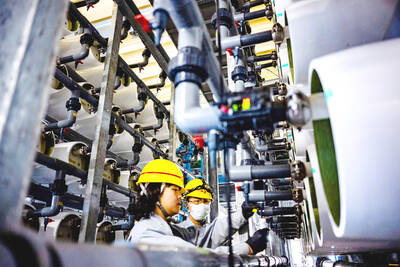
HIGH HOPES: The power source is expected to have a future, as it is not dependent on the weather or light, and could be useful for places with large desalination facilities A Japanese water plant is harnessing the natural process of osmosis to generate renewable energy that could one day become a common power source. The possibility of generating power from osmosis — when water molecules pass from a less salty solution to a more salty one — has long been known. However, actually generating energy from that has proved more complicated, in part due the difficulty of designing the membrane through which the molecules pass. Engineers in Fukuoka, Japan, and their private partners think they might have cracked it, and have opened what is only the world’s second osmotic power plant. It generates
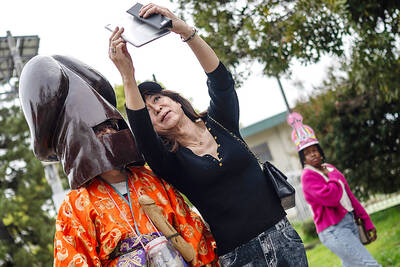
Showcasing phallus-shaped portable shrines and pink penis candies, Japan’s annual fertility festival yesterday teemed with tourists, couples and families elated by its open display of sex. The spring Kanamara Matsuri near Tokyo features colorfully dressed worshipers carrying a trio of giant phallic-shaped objects as they parade through the street with glee. The festival, as legend has it, honors a local blacksmith in the Edo Period (1603-1868) who forged an iron dildo to break the teeth of a sharp-toothed demon inhabiting a woman’s vagina that had been castrating young men on their wedding nights. A 1m black steel phallus sits in the courtyard of

Hundreds of Filipinos and tourists flocked to a sun-bleached field north of Manila yesterday, on Good Friday, to witness one of the country’s most blood-soaked displays of religious fervor, undeterred by rising fuel prices. Scores of bare-chested flagellants with covered faces walked barefoot through the dusty streets of Pampanga Province’s San Fernando as they flogged their backs with bamboo whips in the scorching heat. Agence France-Presse (AFP) journalists said they saw devotees deliberately puncturing their skin with glass shards attached to a small wooden paddle to ensure their bleeding during the ritual, a way to atone for sins and seek miracles from


 RSS
RSS